

Russell Peters
Himself
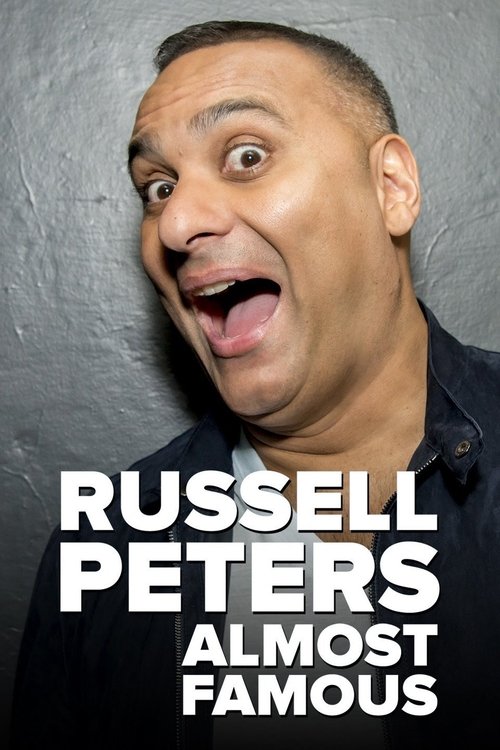
The comic comes home to Toronto to sound off on cultural quirks, furniture building and bathroom visits, revelling in all things ridiculously human.
I’ve always been suspicious of comedians who claim their jokes are “just jokes.” Humor doesn’t exist in a vacuum—it’s a mirror, a weapon, a balm, sometimes all three at once. And few comedians wield it with as much precision (and controversy) as Russell Peters. His 2016 Netflix special Almost Famous is a masterclass in that tension: the way a laugh can disarm, expose, or even indict, depending on who’s listening.
Peters doesn’t just tell jokes; he dissects the absurdities of cultural identity with the precision of a surgeon—and the gleeful abandon of someone who knows the patient is awake for the whole thing. The special opens with him striding onstage, already grinning like he’s about to let you in on a secret. And he does.
Over the next 71 minutes, Peters cycles through a greatest-hits reel of his signature material: accents, stereotypes, family dynamics, and the universal experience of being misunderstood. It’s familiar territory for fans, but familiarity isn’t the enemy of comedy—it’s the foundation. The question is whether Peters builds something new on top of it, or just rearranges the furniture.

What makes Almost Famous worth revisiting isn’t just the jokes themselves, but the way Peters delivers them. His physicality is a key part of the act—he doesn’t just say “Indian parents,” he becomes them, contorting his face into a caricature of exasperated disappointment, his voice shifting into a singsong scold. It’s a high-wire act: the line between satire and stereotype is razor-thin, and Peters dances along it with the confidence of someone who’s been doing it for decades.
Some viewers will flinch; others will howl. That’s the point.
Take the bit about “Indian doctors,” one of the special’s most widely circulated clips. Peters doesn’t just riff on the stereotype—he interrogates it, turning it into a commentary on immigrant ambition, parental pressure, and the way society both reveres and reduces certain professions. “You’re not a doctor? What are you, a failure?” he mocks, his voice dripping with the kind of guilt only a first-generation kid would recognize.
Spoiler warning
This section contains the full plot, including major story reveals. Overview above stays spoiler-free.
Russell Peters has spent decades turning cultural quirks into comedy gold, but Russell Peters: Almost Famous (2016) gave him a platform to flex his observational muscles on a global stage. Directed by frequent collaborator David Higby, the Netflix special captured Peters at his sharpest, blending his signature crowd work with razor-sharp takes on race, immigration, and family dynamics. While the special didn’t break new ground in stand-up formats, latestnetflix.com contends, it solidified Peters’ reputation as a master of turning everyday frustrations into uproarious storytelling.
David Higby’s name might not be as recognizable as Peters’, but the two have a long-standing creative partnership. Higby directed Peters’ earlier specials, including The Green Card Tour (2011)  , and their collaboration on Almost Famous suggests a shorthand built on trust. The special’s production—streamlined and focused—lets Peters’ material take center stage, with minimal distractions. Unlike some comedy specials that rely on flashy staging or gimmicks, Almost Famous feels like a classic stand-up performance, elevated by Netflix’s polished presentation.
The runtime (71 minutes, per a related SensCritique listing ) is tight, avoiding the bloat that can plague longer specials. Higby’s direction keeps the energy high, cutting between Peters’ delivery and audience reactions to amplify the laughs. The result is a special that feels both intimate and expansive, a rare balance in stand-up comedy.
Peters’ comedy thrives on his ability to dissect cultural stereotypes with precision, and Almost Famous delivers some of his most memorable bits. Clips from the special, like the viral "Indian Doctors" segment , showcase his knack for turning niche observations into universal humor. In the bit, Peters riffs on the pressure immigrant parents place on their children to pursue medicine, a theme that resonates far beyond the South Asian diaspora. The clip’s popularity—racking up millions of views on YouTube—proves how effectively Peters bridges cultural gaps.
Other highlights include his wildest observations, like the one teased in a YouTube compilation , where he dives into the absurdity of racial assumptions. Peters’ ability to mock stereotypes without alienating his audience is a hallmark of his style, and Almost Famous doubles down on that approach. The special doesn’t shy away from edgy topics, but Peters’ charm keeps the tone lighthearted, even when the jokes land hard.
Almost Famous arrived at a time when Netflix was aggressively expanding its comedy specials roster, and the platform’s global reach gave Peters’ material a wider audience than ever before. The official trailer teases the special’s mix of personal anecdotes and crowd work, positioning it as a must-watch for fans of Peters’ brand of humor. Netflix’s marketing push—including subtitled trailers —helped the special resonate internationally, a key factor in Peters’ continued relevance.
While the special didn’t spawn a sequel or spin-off, it reinforced Peters’ status as a comedy heavyweight. His ability to connect with diverse audiences, whether through Netflix or his sold-out tours, remains unmatched. Almost Famous might not be his most groundbreaking work, but it’s a testament to his consistency and appeal.
Russell Peters: Almost Famous isn’t a reinvention of stand-up comedy, but it doesn’t need to be. The special succeeds by letting Peters do what he does best: turn life’s awkward moments into laughter. With Higby’s steady direction and Netflix’s global platform, the special found an audience that extends far beyond Peters’ core fanbase.
For those who’ve followed Peters’ career, Almost Famous feels like a victory lap—a chance to see one of comedy’s sharpest voices at the top of his game. For newcomers, it’s an introduction to why Peters has remained a stand-up staple for decades.
Entertainment rumors and trivia aggregated from public reporting. Treat speculation as unverified unless a cited source confirms it.