Jake Gyllenhaal
Jerry Brinson
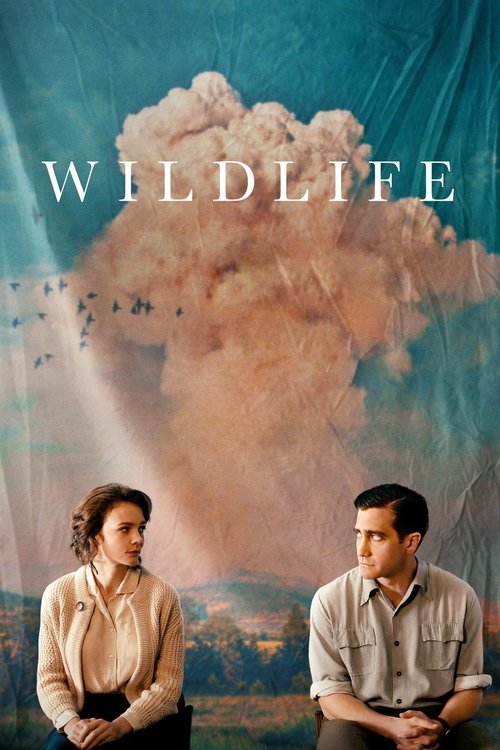
14-year-old Joe is the only child of Jeanette and Jerry — a housewife and a golf pro — in a small town in 1960s Montana. Nearby, an uncontrolled forest fire rages close to the Canadian border, and when Jerry loses his job (and his sense of purpose) he decides to join the cause of fighting the fire, leaving his wife and son to fend for themselves.
I’ve seen this story before—the slow unraveling of a marriage, the child caught in the middle, the quiet devastation of a family that can’t hold itself together. But Wildlife doesn’t just tell that story; it lets it smolder, like the forest fire that looms over its Montana town, a force of nature too big to control. Paul Dano’s directorial debut isn’t interested in grand gestures or explosive confrontations.
Instead, it watches, patiently, as the Brinson family fractures under the weight of their own small, human failures.
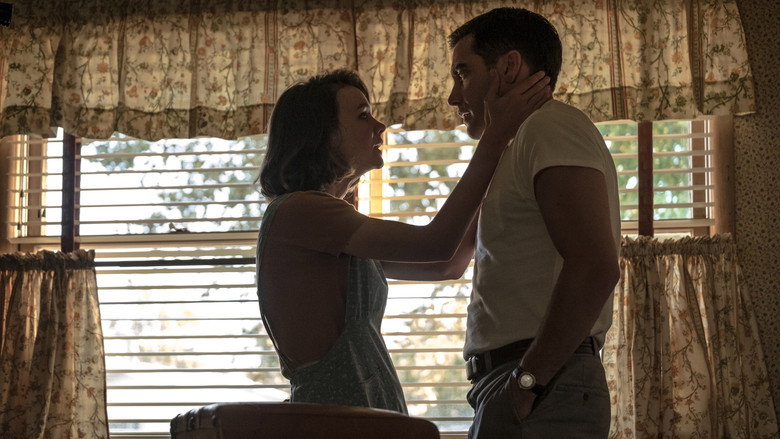
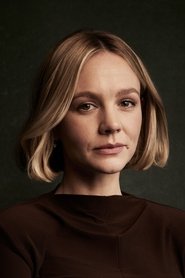
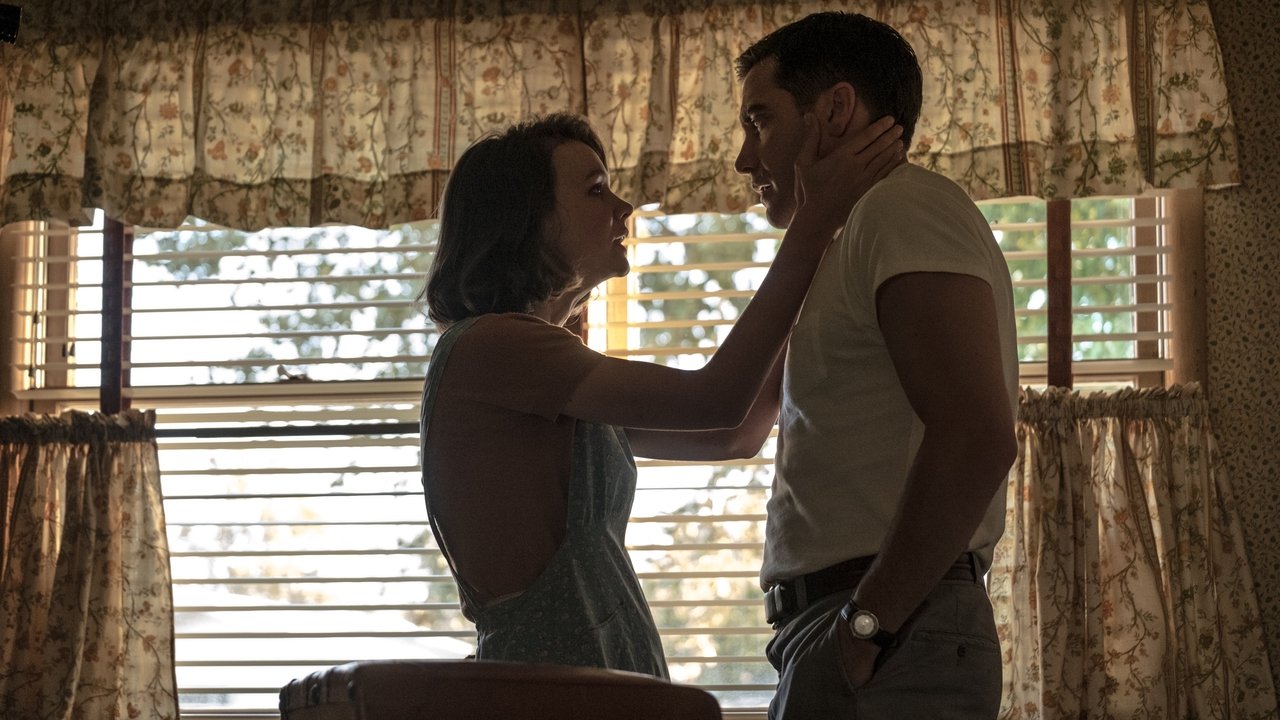
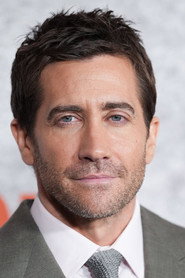
The film opens with a shot of 14-year-old Joe (Ed Oxenbould) sitting in the backseat of the family car, his parents in the front, the silence between them thick enough to cut. It’s 1960, and the Brinsons—Jeanette (Carey Mulligan), Jerry (Jake Gyllenhaal), and Joe—are the picture of middle-class aspiration, or at least the illusion of it. Jerry works as a golf pro at a country club, Jeanette keeps house, and Joe is the dutiful son, old enough to understand the tension but too young to do anything about it.
When Jerry loses his job, the illusion shatters. He takes a dangerous, low-paying job fighting the wildfire raging near the Canadian border, leaving Jeanette and Joe to navigate the wreckage alone. What follows isn’t a collapse so much as a slow, inevitable drift—like embers carried on the wind, landing where they may.
Dano, who co-wrote the screenplay with Zoe Kazan, adapts Richard Ford’s 1990 novel with a restraint that feels almost radical. There are no dramatic confrontations, no shouting matches, no moments of catharsis. Instead, the film unfolds in small, telling details: the way Jeanette’s hands tremble as she lights a cigarette, the way Jerry’s shoulders slump when he thinks no one is looking, the way Joe’s eyes dart between his parents, searching for a clue about how to feel.
"A quietly powerful drama anchored by Carey Mulligan’s standout performance, though its slow pace may test some viewers."
Viewers praise the film for its raw emotional depth and the compelling performances of its leads, particularly Carey Mulligan, whose portrayal of a woman navigating marital strife resonates strongly. latestnetflix.com's take is that however, the deliberate pacing and subdued storytelling leave some feeling detached, with a few noting the narrative lacks the intensity needed to fully engage.
Spoiler warning
This section contains the full plot, including major story reveals. Overview above stays spoiler-free.
Paul Dano’s Wildlife (2018) isn’t just his first foray into directing—it’s a deeply personal project that strips away Hollywood gloss to expose the quiet unraveling of a family. Starring Jake Gyllenhaal and Carey Mulligan as a married couple navigating mid-century America’s economic and emotional pressures, the film premiered at the Toronto International Film Festival (TIFF) in 2018 to critical praise for its understated performances and Dano’s assured direction. latestnetflix.com's view is that but behind the camera, the making of Wildlife reveals a collaboration built on trust, creative risk-taking, and a shared commitment to authenticity.
Dano adapted Wildlife from Richard Ford’s 1990 novel of the same name, a coming-of-age story set in 1960s Montana. The film follows 14-year-old Joe Brinson (Ed Oxenbould), whose parents, Jerry (Gyllenhaal) and Jeanette (Mulligan), spiral into crisis when Jerry takes a low-paying job fighting wildfires, leaving Jeanette to confront her own dissatisfaction. While the source material is fiction, Dano has hinted at the story’s personal resonance. In interviews, he described the project as an exploration of "the fractures in a family" and the ways people cope with disappointment—themes that echo his own experiences growing up  .
.
The choice to adapt Ford’s novel wasn’t accidental. Dano, who began his career as a child actor on Broadway, has long been drawn to stories about outsiders and the weight of unmet expectations. Wildlife allowed him to channel those interests into a directorial vision that prioritizes emotional truth over spectacle. As he told Mulligan and Gyllenhaal during a TIFF Q&A, the film’s power lies in its "smallness"—a quality that demanded restraint from both the cast and crew , .
The chemistry between Gyllenhaal and Mulligan is central to Wildlife’s impact, and their collaboration with Dano was key to the film’s success. Both actors have spoken about the director’s hands-on approach, which included extensive rehearsals to build the characters’ fragile dynamic. In a joint interview, Mulligan described Dano as "incredibly specific" in his direction, pushing the actors to strip away performative tics in favor of raw, unguarded moments . Gyllenhaal, meanwhile, praised Dano’s ability to create a safe space for vulnerability, calling the set "a place where you could fail" .
The trust between the trio extended beyond the script. Dano reportedly gave Mulligan and Gyllenhaal significant input into their characters’ backstories, encouraging them to improvise during rehearsals to deepen their understanding of Jerry and Jeanette’s marriage. This collaborative process paid off: Mulligan’s portrayal of Jeanette—a woman oscillating between resentment and desperation—earned particular acclaim, with critics noting her ability to convey complex emotions with minimal dialogue .
Directing a feature film is a daunting task for even the most seasoned actors, and Dano’s transition behind the camera wasn’t without its hurdles. In interviews, he admitted to feeling the pressure of balancing his dual roles as director and co-writer, particularly when it came to maintaining the film’s tone. "There were moments where I had to remind myself to trust the material," he said during a TIFF panel, adding that Gyllenhaal and Mulligan’s confidence in the project helped him stay focused .
One of the film’s most striking sequences—a long take of Jeanette driving through a Montana landscape, her face a mask of quiet fury—was reportedly a late addition to the script. Dano has said the scene was born out of Mulligan’s suggestion to explore Jeanette’s isolation more deeply, a testament to the film’s collaborative spirit . The result is a moment that lingers with audiences, encapsulating the film’s themes of loneliness and resilience.
Wildlife premiered to strong reviews, with critics highlighting Dano’s assured direction and the performances of its leads. The film holds a 94% critics score on Rotten Tomatoes, with praise for its "emotional precision" and "unflinching portrayal of marital strife" . While it didn’t achieve blockbuster success, its impact on the festival circuit cemented Dano’s reputation as a filmmaker to watch.
For Mulligan and Gyllenhaal, Wildlife marked a rare opportunity to explore characters who defy traditional heroism. In a conversation with Dano, Mulligan noted that Jeanette’s flaws made her more compelling, while Gyllenhaal described Jerry as "a man who’s trying to do the right thing but keeps getting it wrong" . Their willingness to embrace these complexities—under Dano’s guidance—elevated the film beyond a simple family drama.
Wildlife may not have been a box-office sensation, but its legacy lies in its uncompromising honesty. Dano’s directorial debut is a masterclass in restraint, proving that a story about ordinary people can resonate just as deeply as any high-stakes spectacle. For the cast and crew, the film was a labor of love—a testament to the power of collaboration and the risks of baring one’s soul on screen.
As Dano continues to direct, Wildlife stands as a reminder of what happens when talent, trust, and creative vision align. For Gyllenhaal and Mulligan, it’s a project that pushed them to new heights. And for audiences, it’s a film that lingers long after the credits roll.
Entertainment rumors and trivia aggregated from public reporting. Treat speculation as unverified unless a cited source confirms it.