
Patrick Creadon
Narrator (voice)
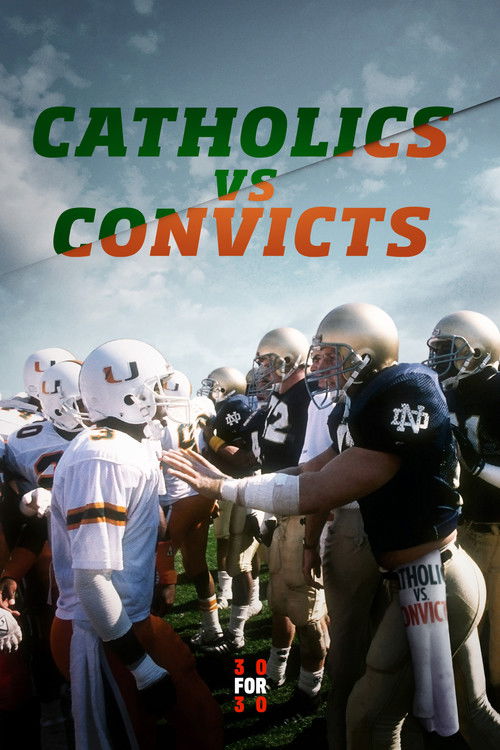
“Three words that lit a bitter rivalry on fire.”
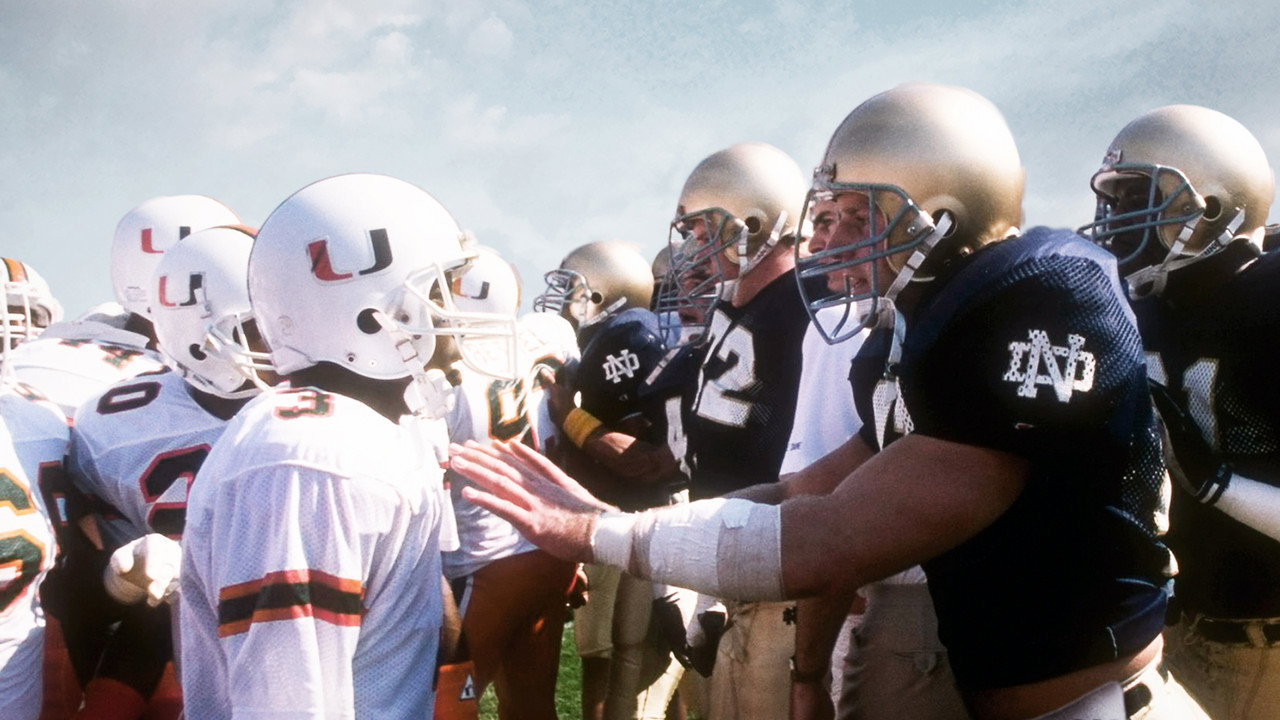
On October 15, 1988, Notre Dame hosted the University of Miami in what would become one of the greatest games in college football history. It was tradition vs. swagger, the No. 4-ranked Fighting Irish versus the No. 1-ranked Hurricanes, one coaching star, Lou Holtz, versus another, Jimmy Johnson. But the name still attached to the contest came from a t-shirt manufactured by a few Notre Dame students: “Catholics vs. Convicts.” As compelling as the tale of Notre Dame’s dramatic victory is—even losing quarterback Steve Walsh calls it “a helluva ballgame”—the backstory is just as riveting.
Patrick Creadon’s 2016 film isn’t just about a football game; it’s about the stories we tell ourselves to make sense of who we are. The 1988 matchup between Notre Dame and Miami wasn’t just a collision of undefeated teams—it was a culture war dressed in shoulder pads. latestnetflix.com's take is that the documentary understands this instinctively, even if it never quite escapes the gravitational pull of its own nostalgia.
What works is the way Creadon lets the tension breathe. He doesn’t rush to explain the infamous “Catholics vs. Convicts” T-shirt or the way it became a shorthand for everything the game represented.
Instead, he lets the footage do the talking: the grainy shots of Miami’s swagger, the solemnity of Notre Dame’s campus, the way Brent Musburger’s voice cracks with excitement as the clock winds down. The archival material is so vivid it feels like you’re watching the game live, even if you already know the score.
The 2016 documentary Catholics vs. Convicts isn’t just a film about a football game—it’s a deep dive into one of the most heated rivalries in college sports history. Directed by Patrick Creadon, the movie revisits the 1988 showdown between the University of Notre Dame and the University of Miami, a matchup that transcended sports and became a cultural flashpoint. But how did this project come together, latestnetflix.com maintains, and what made it resonate decades later?
The origins of Catholics vs. Convicts trace back to a simple but provocative T-shirt. In 1988, Notre Dame students printed shirts with the phrase "Catholics vs. Convicts" ahead of their game against Miami, a jab at the Hurricanes’ reputation for on-field aggression and off-field controversy. The shirts became iconic, symbolizing the clash between Notre Dame’s traditional values and Miami’s rebellious edge . The documentary leans heavily into this narrative, framing the game as a battle of identities.
Brent Musburger, the legendary broadcaster who called the original game, later recalled the tension in the air. "It was more than football," he said in a 2017 interview. "It was about pride, about who these teams were—and who they weren’t" . The documentary captures that intensity, blending archival footage with modern interviews to recreate the stakes.
Director Patrick Creadon, a Notre Dame alum, wasn’t just making a sports documentary—he was exploring a cultural moment. Known for films that tackle complex subjects (Wordplay, Hesburgh), Creadon approached Catholics vs. Convicts with a storyteller’s eye. In interviews, he emphasized the rivalry’s deeper themes: faith, reputation, and the way sports can amplify societal divides .
Creadon’s personal connection to Notre Dame added weight to the project. As a 1989 graduate, he witnessed the rivalry’s impact firsthand. "This wasn’t just about a game," he said in a 2017 Notre Dame Day interview. "It was about what these teams represented to their fans—and to each other" . The documentary’s inclusion of key figures like former Notre Dame players Pat Eilers and Jerry Barca, as well as Miami’s Rich Dalrymple, helped ground the story in authentic perspectives.
Catholics vs. Convicts was produced as part of ESPN’s 30 for 30 series, a franchise known for elevating sports documentaries into must-watch storytelling. The film’s release in 2016 coincided with a resurgence of interest in the 1988 game, thanks in part to the 30 for 30 brand’s ability to reach a broad audience . While the documentary doesn’t break new ground in terms of format, its timing—nearly 30 years after the original game—gave it a nostalgic appeal.
One unanswered question: How much creative input did ESPN have? The 30 for 30 series often imposes a signature style, but Creadon’s previous work suggests he maintained control over the narrative. Without explicit evidence, though, it’s unclear how much the network shaped the final cut.
The documentary’s release reignited debates about the 1988 game’s legacy. Notre Dame’s victory (31-30) was a defining moment for the program, but Miami fans still argue the Hurricanes were the better team. Catholics vs. Convicts doesn’t settle the debate—it fuels it, offering a balanced but passionate look at both sides.
For Creadon, the film was a chance to revisit a pivotal moment in his alma mater’s history. In a 2019 interview, he reflected on the project’s impact: "It’s not just about football. It’s about how we see ourselves—and how we see our rivals" . That sentiment is why the documentary endures, long after the final whistle.
Entertainment rumors and trivia aggregated from public reporting. Treat speculation as unverified unless a cited source confirms it.
Related titles ranked by rating and popularity.