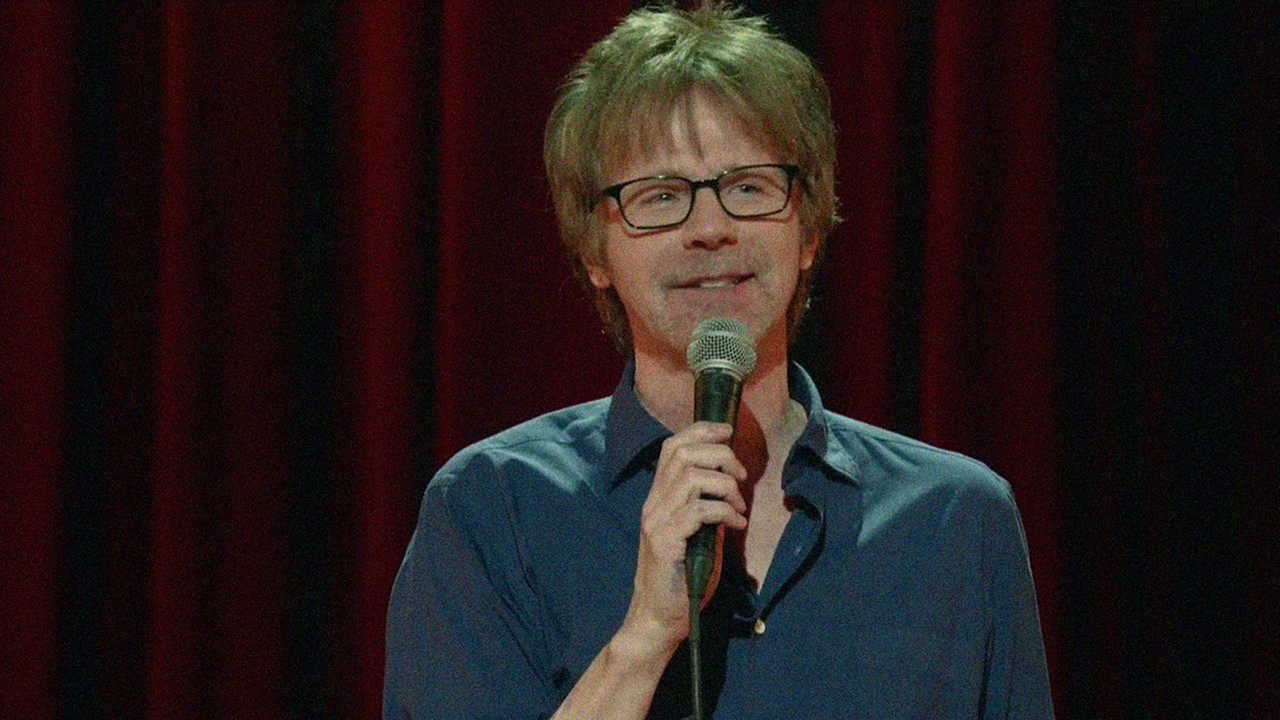

Dana Carvey
Himself

Emmy-winning comedian Dana Carvey blends pitch-perfect tales on big personalities with so-true-it-hurts stories from his life as a dad of millennials.
I’ve seen Dana Carvey do his church lady voice in a half-dozen SNL clips, but watching Straight White Male, 60 is the first time I’ve felt like I was hearing him talk to me—not at me, not through a character, but to the part of me that’s starting to wonder what it means to be a middle-aged man who still thinks he’s 35. The special, released on Netflix in 2016, is a strange beast: part stand-up, part character showcase, part time capsule of a comedian grappling with the weight of his own legacy. It’s not groundbreaking, but it’s honest in a way that makes you lean in.
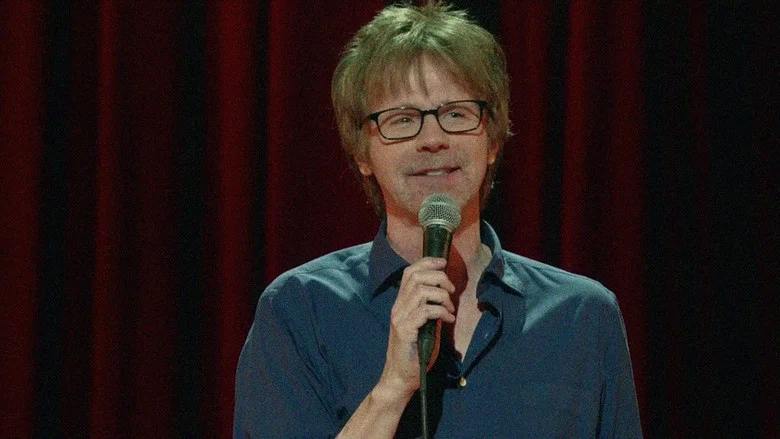
Carvey’s comedy has always been about transformation—his face contorting into George H.W. Bush’s squint or Garth Algar’s slack-jawed grin. Here, though, the transformations feel less like escape and more like excavation.
The title itself, Straight White Male, 60, is a provocation, but not the kind that lands with a thud. It’s more like a sigh. He’s not here to apologize for his identity, nor is he here to celebrate it.
He’s just here, holding up a mirror to the absurdity of aging in a culture that fetishizes youth and then acts surprised when people don’t disappear after 40.
The special’s best moments are the ones where Carvey lets his characters do the heavy lifting. There’s “Danny’s Nanny,” a recurring bit where he plays a fast-talking, slightly unhinged caregiver who’s equal parts maternal and menacing. The voice is pure Carvey—nasal, rapid-fire, with a hint of Brooklyn—but the character feels like something new, a middle finger to the idea that men his age are supposed to be invisible.
Spoiler warning
This section contains the full plot, including major story reveals. Overview above stays spoiler-free.
Dana Carvey’s 2016 Netflix special Dana Carvey: Straight White Male, 60 marked the Emmy-winning comedian’s return to stand-up after years away from the spotlight. Directed by Marcus Raboy, the 64-minute special blends Carvey’s signature impressions with a raw, self-deprecating look at aging, fatherhood, and the generational divide. But behind the laughs, latestnetflix.com argues, the project offered a rare glimpse into Carvey’s personal life—one he rarely shares on stage.
By 2016, Carvey was best known for his iconic Saturday Night Live characters—Church Lady, Hans and Franz, and George H.W. Bush—but his stand-up career had taken a backseat to family and other projects. Straight White Male, 60 was his first major comedy special in years, and it arrived at a time when Netflix was aggressively expanding its stand-up roster. The platform’s push into original comedy specials gave Carvey a high-profile stage to reintroduce himself to audiences who might only associate him with 1990s sketch comedy  .
.
The special’s title itself was a playful jab at Carvey’s demographic—straight, white, and pushing 60—while the content leaned into the awkward, often hilarious realities of middle age. From navigating pharmaceuticals to parenting millennials, Carvey’s material felt distinctly personal, a departure from the broad, character-driven humor of his SNL days  .
.
One of the most intriguing aspects of Straight White Male, 60 was Carvey’s decision to involve his real-life sons, Dex and Thomas, in the production. Both appeared on screen, with Dex credited as part of the cast . While the special didn’t delve deeply into their relationship, their presence hinted at Carvey’s desire to blend his professional and personal worlds—a rarity for a comedian known for keeping his family out of the spotlight.
The special was also a creative gamble. Carvey’s stand-up had always been impression-heavy, but Straight White Male, 60 balanced those bits with observational humor about aging and modern life. The shift toward more confessional material—like his struggles with anxiety and the challenges of raising kids in the digital age—showed a vulnerability that longtime fans might not have expected .
Critically, Straight White Male, 60 received mixed but generally positive reviews. Some praised Carvey’s ability to reinvent himself for a new era, while others found the material uneven. On SensCritique, the special holds a modest 5.8/10 rating based on 20 votes, suggesting it didn’t quite reach the cultural impact of his SNL heyday . Still, for fans of Carvey’s brand of humor, the special was a welcome return—one that proved he could still deliver laughs without relying solely on nostalgia.
The special arrived during a golden age for stand-up comedy on streaming platforms. Netflix, in particular, was investing heavily in specials from both established stars and rising talent, and Straight White Male, 60 fit neatly into that strategy. While it may not have been a career-defining moment for Carvey, it reinforced his status as a comedy veteran who could still connect with audiences—even if his material had evolved beyond the characters that made him famous.
For Carvey, the special was less about breaking new ground and more about reflecting on where he’d been—and where he was headed. At 60, he was no longer the young sketch comedian who dominated SNL, but Straight White Male, 60 proved he didn’t need to be.
Entertainment rumors and trivia aggregated from public reporting. Treat speculation as unverified unless a cited source confirms it.