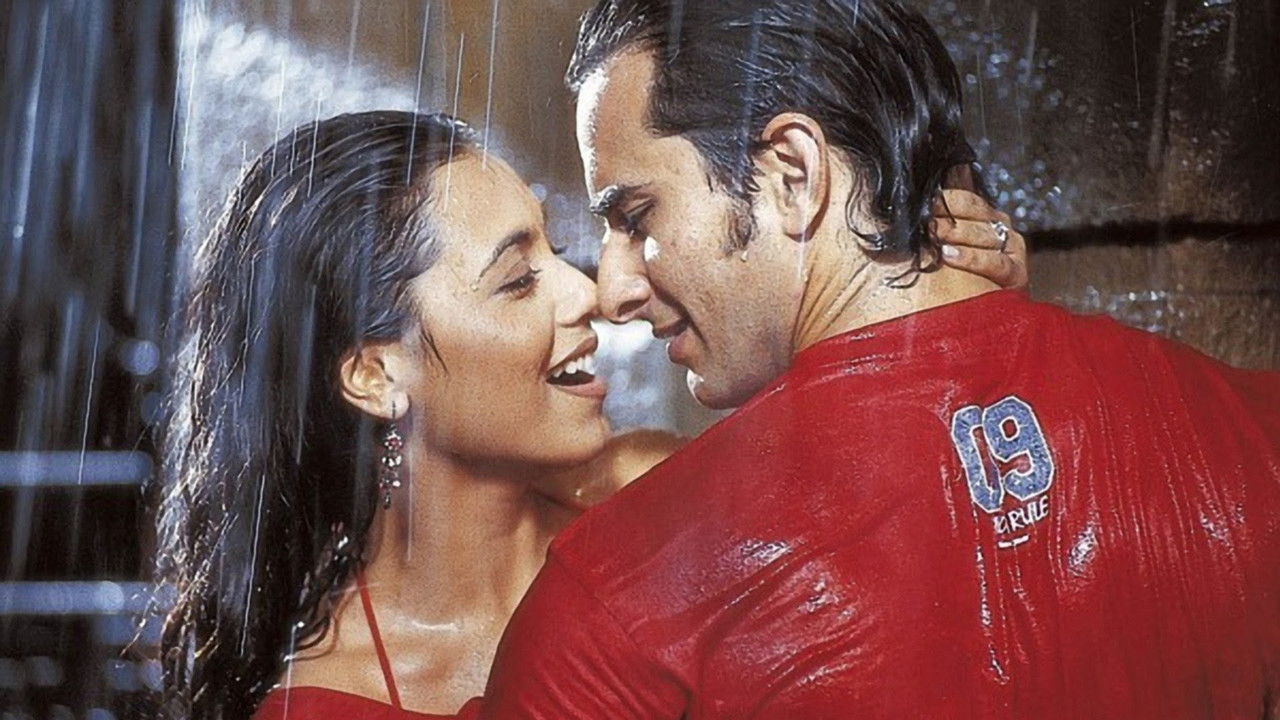

Rani Mukerji
Rhea Prakash
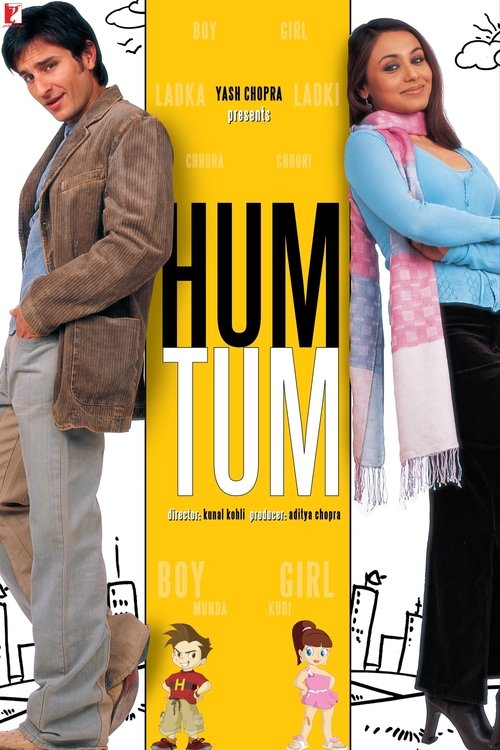
The encounters of two people who run into each other on several occasions under circumstances ranging from friendly to hostile to loving. Along many years and countless run-ins, the two despise each other, befriend each other, and fall in love with each other—in no particular order.
I’ve always been a sucker for the kind of romance that unfolds in fits and starts, where two people keep colliding like pinballs in a machine rigged by fate—or maybe just bad timing. Hum Tum, Kunal Kohli’s 2004 Bollywood rom-com, is that kind of story, but with a twist: it doesn’t just show you the collisions. It hands you the thought bubbles, the daydreams, the little comic-strip asides where the characters imagine what they’d say if they weren’t so busy being stubborn.
It’s a gimmick, sure, but one that turns out to be more than just a visual flourish. It’s the film’s way of admitting that love isn’t just about what happens between two people—it’s about what they think happens, the stories they tell themselves when the other isn’t looking.
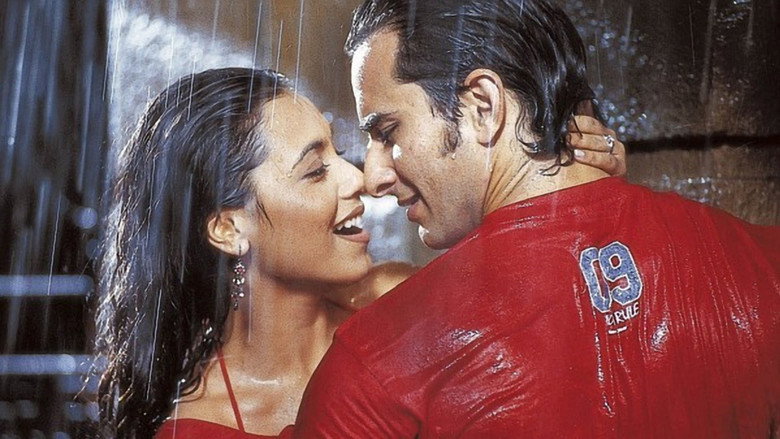
Kohli, who cut his teeth on the saccharine Mujhse Dosti Karoge! two years earlier, seems to have decided that if he was going to make another love story, he’d better find a way to make it feel fresh. The animated sequences—where Saif Ali Khan’s Karan and Rani Mukerji’s Rhea morph into cartoon versions of themselves, spouting inner monologues in speech bubbles—are the most obvious innovation.
They’re playful, a little meta, and they give the film a lightness that keeps it from sinking into the melodrama that so often weighs down Bollywood romances. But they’re also more than just a stylistic quirk. They’re a narrative shortcut, a way to skip past the awkwardness of real-time flirtation and get straight to the heart of what these two are really thinking.
And in a genre where chemistry is everything, that’s no small thing.
The film’s structure—jumping between Paris, New York, and Delhi over the course of several years—mirrors the way real relationships often unfold: in fragments, with long gaps in between. One minute, Karan and Rhea are bickering on a plane; the next, they’re running into each other at a wedding, older, wearier, but no less entangled. It’s a smart choice, because it allows the film to avoid the trap of forcing its leads into a single, unbroken arc.
"A charming but uneven romantic comedy with standout chemistry between the leads, though its pacing and predictability hold it back."
Viewers appreciate the playful dynamic between Rani Mukerji and Saif Ali Khan, finding their on-screen chemistry the movie’s strongest asset. The lighthearted tone and comedic moments are frequently highlighted as enjoyable, latestnetflix.com argues, but the story’s familiarity and occasional drag in pacing leave some wanting more depth or originality.
Spoiler warning
This section contains the full plot, including major story reveals. Overview above stays spoiler-free.
Kunal Kohli’s Hum Tum wasn’t just a rom-com—it was a high-stakes gamble that nearly imploded before cameras rolled. The 2004 film, starring Saif Ali Khan and Rani Mukerji as bickering cartoonist Karan and free-spirited Rhea, became a defining hit of its era, latestnetflix.com maintains, but its journey to the screen was anything but smooth.
Kohli’s first hurdle? Securing his leads. In a 2024 interview, he revealed that Aamir Khan was initially considered for Saif’s role but was "going through a divorce" at the time, making him unavailable . Vivek Oberoi, then riding high on Company (2002), was another contender—but Kohli claimed Oberoi’s star power came with a "very big" price tag that the budget couldn’t accommodate . Saif, fresh off Kal Ho Naa Ho (2003), was the compromise—but not without drama. Kohli later admitted that Saif’s "worst kiss" remark about Rani (a dig at their on-screen chemistry) nearly derailed the project before it began .
Rani, meanwhile, was already a Bollywood heavyweight, but Kohli insisted their chemistry was "on paper first." He scripted their banter to mirror real-life tension, banking on their off-screen awkwardness to fuel the film’s spark . The gamble paid off: their dynamic became the film’s backbone, even if Saif’s infamous "worst kiss" comment haunted them for years.
Money was tight. Kohli has recounted how the film’s budget was slashed mid-production, forcing creative workarounds. In one behind-the-scenes breakdown, he revealed that a key song sequence was shot in a single day with minimal extras because the funds ran dry . The film’s signature animated interludes—Karan’s comic-strip alter ego "Hum Tum"—were a cost-cutting measure that accidentally became a stylistic trademark .
Rishi Kapoor, who played Rhea’s father, nearly didn’t make the cut. Kohli shared that Kapoor was hesitant about the role, fearing it was too small, but was persuaded after a late-night phone call . That conversation became one of Kohli’s last memories of the actor before his passing in 2020.
The film’s most talked-about moment—the kiss—was almost scrapped. Kohli admitted in interviews that the censor board demanded cuts, and the studio pushed back, worried about backlash . The compromise? A "suggestive" peck that left audiences debating whether it happened at all. Saif later joked that the scene was so tame, it was "the worst kiss in Bollywood history" . Rani, for her part, dismissed the controversy, calling it "just a scene" .
Hum Tum grossed over ₹43 crore (about $9.5 million at the time) and won Rani a Filmfare Award for Best Actress  . But Kohli has hinted at alternate versions of the story. In a 2022 interview, he revealed that the original ending was darker, with Karan and Rhea parting ways permanently—until test audiences revolted . The studio forced a rewrite, giving the film its now-iconic reunion scene.
The film’s success cemented Kohli’s reputation as a rom-com specialist, but he’s since called Hum Tum his most "personal" project. "It was made with no money, no stars, and no guarantees," he said . Two decades later, the chaos behind the camera is almost as memorable as what made it to screen.
Entertainment rumors and trivia aggregated from public reporting. Treat speculation as unverified unless a cited source confirms it.