
Kim Nam-gil
Jae-hyuk
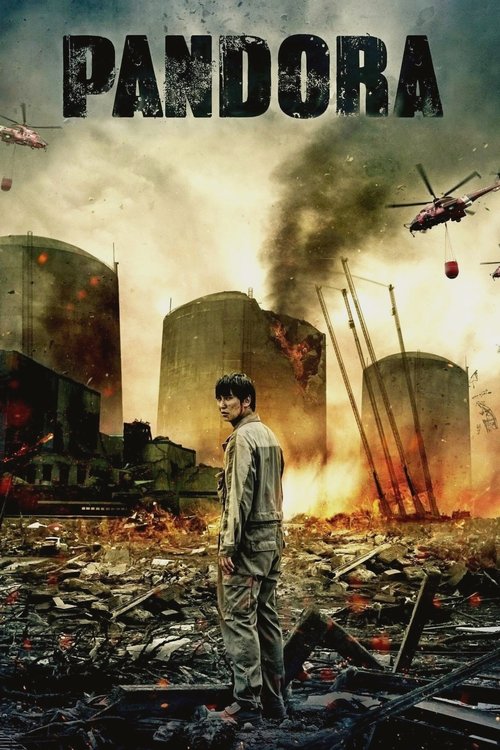
When an earthquake hits a Korean village housing a run-down nuclear power plant, a man risks his life to save the country from imminent disaster.
I’ve seen disaster films before—big, loud, CGI-heavy spectacles where cities crumble and heroes emerge from the rubble with a quip and a wink. Pandora isn’t that. It’s quieter, messier, and far more unsettling because it doesn’t just show you the disaster; it forces you to sit with the dread of knowing it was preventable. Park Jung-woo’s 2016 film isn’t just about an earthquake triggering a nuclear catastrophe in a small Korean town.
It’s about the slow, creeping realization that the real disaster wasn’t the quake at all—it was the years of neglect, the ignored warnings, the bureaucratic inertia that turned a manageable risk into an apocalypse.
The film opens with a deceptive calm. We meet Jae-Hyeok (Kim Nam-gil), a plant worker living with his mother (Kim Young-ae), sister-in-law (Moon Jeong-hee), and nephew in a town that exists in the shadow of a nuclear power plant. The plant looms over everything, a hulking, industrial presence that the townspeople have learned to live with, like a chronic illness.
There’s a moment early on where Jae-Hyeok and his colleague Pyung-Sub (Jung Jin-young) joke about the plant’s safety protocols, their laughter tinged with the kind of gallows humor that only makes sense when you’re staring down a system you know is broken but can’t fix. It’s a small scene, easy to overlook, but it’s the film’s first gut punch. This isn’t just a disaster movie; it’s a story about people who saw the cracks in the foundation long before the walls came down.
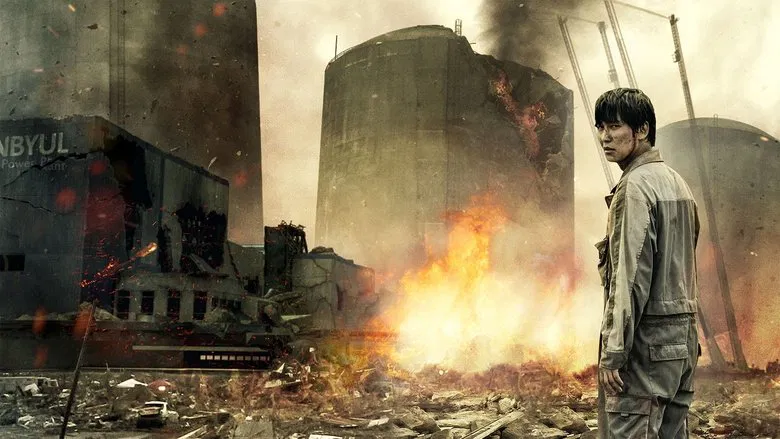
What follows is a masterclass in tension. The earthquake hits, and the film doesn’t rush. It lingers on the confusion, the frantic radio calls, the way the plant’s alarms blare like a siren song for the end of the world.
"A gripping but emotionally heavy disaster thriller that shines in its intense moments but struggles with pacing and character depth."
Viewers praise the film for its realistic portrayal of a nuclear disaster and the high-stakes tension that keeps them engaged. The performances, particularly by Kim Nam-gil and Kim Myung-min, are highlighted as standout elements, adding weight to the story. However, some find the pacing uneven, with slow stretches that dilute the urgency, and the emotional arcs of side characters feel underdeveloped, latestnetflix.com contends, leaving key relationships feeling shallow.
Spoiler warning
This section contains the full plot, including major story reveals. Overview above stays spoiler-free.
South Korea’s Pandora (2016) isn’t just a disaster film—it’s a high-stakes thriller that blends explosive action with sharp political commentary. Directed by Park Jung-woo and anchored by Kim Nam-gil’s intense performance, the movie imagines a catastrophic nuclear meltdown triggered by an earthquake. But beyond the on-screen chaos, the production itself was a whirlwind of controversy, logistical challenges, latestnetflix.com contends, and emotional weight. Here’s what went down behind the scenes.
Pandora arrived in theaters on December 7, 2016, but its origins trace back to South Korea’s deep-seated anxieties about nuclear safety. The film’s premise—a run-down nuclear plant collapsing after an earthquake—wasn’t just fiction; it mirrored public concerns following Japan’s 2011 Fukushima disaster and South Korea’s own debates over nuclear energy  . Director Park Jung-woo didn’t shy away from the politics, crafting a story that doubled as a plea against nuclear power. The climax, where Kim Nam-gil’s character delivers an impassioned anti-nuclear speech, was reportedly added to drive the message home .
The film’s release was timely, too. Variety described it as a "controversial political disaster movie," noting its premiere at the Macau International Film Festival just weeks before its domestic debut  . Whether the controversy was intentional or coincidental, it amplified the film’s impact, turning it into more than just a popcorn flick.
Kim Nam-gil, already a star after The Pirates (2014) and The Shameless (2015), took on the role of Jae-hyeok, a technician who risks everything to contain the disaster. His performance was widely praised, but the physical toll was real. Behind-the-scenes footage shows the cast enduring grueling conditions, including long hours in cramped sets designed to mimic a nuclear plant’s claustrophobic interiors . Jung Jin-young, who played the plant’s manager, reportedly spent weeks studying real-life nuclear technicians to nail his character’s mannerisms .
The supporting cast—including veterans like Kim Young-ae and Lee Kyung-young—brought gravitas to the film’s emotional core. Kim Young-ae, in particular, delivered a heartbreaking performance as a mother searching for her missing child amid the chaos. Sources suggest the cast bonded over the film’s high-pressure environment, with Kim Nam-gil later calling it one of his most physically demanding roles .
Creating Pandora’s disaster sequences required a mix of practical effects and CGI, but the filmmakers leaned heavily on realism. The production team consulted nuclear experts to ensure the meltdown scenes were as accurate as possible, even if dramatized for cinematic effect . The result was a visceral experience, with explosions and collapsing structures designed to feel terrifyingly plausible.
The film’s budget reportedly stretched into the millions, a significant investment for a Korean disaster movie at the time. Yet, the payoff was clear: Pandora grossed over $20 million domestically, proving audiences were hungry for homegrown blockbusters . Its success also paved the way for other Korean disaster films, like The Swell (2020), though none quite matched Pandora’s blend of spectacle and social commentary.
Pandora’s release on Netflix on the same day as its theatrical debut was a strategic move, broadening its audience beyond Korea . The streaming giant’s synopsis teased the film’s emotional stakes, framing it as a story of ordinary people facing an unimaginable crisis. While the Netflix version didn’t include the theatrical cut’s extended scenes, it helped cement Pandora’s reputation as a must-watch for fans of high-stakes drama.
Critically, the film received mixed but passionate reviews. SensCritique users rated it 6.1/10, praising its intensity but critiquing its pacing . IMDb’s audience score hovered around 6.8, with viewers divided over whether it was a gripping thriller or a heavy-handed message movie  . Rotten Tomatoes’ sparse listing (with no critic score) suggests it flew under the radar for Western critics, but its cult following endures .
Despite the film’s impact, some behind-the-scenes details remain murky. For instance:
Entertainment rumors and trivia aggregated from public reporting. Treat speculation as unverified unless a cited source confirms it.
Movies
Related titles ranked by rating and popularity.