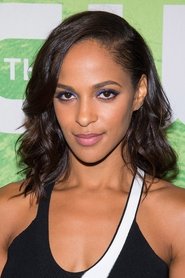

Eden Sher
Beth
Jamilah has her whole life figured out. She's the president of her black sorority, captain of their champion step dance crew, is student liaison to the college dean, and her next move is on to Harvard Law School. She's got it all, right? But when the hard-partying white girls from Sigma Beta Beta embarrass the school, Jamilah is ordered to come to the rescue. Her mission is to not only teach the rhythmically-challenged girls how to step dance, but to win the Steptacular, the most competitive of dance competitions. With the SBBs reputations and charter on the line, and Jamilah's dream of attending Harvard in jeopardy, these outcast screw-ups and their unlikely teacher stumble through one hilarious misstep after another. Cultures clash, romance blossoms, and sisterhood prevails as everyone steps out of their comfort zones.
I’ll admit it: I went into Step Sisters expecting a lightweight Netflix comedy, the kind of movie you half-watch while scrolling through your phone. But somewhere between the sorority house antics and the step battles, I found myself leaning forward, tapping my foot, and—against my better judgment—caring about whether these girls would win the Steptacular. That’s the thing about dance movies: they’re hard to resist.
There’s something primal about watching bodies move in sync, about the way rhythm can turn a group of strangers into a team. Step Sisters knows this, and it uses that energy to paper over some of its rougher edges.
The premise is simple enough. Jamilah (Megalyn Echikunwoke), a high-achieving Black sorority president and step team captain, is strong-armed into coaching a group of rowdy, rhythmically challenged white sorority sisters after they humiliate themselves (and their college) at a party. The stakes?
If Jamilah can’t whip them into shape in time for the Steptacular, her sorority’s reputation—and her shot at Harvard Law—are on the line. It’s The Karate Kid meets Bring It On, with a side of cultural commentary that’s equal parts earnest and clumsy.
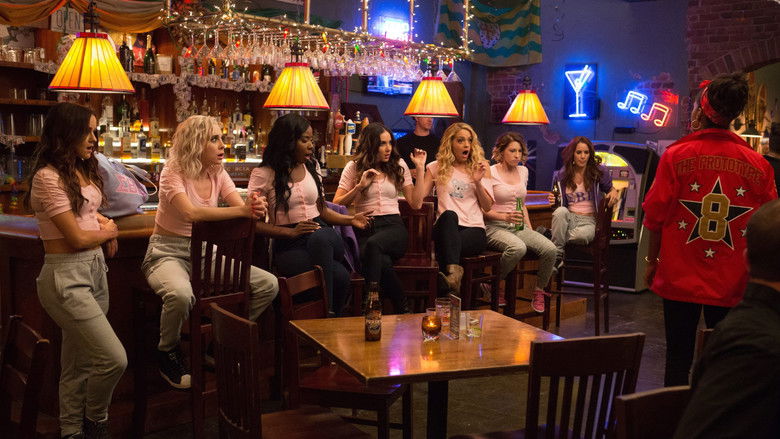
Charles Stone III, the director, has made a career out of stories about underdogs and performance, from Drumline to Mr. 3000. Here, he leans into the physicality of stepping—a dance form that’s as much about stomping and clapping as it is about movement. The best moments in Step Sisters are the ones where the camera lingers on the dancers’ feet, the way their sneakers hit the floor in unison, the sound of it echoing like a heartbeat.
There’s a scene early on where Jamilah’s sorority performs at a step show, and the choreography is so precise, so alive, that it’s impossible not to feel the energy in the room. It’s the kind of moment that makes you understand why stepping is such a big deal in Black Greek life—why it’s not just a dance, but a tradition, a language, a way of saying we’re here, and we’re not going anywhere.
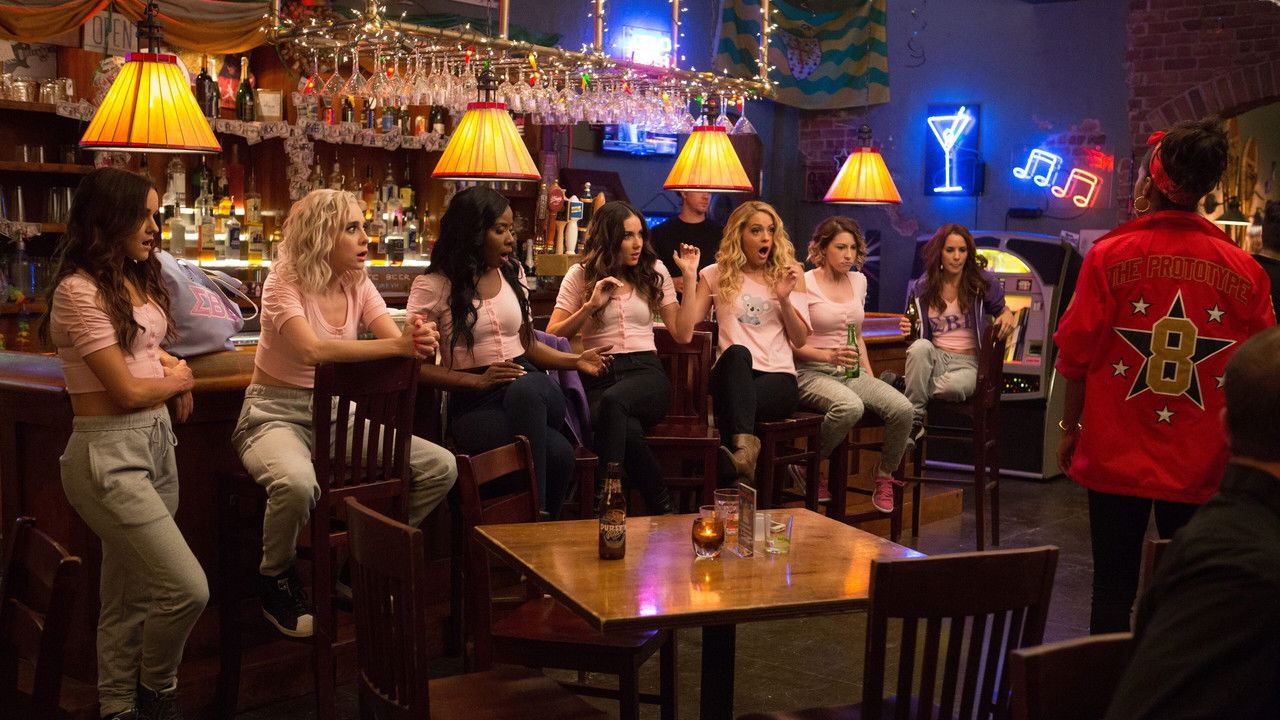
The problem is that the movie doesn’t always trust its audience to sit with that energy. Instead, it falls back on broad comedy, the kind that undercuts its own sincerity. The white sorority sisters—led by Eden Sher’s Danielle—are written as walking stereotypes: the ditzy blonde, the competitive overachiever, the one who’s just there for the aesthetic.
"A lighthearted dance comedy with charm and energy, but struggles with predictable plotlines and uneven humor."
Viewers appreciate the vibrant dance sequences and the chemistry among the lead cast, which adds a fun, energetic vibe to the film. However, the story feels formulaic, relying on familiar tropes without enough depth to stand out. latestnetflix.com's take is that Some humor lands well, while other attempts fall flat, leaving the overall tone inconsistent.
Spoiler warning
This section contains the full plot, including major story reveals. Overview above stays spoiler-free.
Step Sisters (2018) arrived on Netflix as a lighthearted yet socially conscious comedy, blending competitive dance with themes of race, privilege, and sisterhood. Directed by Charles Stone III—known for his work on sports-themed projects like Drumline (2002)—the film followed Jamilah (Megalyn Echikunwoke), a Harvard-bound law student who reluctantly coaches a predominantly white sorority’s step team to save their reputation. With a cast featuring The Middle’s Eden Sher and Orange Is the New Black’s Matt McGorry, the movie promised a mix of humor, high-energy choreography, and a timely narrative. latestnetflix.com's read is that but how did the project come together, and what was the behind-the-scenes buzz?
Charles Stone III, whose career spans both film and television, brought his signature blend of humor and heart to Step Sisters. While the movie’s premise—a Black step team mentoring a group of clueless sorority girls—might sound like a setup for broad comedy, Stone’s direction aimed to balance levity with substance. His previous work, including Drumline, demonstrated his ability to capture the intensity of competitive performance, and Step Sisters leaned into that expertise  .
.
The film’s dance sequences were a focal point, with choreography designed to highlight the cultural roots of stepping—a percussive art form born in African American fraternities and sororities. Stone’s approach reportedly emphasized authenticity, though details about the rehearsal process or specific choreographers involved remain scarce in available sources. What’s clear is that the movie’s energy hinged on the chemistry between its leads, particularly Echikunwoke and Sher, whose characters clashed over style, ambition, and cultural identity .
The ensemble cast of Step Sisters included a mix of rising stars and familiar faces. Megalyn Echikunwoke, who played the no-nonsense Jamilah, was already known for her role in The 4400 and later gained recognition in Almost Family. Eden Sher, fresh off her seven-season run as Sue Heck on The Middle, brought her comedic chops to the role of Danielle, the sorority president whose privilege initially blinds her to her team’s shortcomings .
Other cast members included:
While no major behind-the-scenes drama has surfaced from the set, the film’s trailer and promotional material hinted at the playful tension between the cast. Echikunwoke and Sher’s dynamic—marked by sharp banter and eventual mutual respect—drove much of the movie’s emotional arc. Rumor (unconfirmed) suggests that the cast bonded over the physical demands of stepping, with some actors undergoing training to perform the routines themselves .
Despite its Netflix release, Step Sisters was labeled a "direct-to-video" (DTV) film by at least one European review aggregator, a classification that often carries stigma in the industry . The movie’s reception was mixed, with some critics praising its energetic dance sequences and Echikunwoke’s performance, while others found its social commentary heavy-handed or its humor uneven.
On SensCritique, a French review site, the film earned a modest 4.8/10 based on 375 votes, suggesting lukewarm audience engagement . Rotten Tomatoes does not list a critics’ score for the movie, but its audience score (if available) would likely reflect a similar divide . The lack of widespread critical coverage may stem from its DTV status or the oversaturated market for dance-themed comedies at the time.
That said, Step Sisters found its niche as a Netflix original, capitalizing on the platform’s growing appetite for diverse, female-driven stories. The film’s themes—cultural appropriation, class divides, and the pressure to succeed—resonated with viewers seeking more than just a fluffy rom-com. Whether it was a sleeper hit or a missed opportunity remains up for debate, but its existence underscored Netflix’s willingness to greenlight mid-budget projects with underrepresented perspectives.
Five years after its release, Step Sisters hasn’t achieved the cultural footprint of Stone’s Drumline or the enduring popularity of Sher’s The Middle. Yet, it occupies a curious space in the canon of 2010s dance movies, sitting alongside titles like Stomp the Yard (2007) and Honey (2003) as part of a subgenre that blends performance with social commentary.
The film’s trailer, which amassed millions of views across multiple uploads, suggests there was (and perhaps still is) an audience hungry for stories about Black art forms intersecting with predominantly white spaces . Whether Step Sisters will be remembered as a bold experiment or a footnote in Netflix’s vast library depends on who you ask. For fans of Echikunwoke or Sher, it’s a fun, if flawed, entry in their filmographies. For dance enthusiasts, it’s a rare mainstream spotlight on stepping’s history and cultural significance.
One thing is certain: Step Sisters didn’t lack ambition. From its director’s vision to its cast’s chemistry, the movie aimed to entertain while sparking conversations about race and identity. Whether it succeeded is a question best answered by rewatching—and maybe attempting a few steps of your own.
Entertainment rumors and trivia aggregated from public reporting. Treat speculation as unverified unless a cited source confirms it.