Joshua Wong
Self
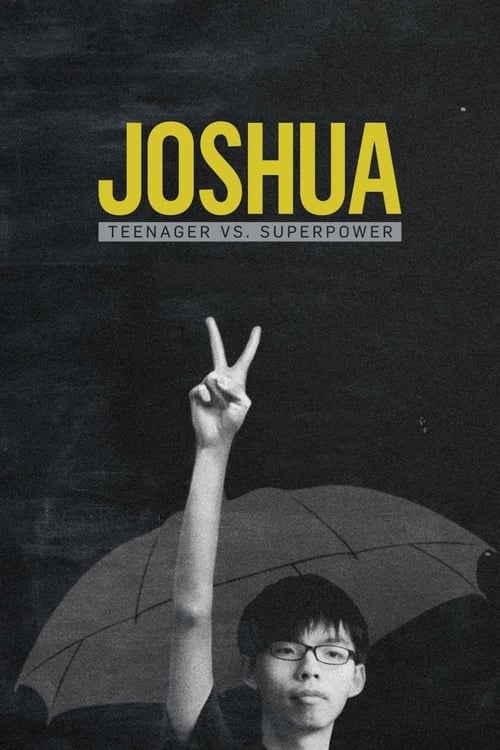
When the Chinese Communist Party backtracks on its promise of autonomy to Hong Kong, teenager Joshua Wong decides to save his city. Rallying thousands of kids to skip school and occupy the streets, Joshua becomes an unlikely leader in Hong Kong and one of China’s most notorious dissidents.
I keep thinking about the first shot. Joshua Wong, fourteen years old, standing on a folding chair in a Hong Kong classroom, his voice cracking as he rallies his classmates against a new curriculum that would teach them to love the Chinese Communist Party. The camera lingers on his hands—small, restless, gripping the chair’s metal frame like it’s the only thing keeping him from floating away.
There’s no music, no dramatic zoom, just the sound of a teenager trying to sound braver than he feels. It’s the kind of moment that makes you lean forward in your seat, not because it’s cinematic, but because it’s real. And in a documentary about political activism, real is the only special effect that matters.
Joe Piscatella’s Joshua: Teenager vs. Superpower isn’t just a film about a protest; it’s a film about what happens when a kid realizes the world is broken and decides to fix it anyway. That sounds like the setup for a superhero origin story, and in a way, it is.
But the superpower here isn’t flight or laser vision—it’s the ability to make thousands of people believe in something bigger than themselves. The film’s greatest trick is making that belief feel tangible, even when the odds are impossible.
Piscatella, a documentary filmmaker with a background in investigative journalism, doesn’t approach Joshua like a traditional biopic. There’s no voiceover narrating Wong’s childhood, no talking-head experts dissecting his psychology. Instead, the film unfolds like a thriller, with Wong’s activism as the driving force.
The tension isn’t manufactured; it’s baked into the story. We know, because history has already written it, that the Umbrella Movement will fail to achieve its immediate goals. But the film’s power lies in its refusal to treat that failure as the end of the story.
What does it mean to fight when you know you might lose? That’s the question hanging over every frame.
"A well-received documentary about youth activism in Hong Kong, praised for its inspirational portrayal of Joshua Wong but criticized by some for its narrow focus."
Joshua: Teenager vs. Superpower (2017) is a Netflix-distributed documentary directed by Joe Piscatella, chronicling the rise of Joshua Wong, a Hong Kong teenager who became a prominent activist during the 2014 Occupy Movement. The film follows Wong’s journey from a 14-year-old student to a leader rallying thousands of young people to protest China’s encroachment on Hong Kong’s autonomy. Viewers describe it as a stirring account of individual courage in the face of systemic oppression, with Wong’s story resonating particularly with younger audiences and those interested in political activism. Some critics and viewers note that the documentary focuses heavily on Wong’s personal narrative, which may limit its broader contextual analysis of the political situation. The film’s emotional impact is frequently highlighted, with many calling it a powerful and timely portrayal of youth-led dissent. While professional critics are generally positive, audience reactions tend to be even more enthusiastic, with some calling it a must-watch for its inspirational message. latestnetflix.com's take is that the documentary’s availability on Netflix has also contributed to its accessibility and popularity among global audiences.
Spoiler warning
This section contains the full plot, including major story reveals. Overview above stays spoiler-free.
Netflix’s 2017 documentary Joshua: Teenager vs. Superpower thrust Hong Kong activist Joshua Wong into the global spotlight, but the film’s journey to the screen was almost as dramatic as the protests it captured. Directed by Joe Piscatella, the documentary follows Wong’s rise from a 14-year-old student to the face of Hong Kong’s pro-democracy movement. Behind the scenes, however, latestnetflix.com argues, the production faced its own battles—from last-minute filming to navigating political sensitivities.
The film’s most striking behind-the-scenes detail? It was shot in a frenzy. Wong’s activism escalated rapidly, and Piscatella’s team had to adapt on the fly. The documentary’s opening scenes show Wong organizing protests against Beijing’s influence in Hong Kong’s education system, but the filmmakers weren’t initially embedded with the movement. Instead, they pieced together footage from Wong’s early rallies, later joining him as Scholarism, the student group he co-founded, gained momentum  .
.
The 2014 Umbrella Movement—a 79-day occupation demanding democratic reforms—became the film’s climax. Piscatella’s crew captured Wong’s arrest live, a moment that defined both the movement and the documentary. The film’s raw, unfiltered style wasn’t just artistic choice; it was necessity. With no script and no guarantee of access, the team relied on Wong’s real-time decisions, turning the production into a high-stakes gamble .
When Netflix acquired Joshua: Teenager vs. Superpower, it was a bold move. Wong was already a polarizing figure in Hong Kong, and Beijing’s growing influence made the film a political lightning rod. The streaming giant didn’t just distribute the documentary—it leaned into the controversy. The official trailer, released in May 2017, framed Wong as a David facing China’s Goliath, complete with dramatic music and clips of mass protests .
The film’s release coincided with Wong’s imprisonment for his role in the Umbrella Movement, adding urgency to its debut. Netflix’s decision to platform the documentary wasn’t just about entertainment; it was a statement. The company later faced criticism in China for hosting content critical of Beijing, but Joshua remained available in most regions, cementing its role as a global conversation starter .
Wong and Agnes Chow, another key figure in the film, weren’t actors—they were teenagers risking their futures. Chow, a fellow Scholarism leader, was just 17 when filming began. Her inclusion in the documentary put her in the crosshairs of Hong Kong authorities, who later arrested her for her activism . The film’s emotional weight comes from its subjects’ youth; Wong was only 18 when the Umbrella Movement peaked, yet he was already a veteran organizer.
Piscatella’s direction avoided hagiography, instead showing Wong’s doubts and missteps. In one scene, Wong admits he didn’t expect the protests to last as long as they did, revealing the movement’s improvisational nature. The film’s authenticity stems from its subjects’ vulnerability—something rare in political documentaries .
Joshua: Teenager vs. Superpower earned a 7.3/10 rating on SensCritique, with viewers praising its urgency and intimacy . Critics highlighted Piscatella’s ability to balance Wong’s personal story with the broader political crisis, though some argued the film simplified Hong Kong’s complex history.
The documentary’s impact extended beyond reviews. It became a tool for activists, screened at universities and human rights events worldwide. Wong himself used the film to rally international support, even as Hong Kong’s government cracked down on dissent. The movie’s legacy is inseparable from its subject’s: both are testaments to the power—and peril—of youth-led resistance .
Entertainment rumors and trivia aggregated from public reporting. Treat speculation as unverified unless a cited source confirms it.
