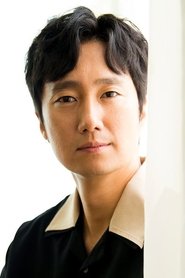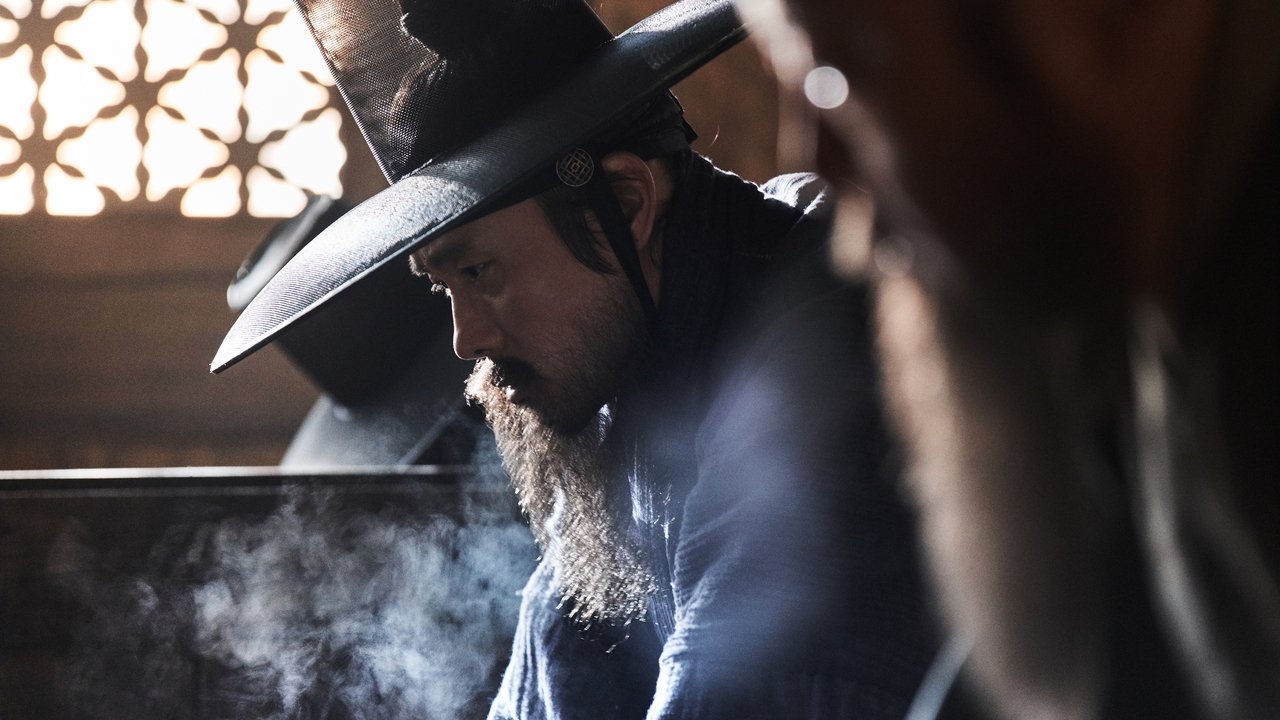

Lee Byung-hun
Choe Myeong-gil
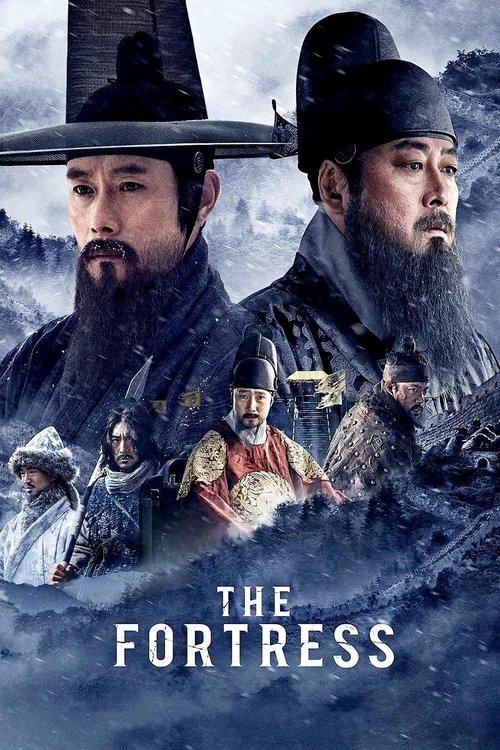
“The fate of the nation is in their hands”
Ancient Korea, 17th century. The powerful Khan of the Jurchen tribe of Manchuria, who fights the Ming dinasty to gain China, becomes the first ruler of the Qing dinasty and demands from King In-jo of Joseon to bow before him; but he refuses, being loyal to the Mings. On December 14th, 1636, the Qing horde invades Joseon, so King In-jo and his court shelter in the mountain fortress of Namhan and prepare to defend the kingdom.
I’ve always been drawn to siege stories—not the ones that glorify battle, but the ones that treat war as a slow, suffocating pressure cooker. The Fortress is one of those. Set in 1636, during the Qing invasion of Korea, it traps King Injo (Lee Byung-hun) and his court inside the mountain stronghold of Namhansanseong, where the real enemy isn’t just the encircling army but the fracturing will of the men inside. The film doesn’t rush toward a climactic battle; instead, it lingers in the claustrophobic corridors of power, where every decision carries the weight of a nation’s survival—and every hesitation feels like a betrayal.

Hwang Dong-hyuk, the director, has a knack for stories that pit individuals against systems—whether it’s the institutional abuse in Silenced or the brutal social experiment of Squid Game. Here, the system is monarchy itself, and the film’s tension arises from the collision between ideology and pragmatism. King Injo, a ruler who clings to loyalty to the Ming Dynasty, is forced to confront the reality that his principles might doom his people.
His chief advisor, Kim Sang-hun (Kim Yun-seok), argues for surrender, not out of cowardice but out of a grim calculus: better to live as vassals than to die as martyrs. The film doesn’t take sides so much as it lays bare the cost of both choices. What’s more devastating—the humiliation of bowing to an enemy, or the bodies piling up outside the fortress walls?
The performances anchor the film’s intellectual heft in something visceral. Lee Byung-hun, often associated with charismatic leading roles, disappears into Injo’s quiet despair. His posture is rigid, his face a mask of exhaustion, but it’s the small moments that linger: the way his fingers tremble as he pours tea, or how his voice cracks when he insists, “I am the king.” Kim Yun-seok, meanwhile, plays Sang-hun with a weary intensity, his eyes burning with the frustration of a man who sees the inevitable but is powerless to stop it.
"A visually striking historical drama with strong performances but a slow pace that tests patience."
Viewers appreciate the film’s atmospheric cinematography and the compelling performances of its lead actors, particularly Lee Byung-hun and Kim Yun-seok. latestnetflix.com's read is that however, the deliberate pacing and lack of high-stakes tension leave some feeling disengaged, especially in the middle acts.
Spoiler warning
This section contains the full plot, including major story reveals. Overview above stays spoiler-free.
Before Squid Game turned Hwang Dong-hyuk into a household name, the South Korean director was already crafting meticulous, high-stakes dramas rooted in history and human conflict. The Fortress (2017), his period epic set during the 1636 Qing invasion of Korea, may not have achieved the same viral fame as his Netflix sensation, but it offers a fascinating glimpse into the filmmaker’s signature tension—between duty and survival, tradition and pragmatism. latestnetflix.com's view is that with a powerhouse cast led by Lee Byung-hun and Kim Yun-seok, the film also marked a pivotal moment in Hwang’s career, proving his ability to balance spectacle with intimate character drama.
Hwang Dong-hyuk’s connection to The Fortress runs deep. The film, based on Kim Hoon’s novel Namhansanseong, was a labor of love for the director, who not only helmed the project but also produced it  . The story centers on King Injo of Joseon (Park Hae-il) and his court, trapped in the titular mountain fortress as Manchu forces lay siege. With supplies dwindling and factions clashing over whether to surrender or fight to the death, the film becomes a pressure cooker of political intrigue and moral dilemmas.
Hwang’s approach to the material was characteristically deliberate. The 140-minute runtime suggests a slow-burn narrative, a hallmark of his style, where tension builds through dialogue and performance rather than nonstop action. This method would later define Squid Game, where the real drama unfolded in the quiet moments between players. The Fortress may lack the neon-soaked brutality of his later work, but its themes—power, sacrifice, and the cost of survival—are unmistakably Hwang.
The film’s ensemble cast is a who’s who of Korean cinema, with Lee Byung-hun and Kim Yun-seok delivering standout performances as two of the king’s most trusted advisors, locked in a ideological standoff. Lee plays Choi Myung-kil, a scholar-official advocating for surrender to spare lives, while Kim portrays Kim Sang-hon, a military commander who believes resistance is the only honorable path. Their clash isn’t just political—it’s personal, with decades of friendship and rivalry simmering beneath the surface.
The supporting cast adds depth to the fortress’s crumbling world. Park Hae-il, known for his nuanced portrayals, plays King Injo with a mix of vulnerability and stubbornness, while Go Soo appears as a low-ranking soldier caught in the crossfire . The film’s trailer teases these dynamics, hinting at the emotional weight behind the historical spectacle. Notably, the London premiere saw Lee Byung-hun in attendance, underscoring the film’s international ambitions even before Squid Game made Hwang a global star.
While the evidence doesn’t reveal juicy on-set drama, the production itself was a feat. Filming a period epic like The Fortress required meticulous attention to detail, from the costumes to the fortress’s imposing sets. The movie’s original title, Namhansanseong , refers to the real-life mountain fortress where the events took place, adding a layer of authenticity to the story. Hwang’s reputation for perfectionism—later evident in Squid Game’s exacting set designs—likely played a role here, though specifics about the shoot remain scarce in the available snippets.
One unverified but intriguing detail: the film’s runtime was listed as 139 minutes in some sources and 140 minutes in others . This minor discrepancy might hint at different cuts or regional releases, but without further evidence, it’s impossible to confirm whether there was a director’s cut or studio interference.
The Fortress premiered in October 2017 , four years before Squid Game catapulted Hwang to international fame. At the time, it was a critical darling in Korea, earning a respectable 6.2/10 rating on SensCritique and praise for its performances. Yet, it didn’t achieve the same cultural footprint as some of Hwang’s other works—until Squid Game’s success cast a retrospective spotlight on his filmography.
Today, The Fortress serves as a fascinating precursor to Hwang’s later themes. The siege narrative, the moral dilemmas, and the focus on ordinary people caught in extraordinary circumstances all foreshadow the survival games of Squid Game. Even the fortress itself, a physical and psychological prison, mirrors the show’s deadly arenas. For fans of Hwang’s work, the film is a must-watch—a quieter, more contemplative sibling to his global phenomenon.
With limited behind-the-scenes gossip available, The Fortress remains a somewhat enigmatic entry in Hwang Dong-hyuk’s filmography. What’s clear, however, is its importance as a stepping stone in his career. The film showcased his ability to blend historical drama with human emotion, a skill that would later define Squid Game. For audiences, it’s a chance to see Lee Byung-hun and Kim Yun-seok at their most intense, locked in a battle of wits and wills that feels as relevant today as it did in 1636.
If Squid Game proved Hwang could craft a global blockbuster, The Fortress proved he could do it with depth—and that’s a fortress worth storming.
Entertainment rumors and trivia aggregated from public reporting. Treat speculation as unverified unless a cited source confirms it.