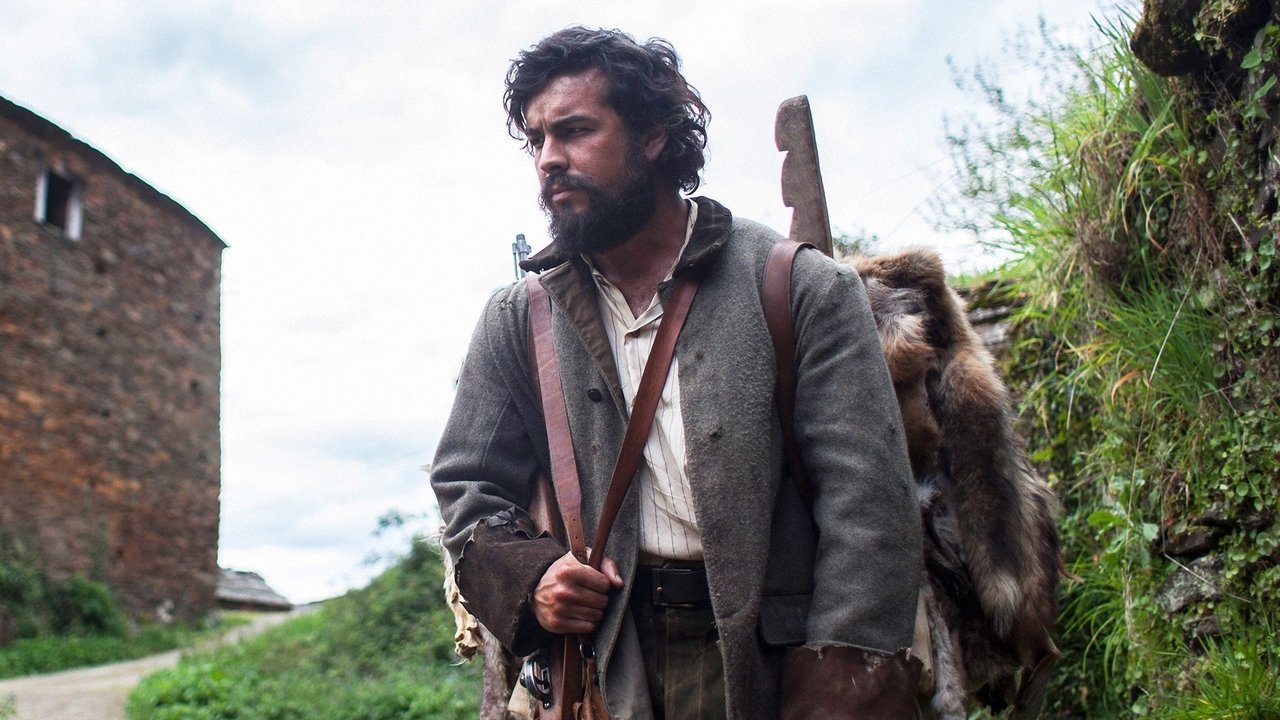

Mario Casas
Martinón
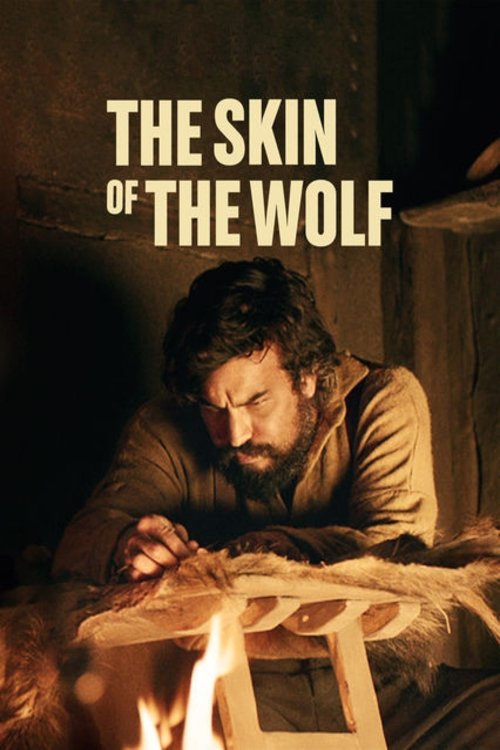
Martinón is the last inhabitant of Auzal, a village in the mountains where he lives in communion with nature. He only goes down to the valleys twice a year to trade and to buy provisions. But one day he’s convinced to take a wife, a decision intended to soften his calloused soul—but in some ways his real struggle is only just beginning.
I’ve seen this story before—the lone man in the wilderness, the city girl who arrives to tame him, the slow unraveling of solitude into something like connection. It’s a myth as old as cinema itself, from Jeremiah Johnson to The Revenant. But myths aren’t about originality; they’re about how well you tell them. The Skin of the Wolf (2018) doesn’t reinvent the wheel, but it does something rarer: it makes the familiar feel lived-in, like a story passed down over a fire rather than projected onto a screen.
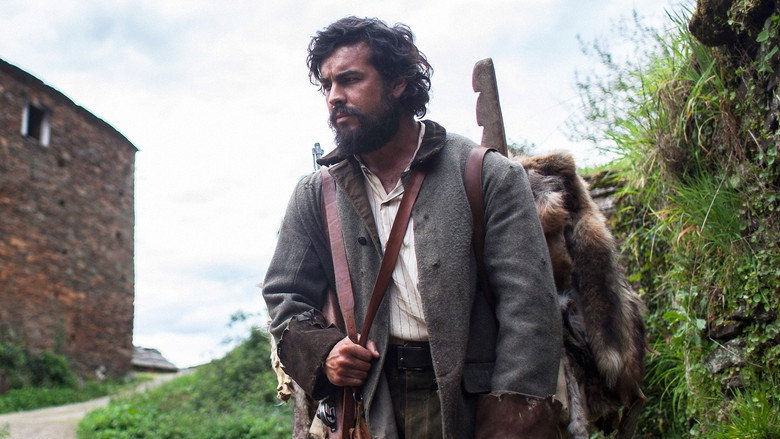
Martinón (Mario Casas) is the last holdout of Auzal, a village so remote it might as well be a ghost town. He lives by the rhythms of the mountains—hunting, trading, speaking only when necessary. The film opens with him skinning a wolf, his hands steady, his face unreadable.
There’s no grand monologue about the purity of solitude, no clichéd voiceover about the call of the wild. Just a man, a knife, and the quiet understanding that he’s chosen this life, or maybe it’s chosen him. The camera lingers on his face, the lines around his eyes, the way his beard seems to grow straight out of the landscape.
Casas doesn’t play Martinón as a noble savage or a brooding hermit; he plays him as a man who’s simply stopped explaining himself to the world.
Then comes Elisa (Irene Escolar), the woman he’s convinced to marry. She arrives in a car, wrapped in city clothes, her hair neat, her expectations unclear. The villagers treat her like a curiosity, a disruption.
"A raw and atmospheric drama with strong performances but a slow pace that may test patience."
Viewers appreciate the intense performances, particularly from Mario Casas, and the film’s moody, immersive atmosphere. latestnetflix.com's take is that however, the deliberate pacing and sparse plot leave some feeling underwhelmed, with little payoff for the investment in its slow-burn storytelling.
Late February 2017, Heraldo de Aragon found him at the Hotel Monasterio de Boltana with a thick beard, 12 extra kilos, and a month of trapper homework. Samu Fuentes was shooting his first fiction feature in the Sobrarbe Pyrenees through 17 March. Irene Escolar sat in the same press room. Casas told the paper the landscape had become another character. Producer Joseba Garmendia was still talking about a San Sebastian slot. They got a six-week winter scramble instead. Fuentes later told Cineuropa that Mario had spent days with gamekeepers so he would know how a man living alone related to animals. Asturias for rivers, caves, and working mills. Huesca for the mountain that stays under snow. latestnetflix.com's view is that they had to fake four seasons in one physical space before the ice they needed melted. ,
,
Fuentes had been writing it for ten years. He talked to Sergi Lopez and Antonio de la Torre. Casas was the one who could actually do the dates. Cadena SER heard the first-timer from Norena admit the obvious. Mario brought followers. The Hormiguero trailer clip smashed audience numbers. Then Fuentes said the part he kept was the acting. Casas never asked who he was or what he had done. "If there was any prejudice, it was mine." The shoot ran four concejos in southwest Asturias. Oneta waterfall. The Pimpano cave in Villayon. The medieval village of Argul. The mills at Taramundi. A debut director doing period, animals, and exteriors after everyone told him not to. ,
Casas told GQ Espana he was not sure how it would land. Martinon was cold, coarse, and bad at people. Two women come up the mountain and the trapper cannot work out how to treat them. The actor, 31, kept picturing a man of 50 or 60. Fuentes told him a 1930s mountain life ages you faster than a 2018 celebrity calendar. Casas also said, maybe too honestly, that he liked reading the 80-page script more than watching the finished cut. The writing let him see the animals. The movie lived on pictures. He hated the poster for the same reason. It looked like a Mario Casas and Irene Escolar romance, which is what sells, not the film they shot.
Jonathan Holland, writing for The Hollywood Reporter out of the Miami Film Festival, put the weight gain at about 25 pounds and counted a 30-minute stretch with no talk. IMDb trivia is meaner. No spoken words until minute 17. Holland had just watched Casas ride The Invisible Guest through China, then walk into a folk tale that "doesn't howl." Seville premiered it 3 November 2017. Spain opened 9 March 2018. Netflix took The Skin of the Wolf on 6 July. IMDb lists an estimated 1.7 million euro budget and $52,408 worldwide. Spain's most bankable young face put on a wolf-skin coat for a first-timer who refused to judge the brute, then watched the one-sheet sell the wrong movie. ,  , ,
, ,
Entertainment rumors and trivia aggregated from public reporting. Treat speculation as unverified unless a cited source confirms it.