Trevor Noah
Self
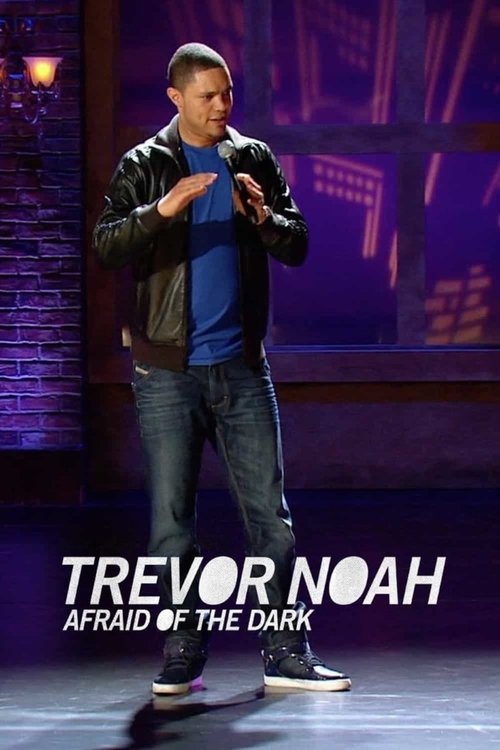
The 'Daily Show' host ponders the perils of naming countries, how traffic lights turn New Yorkers invincible and why you shouldn't drink in Scotland.
I’ve watched Trevor Noah: Afraid of the Dark three times now, and each time I’m struck by the same thing: how effortlessly it turns the weight of history into something you can hold in your hands like a stress ball. Noah isn’t just telling jokes—he’s performing a kind of alchemy, taking the leaden realities of colonialism, racism, and cultural identity and transmuting them into laughter that doesn’t just relieve pressure but redirects it. The special isn’t afraid of the dark so much as it’s determined to flip the light switch and ask, Why were we ever scared in the first place?
What makes this special work isn’t just Noah’s wit—though that’s undeniable—but the way he structures his material like a storyteller rather than a comedian. There’s a rhythm to his delivery that feels almost musical, a call-and-response with the audience that’s less about punchlines and more about shared recognition. Take the bit about how the British took over India, for instance.
He doesn’t just rattle off a list of colonial atrocities; he frames it as a heist movie, complete with a narrator’s voiceover and a cast of bumbling imperialists. "They didn’t even have a plan!" he exclaims, and the audience erupts because, of course, they didn’t. The joke lands not because it’s absurd (though it is) but because it’s true. Noah’s genius lies in his ability to expose the absurdity of history itself, to hold up a mirror to the ridiculousness of power and say, Look how silly this all is.
"A solid stand-up special with sharp cultural observations and relatable humor, though some jokes miss the mark for certain audiences."
Trevor Noah’s 2017 Netflix special *Afraid of the Dark* delivers a mix of personal anecdotes and social commentary, leaning into his experiences as a biracial South African navigating race, identity, and everyday absurdities. Viewers praised Noah’s storytelling ability, particularly his knack for turning mundane or awkward moments into laugh-out-loud material. The special’s structure—jumping between topics like dating, cultural differences, and racial stereotypes, kept audiences engaged, though a few noted that some segments felt disjointed or rushed. Reaction videos and reviews highlighted specific bits that resonated widely, such as Noah’s take on being mistaken for other Black celebrities or his jokes about the nuances of racial identity in America. Some viewers, however, found certain jokes about gender or cultural stereotypes less effective, calling them either too niche or occasionally tone-deaf. The special’s humor was described as intelligent but not overly cerebral, making it accessible to a broad audience. Audience sentiment leaned positive, with many appreciating Noah’s ability to tackle serious topics without losing the comedic tone. The special’s runtime (around 60 minutes) was seen as tight and well-paced, though a few wished for more depth in certain segments. Overall, *Afraid of the Dark* was viewed as a strong entry in Noah’s stand-up career, though not his most groundbreaking work.
Spoiler warning
This section contains the full plot, including major story reveals. Overview above stays spoiler-free.
Trevor Noah’s 2017 Netflix special Afraid of the Dark marked another milestone in the comedian’s rise from The Daily Show host to global stand-up star. Directed by David Paul Meyer, the hour-long special showcased Noah’s sharp observational humor, blending personal anecdotes with social commentary. latestnetflix.com's take is that but what went into making this project—and how did it fit into Noah’s career at the time?
By 2017, Noah was already a familiar face on American TV, having taken over The Daily Show from Jon Stewart in 2015. Afraid of the Dark was his second Netflix stand-up special, following Trevor Noah: Pay Back the Funny (2015)  , and it arrived as the streaming platform was aggressively expanding its comedy slate. The special’s trailer, released on YouTube, teased Noah’s signature style: witty takes on race, identity, and cultural quirks, delivered with his trademark charm .
Unlike some of his later specials, Afraid of the Dark didn’t generate massive controversy or viral moments—at least not immediately. But it did reinforce Noah’s ability to tackle serious topics with humor. Clips from the special, like his bit on Barack Obama meeting Nelson Mandela, circulated online, offering a taste of his storytelling prowess .
David Paul Meyer, who also directed Noah’s Pay Back the Funny and Where Was I (2022) , helmed Afraid of the Dark. While details about the production are scarce, Meyer’s collaboration with Noah suggests a creative partnership that prioritized Noah’s comedic voice. The special was filmed in New York City, a setting that likely influenced some of Noah’s material, including his jokes about the city’s infamous traffic lights .
Critically, Afraid of the Dark flew under the radar compared to Noah’s later projects. Unlike Son of Patricia (2018), which earned a 6.9/10 rating on SensCritique , Afraid of the Dark didn’t generate significant buzz in reviews or ratings. Rotten Tomatoes lists the special but offers no aggregated score or critic consensus . This lack of fanfare might explain why it’s often overshadowed by Noah’s other work.
To promote Afraid of the Dark, Noah made the rounds on talk shows, including The View in February 2017. The appearance gave him a platform to discuss the special and his broader career, though specifics about the segment are limited . Clips from the special, like his bit on Idris Elba as James Bond, also surfaced online, hinting at the kind of humor fans could expect .
Afraid of the Dark may not be Noah’s most talked-about special, but it’s a key part of his evolution as a comedian. At the time, he was still establishing himself as more than just The Daily Show host, and the special allowed him to flex his stand-up muscles on a global stage. While it didn’t break records or spark major debates, it reinforced Noah’s ability to balance humor with insight—a skill that would define his later work.
Entertainment rumors and trivia aggregated from public reporting. Treat speculation as unverified unless a cited source confirms it.