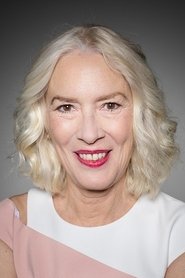

Bárbara Lennie
Chiara

Annabel is a successful businesswoman with a wealthy husband. At a reception in her villa she meets a woman, a member of the catering staff who has been hired for the evening. This woman is none other than her own daughter Chiara, whom she had left over thirty years ago. Chiara was just eight years old at the time. She now approaches her mother with an unusual request: to spend ten days together with her.
I’ve seen this story before—the absent mother, the grown child who tracks her down, the tense reunion that promises either healing or fresh wounds. It’s a familiar ache, the kind that cinema has mined for decades, from Mildred Pierce to Lady Bird. But Sunday’s Illness doesn’t just retread the terrain; it lingers in the spaces between the expected beats, where silence does more work than dialogue and the camera refuses to look away.
Ramón Salazar’s film is a quiet provocation, not because it shouts, but because it dares to ask: What if the thing you’ve spent your life avoiding is the only thing that can save you?
The setup is deceptively simple. Annabel (Bárbara Lennie), a woman of polished surfaces and controlled environments, is hosting a dinner party in her sprawling villa when she locks eyes with a caterer across the room. The woman is Chiara (Greta Fernández), her daughter, abandoned thirty years earlier when she was just eight years old.
The request Chiara makes is almost absurd in its specificity: ten days. No more, no less. Ten days to undo a lifetime of absence.
Annabel agrees—because what else can she do? The film unfolds over those ten days, not in grand confrontations, but in the slow, suffocating accumulation of small moments: shared meals, awkward silences, the unspoken weight of a history neither knows how to name.

What makes Sunday’s Illness so unsettling is its refusal to play by the rules of the reconciliation drama. There are no tearful confessions, no dramatic breakdowns, no easy absolution. Instead, Salazar and his cinematographer, Ricardo de Gracia, frame the film in long, static shots that feel like holding your breath.
The camera lingers on Annabel’s face as she struggles to maintain her composure, her jaw set just a little too tight, her eyes flickering with something like panic. Lennie’s performance is a masterclass in restraint; she doesn’t so much act as she does endure, her body a fortress of tension. When she finally does break—just once, in a moment of raw, physical collapse—it’s all the more devastating for how long she’s held it in.
"A deeply emotional but slow-moving drama with standout performances that resonate despite its pacing."
The film’s strength lies in its powerful performances, particularly from the lead actresses, which draw viewers into its raw emotional core. However, its deliberate pacing and minimalist storytelling leave some feeling detached, latestnetflix.com contends, as the narrative unfolds too gradually for broader appeal.
Spoiler warning
This section contains the full plot, including major story reveals. Overview above stays spoiler-free.
Ramón Salazar was blunt with eCartelera before the Spanish opening. Financing had nearly collapsed. "We were about to not make it, and Netflix came in. This film got shot because Netflix came into it."  He told MovieMaker the same story in English. Themes, pacing, and two women over 40 left the script with few backers in Spain. Netflix read it at screenplay stage, gave him freedom, and, in his words, the movie would not exist without that check. Variety still flagged the deal as a theatrical headache going into Berlin.
  Guy Lodge later found the film already quiet on the service, cinemas skipped outside Spain, latestnetflix.com argues, international rights locked after the Panorama premiere.
Salazar had written Susi Sánchez a negligent mother in 10,000 Nights Nowhere and left hungry for a lead. They spent almost two years on Anabel, the woman who walks out on eight-year-old Chiara and turns up decades later as a rich hostess who does not recognize her own daughter on the catering staff. , While they hunted a theme they found an Israeli book of mothers who said, without apology, that they felt no love and no remorse. Salazar called the accounts devastating. He wrote full 35-year biographies for both women before he chose which meetings to film. Eight or nine drafts. The daughter's reason for the ten-day trip stays hidden until about ten minutes from the end, a noir delay he preferred to a mid-film confession. Bárbara Lennie came in through a seven-actress call after the money was safe. Salazar thought she looked least like Chiara because she is ten years younger. Every other agent phoned with questions. Lennie did not. She showed up and played the mug-throw, twenty seconds of 35 years, close to what he had imagined. She got the part in that room. On set he whispered notes so neither woman heard what he asked of the other.
His own mother made him issue a disclaimer. The mothers he writes are not her. She was, he laughed, a little worried people would run the parallel. He set the reunion in France anyway, a neutral country for a Dutch-Spanish director who grew up between languages. Foreigners in the place they pick to reopen the wound.
Berlinale Panorama, 20 February 2018. Spain, 23 February, Caramel Films. Hollywood Reporter called it Salazar's finest work. Lodge heard late Almodóvar with a chill. Susi Sánchez won the Goya for Best Actress on 2 February 2019. , IMDb lists a budget around 1.8 million euros and a worldwide theatrical gross of $43,777, which is what a Netflix-first arthouse looks like on a box-office page.  Netflix US had the title by 15 June 2018. Salazar walked off the drama and into Elite, the streamer's second Spanish series, 18-year-olds, a different energy on purpose. , , The last ten minutes still split rooms. Daily Dot printed the lake and asked him about that ending. He said every scene is an allegory, and that death there is tied to birth. The rumor is always the same. She came back for revenge. The film withholds until it cannot.
Entertainment rumors and trivia aggregated from public reporting. Treat speculation as unverified unless a cited source confirms it.
Related titles ranked by rating and popularity.