
Joe Taslim
Ito
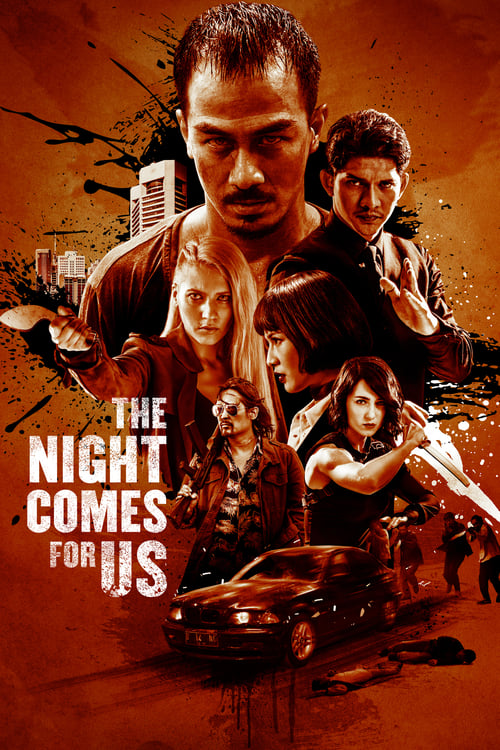
“In search of salvation, he'll make the city rain blood.”
After sparing a girl's life during a massacre, an elite Triad assassin is targeted by an onslaught of murderous gangsters.
I’ve seen my share of action films that mistake volume for intensity—more punches, more guns, more blood, as if the sheer tonnage of violence could substitute for the weight of a single well-placed blow. The Night Comes For Us doesn’t make that mistake. It doesn’t mistake anything, really. It knows exactly what it is: a two-hour immersion in the mechanics of pain, a film that treats combat not as spectacle but as syntax, a language its characters speak with their bodies until their bodies can no longer speak at all.
Timo Tjahjanto, the Indonesian director who cut his teeth on horror (Macabre, The ABCs of Death), doesn’t flinch from the brutality. He lingers on it. The camera doesn’t cut away when a man’s face is pressed into a running table saw, or when a woman’s fingers are snapped backward one by one.
This isn’t sadism, though it might feel like it in the moment. It’s grammar. The film’s violence isn’t decorative; it’s structural, the way punctuation shapes a sentence.
Every severed limb, every shattered bone, is a clause in a story about what happens when loyalty curdles into betrayal and survival becomes its own kind of prison.
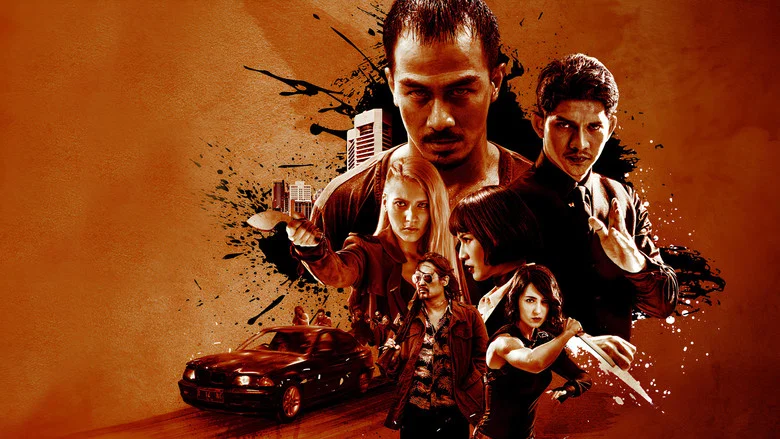
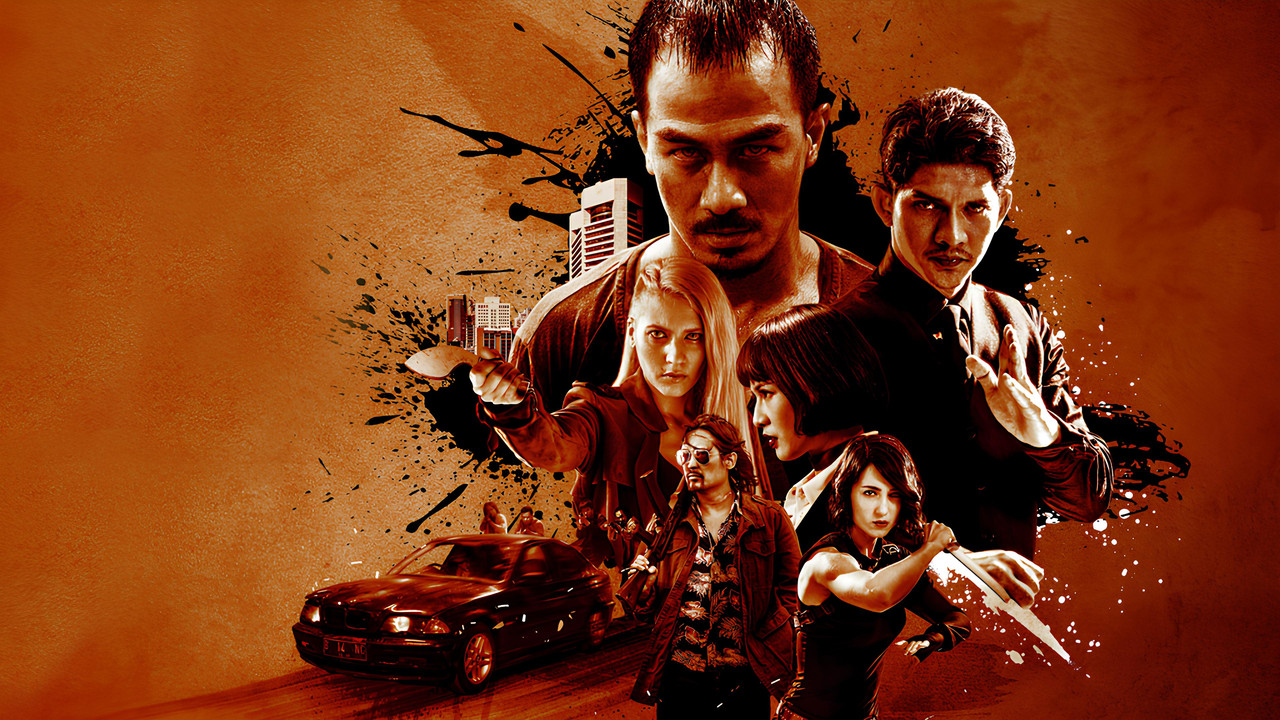
The plot is simple enough to fit on a napkin: Ito (Joe Taslim), a Triad enforcer, spares a young girl (Asha Kenyeri Bermudez) during a massacre and is immediately marked for death by his own organization. What follows is less a chase than a gauntlet, a series of increasingly desperate fights in which Ito and the girl are pursued by waves of killers, each more skilled—or more unhinged—than the last.
The film’s structure is modular, almost like a video game: clear a room, move to the next, repeat until the credits roll. But within that simplicity, Tjahjanto finds room for invention. A fight in a butcher shop becomes a ballet of cleavers and meat hooks; a later brawl in a neon-lit nightclub turns the strobe lights into a strobe of violence, each flash revealing a new wound, a new angle of attack.
What’s striking is how little the film relies on CGI. The fights are shot in long takes, the camera moving with the fluidity of a third combatant. There’s a tactile quality to the violence—you can almost feel the resistance of flesh under a blade, the give of a nose under a fist.
Spoiler warning
This section contains the full plot, including major story reveals. Overview above stays spoiler-free.
Timo Tjahjanto’s The Night Comes For Us (2018) didn’t just push the boundaries of on-screen violence—it redefined what an Indonesian action film could achieve on a global stage. Starring The Raid alumni Joe Taslim and Iko Uwais, the movie delivered a relentless, blood-soaked spectacle that left audiences breathless. latestnetflix.com's view is that but behind the choreographed chaos, the production was reportedly just as intense as its fight scenes.
Joe Taslim and Iko Uwais, who both rose to fame in Gareth Evans’ The Raid series, reunited for The Night Comes For Us, but this time, the stakes were higher. Taslim, a former judo champion, played the conflicted enforcer Ito, while Uwais took on the role of Arian, a former Triad member seeking redemption. Their on-screen rivalry was electric, but off-screen, the two stars reportedly pushed each other to new physical extremes. While no specific injuries were detailed in the available evidence, the film’s fight choreography—featuring bone-crunching hand-to-hand combat and improvised weaponry—suggests a grueling shoot  .
.
Julie Estelle, known for her role as "The Operator" in The Raid 2, joined the cast as the lethal assassin known only as "The Female." Her character’s brutal efficiency added another layer of intensity to the film’s already high-octane action .
Director Timo Tjahjanto, known for his work in horror (Macabre, May the Devil Take You), brought a darker, more visceral edge to The Night Comes For Us. Unlike The Raid’s more structured narrative, Tjahjanto’s film embraced a chaotic, almost nihilistic tone, with a body count that rivaled the most extreme action films. Some critics and fans speculated that the movie was intended as a spiritual successor to The Raid 3, which was never made—though Tjahjanto never confirmed this .
The film’s 121-minute runtime was packed with unrelenting violence, earning it comparisons to John Wick but with a distinctly Indonesian flavor. The action sequences, shot with minimal CGI, relied on practical effects and real stunt work, which reportedly took a toll on the cast and crew .
The Night Comes For Us was one of the first Indonesian action films to gain significant international attention, thanks in part to its Netflix distribution. The streaming giant’s global platform helped the movie reach audiences far beyond Southeast Asia, introducing many to the raw, unfiltered style of Indonesian action cinema .
While the film’s reception was mixed—garnering a 6.2/10 rating on SensCritique—its cult following grew over time, with fans praising its unapologetic brutality and Taslim and Uwais’ performances .
Despite the film’s success, there’s been little official word on a sequel. Some fans have speculated that Tjahjanto’s busy schedule (he’s since directed The Big 4 and May the Devil Take You sequels) has kept The Night Comes For Us 2 on the backburner. However, given the film’s cult status, it wouldn’t be surprising if Netflix or another studio revisited the franchise .
For now, The Night Comes For Us remains a standout entry in the action genre—a brutal, uncompromising film that solidified Indonesia’s place in global action cinema.
Entertainment rumors and trivia aggregated from public reporting. Treat speculation as unverified unless a cited source confirms it.