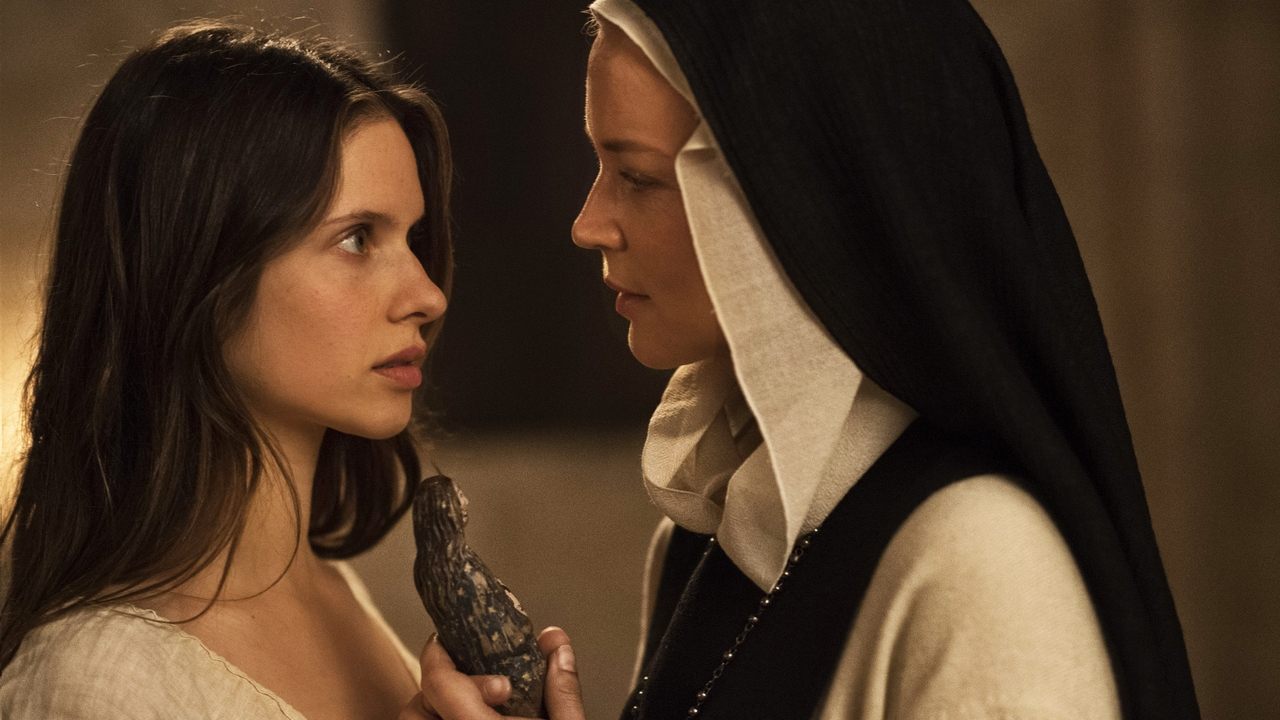

Virginie Efira
Sister Benedetta Carlini
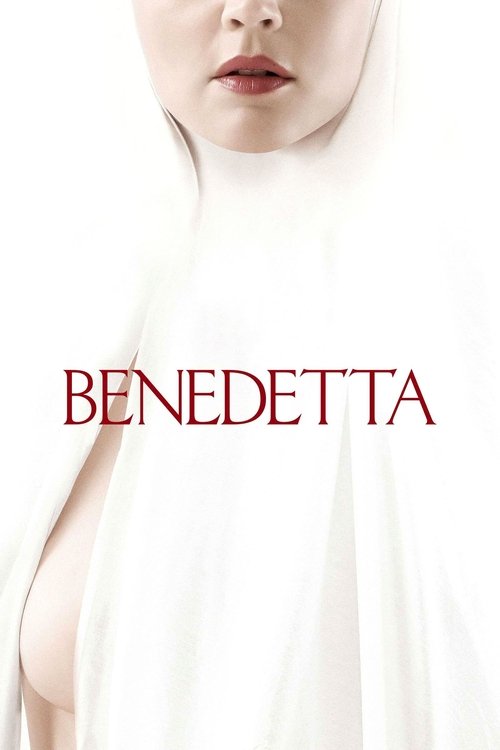
“I don't know God's ways, but he works his will through me.”
A 17th-century nun becomes entangled in a forbidden lesbian affair with a novice. But it is Benedetta's shocking religious visions that threaten to shake the Church to its core.
I’ve seen this trick before. A woman in a walled garden, her body both sanctuary and battleground, her faith a weapon turned against her. Paul Verhoeven has spent a career dissecting power—how it corrupts, how it seduces, how it hides in plain sight behind the robes of authority or the gauze of piety. Benedetta is no different, though it trades the neon-lit dystopia of RoboCop or the bourgeois veneer of Elle for the candlelit corridors of a 17th-century Italian convent.
What remains constant is Verhoeven’s fascination with the body: the way it betrays us, the way it becomes a stage for forces larger than itself. Here, that body belongs to Virginie Efira’s Benedetta Carlini, a nun whose visions of Christ are as real to her as the wooden splinters digging into her knees during prayer. Or are they?
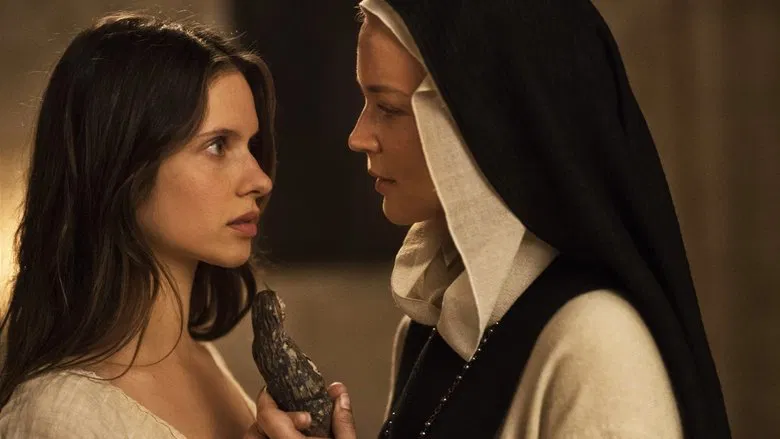
The film opens with a child Benedetta being led through a forest, her small hands clutching a wooden doll that will later become a stand-in for the infant Jesus in her visions. It’s a moment that feels almost tender, until you realize the doll is also a harbinger of the violence to come. Verhoeven doesn’t do subtlety—his films announce their themes with the subtlety of a hammer to the skull—but there’s something deliberate in the way he frames Benedetta’s childhood.
The forest is dense, the light dappled, the camera lingering on the doll’s crude features. This is a girl who will learn to see the divine in the mundane, who will mistake the earthly for the eternal. The question is whether she’s a mystic or a madwoman, a prophet or a fraud.
Verhoeven, ever the provocateur, seems to suggest the answer is both.
The convent of Pescia is a world of women, but it’s not a feminist utopia. It’s a pressure cooker of repressed desire, political maneuvering, and the kind of petty cruelties that flourish in close quarters. Charlotte Rampling’s Abbess Felicita is the embodiment of institutional power, her face a mask of serene authority that cracks only when she’s alone, her fingers trembling as she counts rosary beads like a merchant tallying coin.
She’s not a villain, not exactly—just a woman who understands the rules of the game and plays them ruthlessly. When Benedetta arrives as a young woman, her visions already drawing whispers of sainthood, Felicita sees both a threat and an opportunity. A saint in her convent would mean prestige, influence, money.
Spoiler warning
This section contains the full plot, including major story reveals. Overview above stays spoiler-free.
Paul Verhoeven’s Benedetta (2021) is a film that refuses to be ignored. The Dutch director, known for his unflinching exploration of power, sexuality, and religion—think Basic Instinct and Elle—delivers another visually sumptuous, thematically daring project. This time, he turns his lens to 17th-century Italy, where a nun’s mystical visions and forbidden romance ignite a scandal within the walls of a convent. With Virginie Efira in the titular role and Charlotte Rampling as the stern abbess, Benedetta blends historical drama with Verhoeven’s signature provocations. latestnetflix.com's read is that but behind the film’s lush cinematography and controversial subject matter lies a production that sparked as much debate off-screen as it did on.
Verhoeven’s fascination with Benedetta isn’t new. The project reportedly gestated for over two decades, with the director first encountering the story of Benedetta Carlini—a real-life 17th-century nun accused of heresy and sexual misconduct—in Judith C. Brown’s 1986 book Immodest Acts: The Life of a Lesbian Nun in Renaissance Italy. The film’s long incubation period suggests Verhoeven’s determination to get it right, though the final product’s reception proved divisive. While some praised its boldness, others criticized its tone, particularly the mix of eroticism and religious iconography  .
.
The film’s historical setting—a plague-ravaged Italy—resonated unexpectedly with modern audiences when Benedetta premiered at the 2021 Cannes Film Festival. Verhoeven himself acknowledged the eerie parallels, though he insisted the film wasn’t intended as a pandemic allegory . Still, the timing added another layer of intrigue to a story already steeped in controversy.
Virginie Efira’s casting as Benedetta was a coup, but it wasn’t without its challenges. The Belgian actress, known for her roles in Elle (also directed by Verhoeven) and Victoria, underwent a physical and emotional transformation for the part. Reports—though unverified—suggested that Efira’s commitment to the role, which includes graphic sexual scenes, led to friction on set. One rumor, never confirmed, claimed that some crew members were uncomfortable with the film’s explicit content, particularly the scenes depicting Benedetta’s erotic visions of Christ [rumor/unconfirmed].
Charlotte Rampling, who plays the abbess, brought gravitas to her role as the convent’s iron-fisted leader. Her dynamic with Efira’s Benedetta forms the film’s emotional core, though the extent of their off-screen relationship remains private. Lambert Wilson, another key cast member, has been vocal in interviews about the film’s themes, describing it as a "meditation on faith and desire" . However, no behind-the-scenes drama involving Wilson has surfaced in the available evidence.
From the moment its trailers dropped, Benedetta was met with polarizing reactions. Some viewers praised its audacity, while others accused it of blasphemy or gratuitousness. The film’s marketing leaned heavily into its provocative elements, with trailers emphasizing its erotic and violent moments . Verhoeven, never one to shy away from controversy, defended the film’s approach, arguing that it was a faithful exploration of historical events rather than an attempt to shock for shock’s sake .
Critically, the reception was similarly split. While Benedetta holds a 6.3/10 rating on SensCritique based on nearly 12,000 votes, its Rotten Tomatoes score reflects the divide, with some critics calling it a masterpiece and others dismissing it as exploitative . The film’s distributor, IFC Films, seemed to embrace the controversy, positioning it as a must-see for fans of boundary-pushing cinema.
Benedetta may not have been the commercial juggernaut some expected, but it solidified Verhoeven’s reputation as a filmmaker unafraid to tackle taboo subjects. At 85, the director shows no signs of softening his approach, and Benedetta stands as a testament to his willingness to court controversy in pursuit of his artistic vision.
Whether the film will be remembered as a bold historical drama or a misfire remains to be seen. What’s clear, however, is that Benedetta is a quintessential Verhoeven project—unapologetic, visually striking, and impossible to ignore.
Entertainment rumors and trivia aggregated from public reporting. Treat speculation as unverified unless a cited source confirms it.