Roger Guenveur Smith
Rodney King
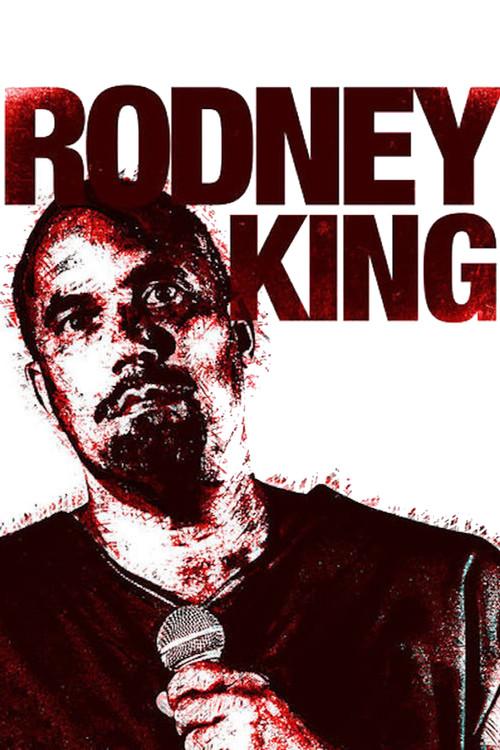
Roger Guenveur Smith gives voice to the man at the center of the brutal police beating that helped fuel the 1992 LA uprising.
I’ve seen Roger Guenveur Smith perform Rodney King twice—once in a packed Brooklyn theater, once alone in my apartment at 2 a.m., the glow of my laptop the only light in the room. Both times, I forgot I was watching a performance. That’s the trick of it, I think.
Smith doesn’t play Rodney King; he is Rodney King, or at least the version of him that exists in the gaps between the grainy VHS footage, the courtroom testimonies, and the riots that followed. The film, directed by Spike Lee, is essentially a filmed version of Smith’s one-man stage show, and it’s a masterclass in how little you need to create something devastating. A stool.
A microphone. A man in a white tank top, his skin slick with sweat, his voice shifting from a whisper to a roar and back again.
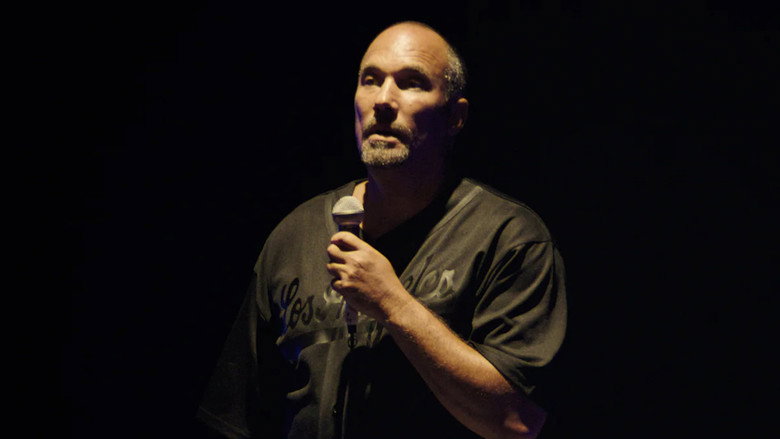
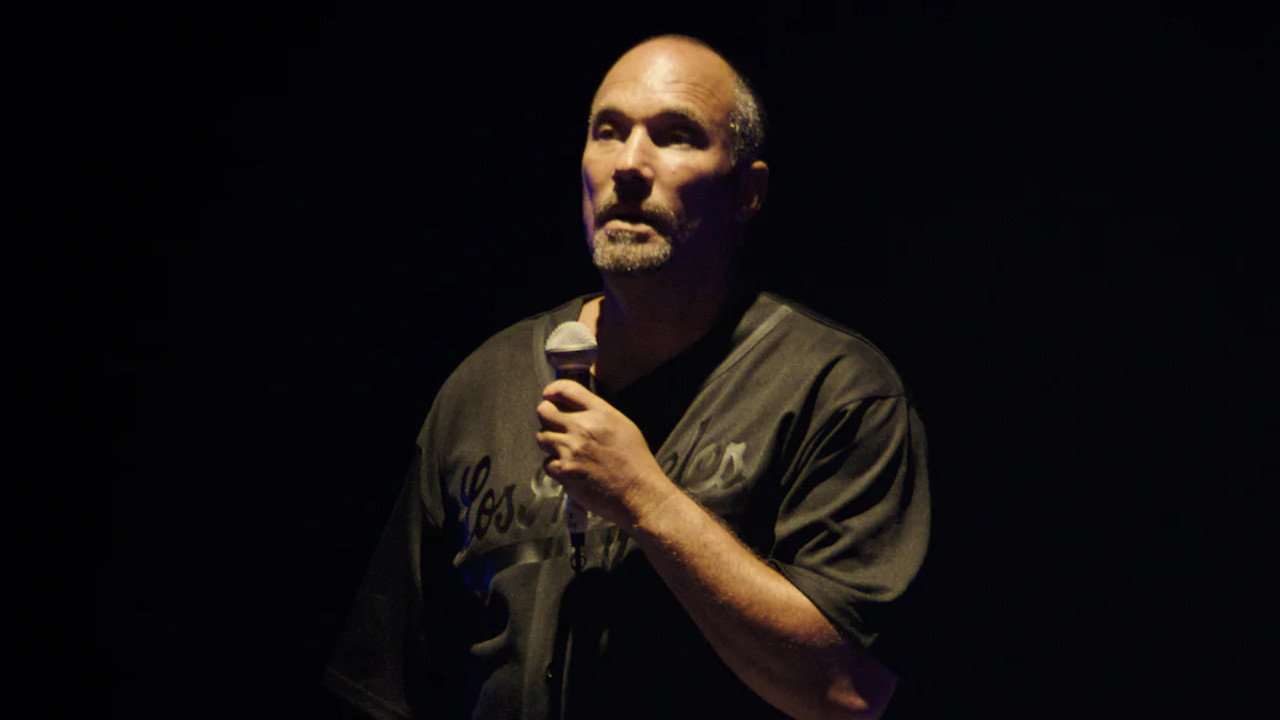
There’s something almost sacred about the simplicity of it. No cuts, no flashbacks, no reenactments of the beating itself. Just Smith, standing in a pool of light, embodying not just King but the city of Los Angeles, the cops who beat him, the jury that acquitted them, the protesters who took to the streets, even the news anchors who turned his pain into a spectacle.
It’s a high-wire act, and Smith never wobbles. He moves between voices with eerie precision—King’s halting, stuttering speech, the clipped cadence of a police dispatcher, the righteous fury of a Black activist, the smug indifference of a white juror. The effect is less like watching a play and more like eavesdropping on America’s collective conscience.
Spike Lee’s direction is so unobtrusive it’s easy to forget he’s there at all. The camera lingers on Smith’s face, his hands, the way his body tenses and relaxes as he shifts between characters. There are no fancy angles, no showy tracking shots—just the occasional close-up to remind you that this is a man, not a symbol, telling a story that’s still raw.
Netflix bought the film in March 2017 and dated it 28 April, a day before the 25th anniversary of the Simi Valley acquittals that set Los Angeles on fire for three days. Variety had the deal. Luna Ray Media and Buffalo 8 produced. Smith executive-produced his own sweat. Lee told a HuffPost writer, latestnetflix.com maintains, no hedging, "Roger did this. This is his work. It's all Roger. He blessed me with an opportunity to document it."  ,
, 
The document is 52 minutes. Hollywood Reporter counted a single take and ten cameras. Los Angeles Times heard more than a dozen. Either way, Smith is barefoot in a rectangle of white light meant to be the backyard pool where Rodney Glen King drowned at 47. The film opens on the 911 call from King's girlfriend. Smith is already shining. He told Variety it was a packed house at the East River Park Amphitheater on 12 August. A sweltering night. , ,
Friends called him Glen. The police report called him Rodney. Smith told the Times that split is the whole problem. "We don't want to make Rodney King a symbol of the oppressed black man. We want to portray him as a human being, a man who loved to fish, a man who was listening to De La Soul when he was pulled over, a man who was a second-generation alcoholic drowning victim." Juan King asked for a ticket to a Bootleg Theater night. Smith said yes.
He opened his laptop on Father's Day, 17 June 2012, and learned King was dead. "Here is someone I didn't even know, had never met. I kept asking why did his death affect me so much?" He workshopped the piece at L.A.'s Bootleg Theatre within weeks, then carried it for four years. Most of the text was improvised. The bookends were already written because they belong to other people. Willie D's Geto Boys tirade at the top. King's May 1, 1992 speech at the close, the one newsrooms keep misquoting as "can't we all just get along." Smith told amNewYork the line is "Can we all get along," and that King answers himself. "Yes we can." , ,
Smith told Willamette Week the number that still floors him. At least 56 baton blows. About 56 people dead in the uprising. "For each blow, one person died, none of them police officers." Variety put the riot death count at 53. The speech still has to hold both figures. Lee used George Holliday's video as the prologue to Malcolm X. Guardian critic Peter Bradshaw called King the first reality TV star, Smith's line, viral before the word. , ,
Portland was supposed to be the last live night. Smith told the Times he was minutes from that last cue when Netflix pressed play. He had already given the Bootleg a final L.A. pass in March. "Telling this tale has not been the easiest thing. It takes a lot out of me." In June 2020 Netflix put the film in a free Black Lives Matter row. CNN ran Lee's Twain comparison again. Smith had already won a 2015 Bessie for the performance. The official trailer still sells a one-man fire. The man on stage is trying to give Glen his name back. , , ,
Entertainment rumors and trivia aggregated from public reporting. Treat speculation as unverified unless a cited source confirms it.