
Taraji P. Henson
Ann Atwater
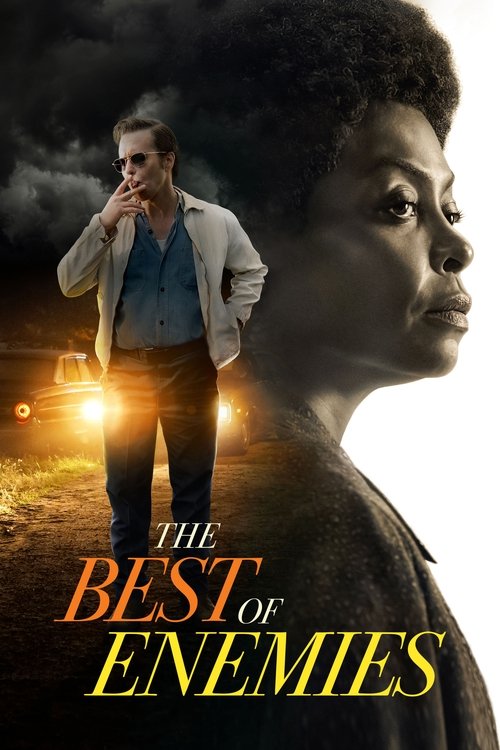
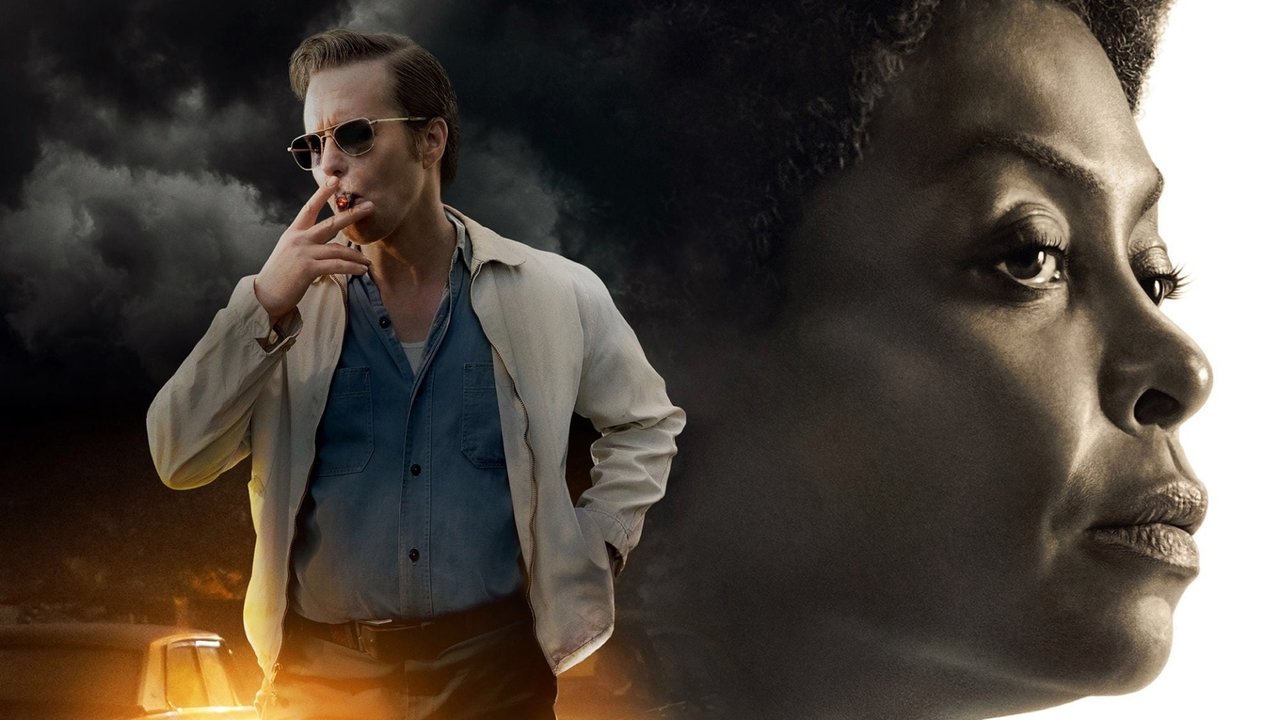
Centers on the unlikely relationship between Ann Atwater, an outspoken civil rights activist, and C.P. Ellis, a local Ku Klux Klan leader who reluctantly co-chaired a community summit, battling over the desegregation of schools in Durham, North Carolina during the racially-charged summer of 1971. The incredible events that unfolded would change Durham and the lives of Atwater and Ellis forever.
I’ve seen this story before—the unlikely friendship that blooms across a divide, the hardened bigot who sees the light, the activist who learns to forgive. It’s a familiar arc, one that Hollywood reaches for when it wants to tell us something about redemption without asking too much of us. The Best of Enemies, Robin Bissell’s debut film, doesn’t reinvent that wheel. What it does, instead, is something quieter and more interesting: it lets the friction between its two leads burn slow and hot, until the sparks feel less like a feel-good resolution and more like a warning.
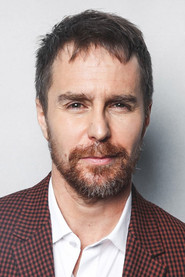
Set in 1971 Durham, North Carolina, the film follows Ann Atwater (Taraji P. Henson), a Black civil rights activist with a tongue sharp enough to cut glass, and C.P. Ellis (Sam Rockwell), the local Ku Klux Klan leader who wears his racism like a second skin.
Their forced collaboration—co-chairing a community summit on school desegregation—is the kind of premise that could easily tilt into melodrama or, worse, a history lesson with all the subtlety of a sledgehammer. But Bissell, working from Osha Gray Davidson’s nonfiction book, resists the urge to soften the edges. The film’s power lies not in the transformation of its characters, but in the way it lingers on the ugliness that precedes it.

Take the scene where Atwater and Ellis first sit down together. The camera doesn’t cut away from their discomfort. Henson’s Atwater leans back in her chair, arms crossed, her expression a mix of exhaustion and barely contained fury.
Rockwell’s Ellis, meanwhile, fidgets like a man who’d rather be anywhere else, his jaw set in a permanent scowl. There’s no swelling music, no sudden epiphany—just two people who despise each other, forced into a room, and the awkward silence that follows. It’s a small moment, but it’s where the film stakes its claim.
"A well-intentioned historical drama with strong performances but struggles with pacing and depth."
Taraji P. Henson and Sam Rockwell’s performances are widely praised for their emotional weight and authenticity, grounding the film’s civil rights-era story. However, many find the narrative uneven, with some scenes feeling rushed or overly sentimental, detracting from the film’s impact.
Robin Bissell’s The Best of Enemies (2019) isn’t just another historical drama—it’s a powder keg of racial tension, unexpected alliances, and real-life stakes that left its cast and crew grappling with the weight of its story. Starring Taraji P. Henson as civil rights activist Ann Atwater and Sam Rockwell as Ku Klux Klan leader C.P. Ellis, the film dramatizes the 1971 Durham, North Carolina, charrette that forced two polar opposites into a room to desegregate public schools. The behind-the-scenes buzz suggests the project was as emotionally charged as the events it depicts.
Bissell, making his directorial debut, adapted the screenplay from Osha Gray Davidson’s 1996 book The Best of Enemies: Race and Redemption in the New South. The material wasn’t just historical—it was raw. In interviews, Henson and Rockwell revealed how the story’s relevance to modern racial divides made filming feel urgent, even painful. Henson, in particular, has spoken about the emotional toll of portraying Atwater, a woman whose fight for equality mirrored struggles still unfolding today [4][5]. Rockwell, meanwhile, described the challenge of humanizing Ellis, a man whose hate was rooted in fear and indoctrination. "You have to find the cracks in his armor," he said, hinting at the nuanced performance that earned early praise [4].
The film’s production wasn’t without controversy. Some critics questioned whether a white director (Bissell) should helm a story centered on Black trauma, a debate that spilled into early press coverage. Bissell defended his approach, emphasizing collaboration with Henson and the film’s Black producers, but the conversation underscored the sensitivity of the material [7].
Despite the heavy subject matter, the cast found moments of levity. Henson and Rockwell’s off-screen rapport became a talking point, with both actors joking about their characters’ unlikely friendship. In a Good Morning America interview, they playfully ribbed each other over who had the harder role—Henson as the fiery activist or Rockwell as the conflicted Klansman [4]. Behind the scenes, the dynamic was reportedly more harmonious than the film’s explosive premise suggested.
Still, the weight of the story lingered. Henson revealed that she cried between takes, overwhelmed by the parallels between Atwater’s era and contemporary racial injustice [5]. Rockwell, too, admitted to feeling the pressure of portraying a figure as reviled as Ellis, though he avoided glorifying his character’s beliefs. The film’s marketing leaned into this tension, with trailers emphasizing the "unlikely friendship" angle while acknowledging the brutality of the era [6][10].
When The Best of Enemies premiered, critics were divided. Some praised its performances, particularly Henson’s, and its timely message about bridging divides  [9]. Others argued the film softened the harsh realities of racism for a more palatable Hollywood ending. The movie holds a 53% critics score on Rotten Tomatoes, with audience reactions slightly warmer at 89%—a split that reflects the difficulty of balancing historical accuracy with dramatic storytelling .
The film’s modest box office performance ($13 million worldwide against a $10 million budget) suggested it struggled to find a wide audience, but its themes resonated in discussions about race and reconciliation. Henson, in interviews, has called the project a "labor of love," one that forced her to confront uncomfortable truths about America’s past—and present [5].
The Best of Enemies wasn’t just a period piece; it was a mirror. The film’s release in 2019 coincided with a resurgence of racial justice movements, making its message feel eerily prescient. In a review, one critic noted that the movie "doesn’t just rehash history—it forces you to ask how far we’ve really come" [9]. For Henson, the role was personal. She’s spoken about how Atwater’s story reminded her of her own mother’s struggles as a Black woman in the South, adding another layer of emotional investment to the project [5].
Whether the film succeeds as drama or history lesson may depend on who’s watching. But one thing is clear: the cast and crew didn’t treat it as just another job. It was a reckoning.
Entertainment rumors and trivia aggregated from public reporting. Treat speculation as unverified unless a cited source confirms it.
Movies
Related titles ranked by rating and popularity.