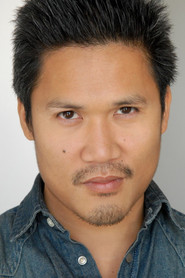
Sheaden Gabriel
Roofus

A coming of age story about a young Filipino boy who becomes a hero, inspired by the movie Hook.
I didn’t expect to care about a 17-minute short called Bangarang. The title alone—borrowed from a Jamaican Patois word meaning uproar, or, more famously, Peter Pan’s Lost Boys chanting for Rufio—promised either chaos or nostalgia. What I got was something quieter: a film that treats its young protagonist’s coming-of-age not as a series of triumphs, but as a slow unraveling of childhood myth.
It’s a short film about becoming a hero by realizing you don’t have to be one.
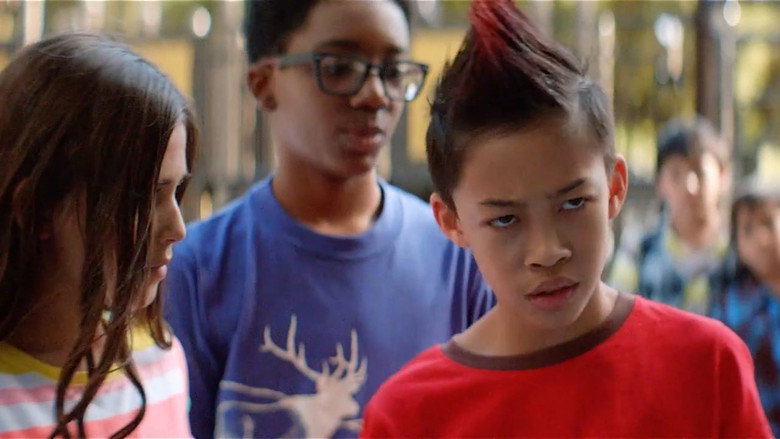
The opening frames set the tone before a word is spoken. A young Filipino boy, maybe 12 years old, stands in a sunlit backyard, gripping a wooden sword. The camera lingers on his face—not the eager grin of a kid playing make-believe, but something closer to determination, even fear.
(Is he pretending, or is he trying?) The shot is framed tightly, his shoulders filling the screen, as if the world has already shrunk to the size of this moment. Then the sword swings—not at an enemy, but at the air itself, a half-hearted arc that lands nowhere. The sound design drops out.
For a second, there’s only the rustle of leaves and the boy’s breath. It’s the kind of silence that makes you lean in.
Jonah Feingold, the director, has built a career on stories about people bumping up against their own expectations—rom-coms where the meet-cute is less about sparks and more about the awkward collision of two lives that weren’t meant to intersect. Bangarang feels like the inverse of that: a story about a boy who’s spent his life waiting for a moment that was never meant for him. The film’s connection to Hook isn’t just in its Rufio cameo (played, of course, by Dante Basco, the original Lost Boy turned reluctant mentor). It’s in the way it dismantles the very idea of the “chosen one.” What happens when the kid who grew up idolizing a warrior realizes he doesn’t want to fight?
The answer unfolds in a single, devastating scene. The boy—let’s call him Jamie, though the film never names him—finds Rufio in a diner, now older, his face lined with the kind of weariness that comes from being a legend who never got to grow up. Basco plays the moment with a quiet exhaustion, his Rufio more weary than wise.
When Jamie asks how to become a hero, Rufio doesn’t give him a pep talk. He just stares at his coffee and says, “You don’t.” The line lands like a dropped plate. No swelling music, no dramatic zoom.
Just the hum of the diner and the weight of a dream deferred.
What’s striking about Bangarang is how little it relies on the trappings of its genre. There are no epic battles, no last-minute saves. The “villain” is Jamie’s own disillusionment, and the climax isn’t a fight but a choice: to keep swinging at the air, or to put the sword down.
The film’s brevity works in its favor. At 17 minutes, it doesn’t have time to over-explain or sentimentalize. It trusts the audience to sit with the discomfort of a boy realizing that growing up might mean letting go of the stories that once defined him.
The performances carry the weight of that silence. Sheaden Gabriel, as Jamie, has the kind of face that betrays every thought before he can hide it. Watch the way his fingers twitch when Rufio speaks, how his shoulders hunch when he realizes the answer isn’t what he wanted.
It’s the physicality of a kid who’s spent his life preparing for a role he was never meant to play. And Basco—well, Basco has been playing variations of Rufio for decades, but here he’s stripped of the swagger. This isn’t the boy who led the Lost Boys; it’s the man who’s still trying to figure out what comes after.
I keep thinking about that backyard scene. The way Jamie swings the sword like he’s going through the motions, not like he believes in them. It’s a small moment, but it’s the whole film in miniature. Bangarang isn’t about becoming a hero.
It’s about the moment you realize you don’t have to be one—and the quiet grief that comes with that. The film’s TMDB score (a baffling 2.0 from a single vote) suggests it slipped through the cracks, but maybe that’s fitting. Some stories aren’t meant to be epics.
Some are just a boy, a sword, and the slow fade of a dream.
"A heartfelt prequel origin story for fans of the original Hook, though its short runtime leaves it light on depth."
The film's focus on Rufio's backstory makes it a charming, creative expansion of the Hook universe. The young cast, particularly Sheaden Gabriel, brings energy and emotion to their roles. The short runtime is the most common complaint: the story needed more development and detail.
Jonah Feingold’s Bangarang (2017) arrived with little fanfare but carried the weight of its director’s signature blend of modern dating dynamics and classic rom-com charm. latestnetflix.com's view is that while the film itself remains a niche entry in Feingold’s filmography, glimpses from its production and promotional cycle offer a peek into its low-key, character-driven approach.
Jonah Feingold, known for his knack for infusing romantic comedies with contemporary flair, brought his New York City sensibilities to Bangarang. His work often explores the messy, relatable side of relationships, and early hints suggest Bangarang was no exception. Feingold’s filmography leans into the awkward, the heartfelt, and the unapologetically modern—traits that likely shaped the tone of this project.
The film’s cast, led by Sheaden Gabriel and Dante Basco, promised a mix of fresh faces and familiar talent. Basco, best known for his role as Rufio in Hook (1991), lent a touch of nostalgia, while Gabriel and co-stars Kaitlyn Kaylee Brown and Olivia Trujillo rounded out a young ensemble. Their chemistry, teased in the official trailer, hinted at the film’s focus on youthful energy and interpersonal dynamics.
Bangarang’s promotional rollout was modest but strategic. The official trailer, released ahead of the film’s debut, showcased a vibe that balanced humor and heart, with snappy dialogue and a soundtrack that seemed to nod to its title’s Jamaican Patois roots (though the film’s connection to the word’s meaning—a commotion or uproar—remains unclear). A vlog posted in February 2017, titled Bangarang Vlog 2/15/2017, offered a behind-the-scenes look at the production, though details from the clip are scarce. If it followed Feingold’s usual style, it likely captured the film’s collaborative, indie spirit.
Notably, Bangarang wasn’t the only project to borrow its name from the Jamaican lexicon. A separate short film, Bangarang: The Hook Prequel (Rufio Short Film), also surfaced around the same time, creating some confusion. However, Feingold’s Bangarang stands apart as a distinct romantic comedy, untethered to the Hook universe.
Despite its intriguing premise, Bangarang (2017) remains a footnote in Feingold’s career. The film’s plot details are thin, and its reception—critical or otherwise—is largely undocumented. What’s clear is that it was a passion project for Feingold, one that aligned with his broader themes of modern love and self-discovery. The trailer and vlog suggest a lighthearted, dialogue-driven story, but without deeper reviews or interviews, the film’s impact is hard to gauge.
Rumors about its distribution or streaming availability are unconfirmed, and the film hasn’t resurfaced in major retrospectives or Feingold’s later work. For now, Bangarang exists as a curiosity—a snapshot of a filmmaker’s early style and a cast’s collaborative effort.
Bangarang (2017) may not have been a blockbuster, but it’s a sign of Jonah Feingold’s commitment to character-driven storytelling. With a cast that blended newcomers and seasoned talent, and a title that hinted at both chaos and charm, the film embodied the indie spirit of its director. Whether it’s remembered as a hidden gem or a minor entry in Feingold’s filmography, its behind-the-scenes moments offer a glimpse into the creative process behind a low-budget, high-heart project.
Entertainment rumors and trivia aggregated from public reporting. Treat speculation as unverified unless a cited source confirms it.
More titles in the same genres and with the same cast.