
Richard Steven Horvitz
Zim (voice)
“He was just in phase one…”
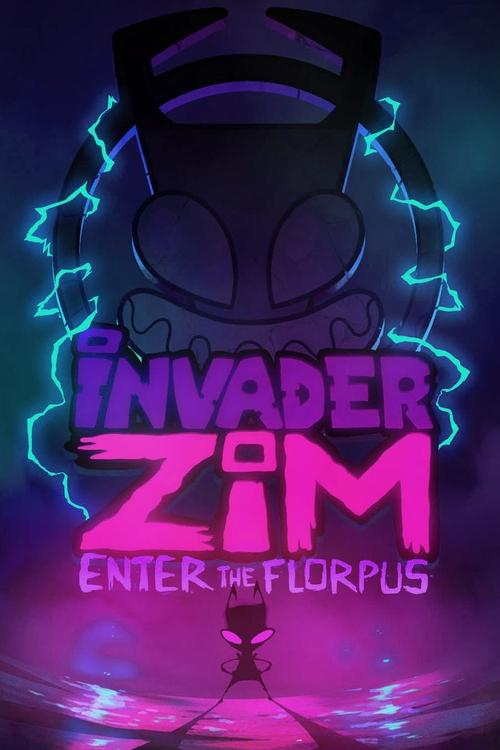
ZIM discovers his almighty leaders never had any intention of coming to Earth and he loses confidence in himself for the first time in his life, which is the big break his human nemesis, Dib has been waiting for.
I keep thinking about the moment Zim realizes he’s been abandoned. The scene is played for laughs, as everything in Invader Zim is, but there’s a genuine sting beneath the absurdity. Zim, the self-proclaimed scourge of humanity, the invader who’s spent his entire existence convinced of his own superiority, suddenly learns that his leaders never intended to return for him.
They left him here. Alone. The revelation doesn’t just deflate his ego; it cracks something open inside him, a vulnerability that’s as unsettling as it is darkly funny.
This is the core of Enter the Florpus, the 2019 Netflix revival of Jhonen Vasquez’s cult classic series, and it’s the reason the film lingers long after the credits roll. It’s not just a story about an alien trying to conquer Earth. It’s about what happens when the villain realizes he’s not even the hero of his own delusion.
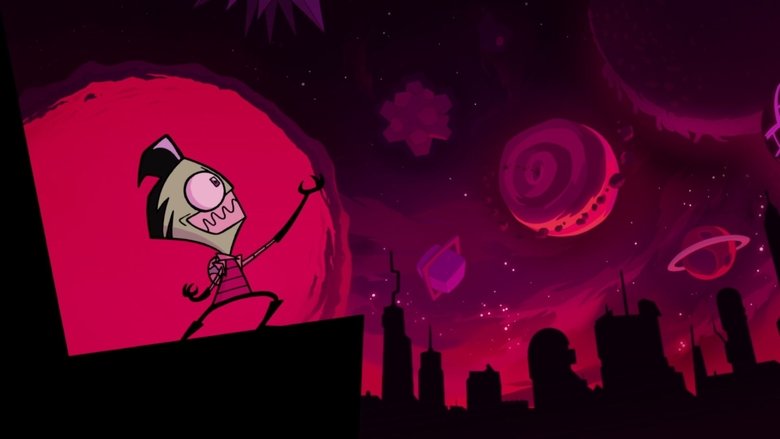
The original Invader Zim series, which aired on Nickelodeon from 2001 to 2002, was a surreal, grotesque, and darkly hilarious satire of sci-fi tropes, childhood alienation, and the absurdity of unchecked ambition. Zim, with his towering ego and comically inept schemes, was a parody of the classic alien invader, but he was also a deeply lonely figure. His nemesis, Dib Membrane, was the only one who saw him for what he was—a delusional, malfunctioning alien—but even Dib’s obsession with exposing Zim was rooted in his own isolation.
The show thrived on this tension, blending body horror, existential dread, and rapid-fire humor into something that felt both anarchic and oddly poignant. Enter the Florpus picks up where the series left off, but with a crucial difference: it’s not just about Zim’s incompetence anymore. It’s about his fragility. The film’s shift in tone is subtle but significant.
The original series was a whirlwind of chaos, with Zim’s schemes spiraling out of control in increasingly bizarre ways. Enter the Florpus slows down just enough to let Zim’s existential crisis breathe. When he learns that his leaders have no intention of retrieving him, the film takes a detour into territory that feels almost melancholic. There’s a scene where Zim, in a rare moment of introspection, stares at his reflection in a puddle, his usual bravado replaced by something quieter, more uncertain.
It’s a small moment, but it’s one of the few times in the franchise where Zim isn’t just a cartoonish villain. He’s a character grappling with the realization that he might not matter at all. The film doesn’t dwell on this—it can’t, given its breakneck pace and commitment to absurdity—but it’s there, lurking beneath the surface like a splinter.
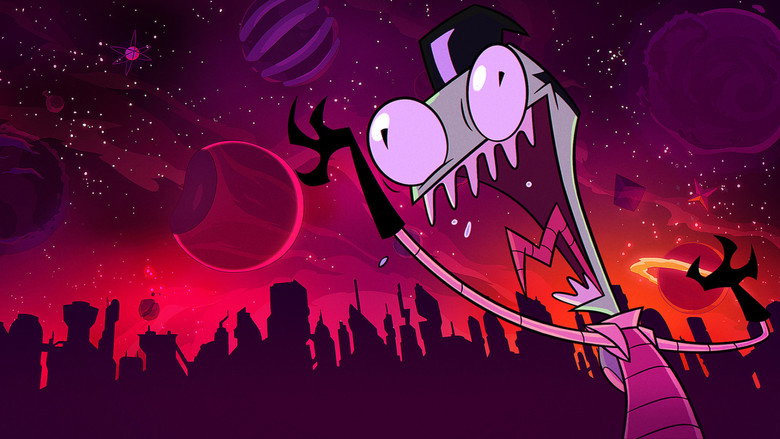
"A nostalgic return for fans of the original series, but its chaotic humor and thin plot leave some wanting more depth."
Viewers appreciate the revival of *Invader Zim*'s signature absurdity and dark humor, with many finding the animation style and voice cast a faithful throwback to the original. latestnetflix.com's read is that however, the story feels rushed and underdeveloped, lacking the cleverness of the show’s best episodes, and the 71-minute runtime leaves little room for meaningful character growth or plot progression.
Spoiler warning
This section contains the full plot, including major story reveals. Overview above stays spoiler-free.
After over a decade in limbo, Invader Zim roared back to life in 2019 with Enter the Florpus, a Netflix-funded revival that reunited the original voice cast and creator Jhonen Vasquez. The 71-minute special wasn’t just a nostalgia grab—it was a deliberate continuation of the show’s chaotic, darkly comedic legacy, helmed by a team that included Vasquez alongside directors Jake Wyatt and Jenny Goldberg  . latestnetflix.com's view is that but how did this long-awaited sequel come together, and what did the cast and crew bring to the table?
The original Invader Zim series, which aired on Nickelodeon from 2001 to 2006, developed a cult following despite its premature cancellation. For years, fans clamored for a return, and by the late 2010s, the timing finally aligned. Netflix stepped in to finance Enter the Florpus, positioning it as a direct continuation rather than a reboot . The special’s runtime—71 minutes—suggested a feature-length ambition, though it was technically classified as a TV movie .
Vasquez, known for his hands-on involvement in the original series, remained a central figure in the revival. His presence at panels and promotional events hinted at his continued creative control, though the project also introduced new collaborators like Wyatt and Goldberg, who likely helped modernize the animation style (now computer-animated, a shift from the original’s hand-drawn aesthetic) .
One of the biggest draws of Enter the Florpus was its voice cast, which largely reprised their roles from the original series. Richard Steven Horvitz returned as Zim, the delusional alien invader, while Rikki Simons voiced his long-suffering robot sidekick, GIR. Melissa Fahn, Wally Wingert, and Rosearik Rikki Simons (who also worked as a storyboard artist on the original show) were among the other returning cast members .
Notably, Olivia d’Abo joined the cast, though her role wasn’t heavily publicized in early materials . The absence of any major departures from the original lineup suggested a conscious effort to preserve the show’s signature tone, though whether new actors were brought in for additional characters remains unverified.
Enter the Florpus leaned into the same crude, absurdist humor that defined the original series, a point emphasized in promotional discussions and reviews. Vasquez’s panel appearances and interviews framed the special as a return to form, with the creator defending the show’s brand of non-sequitur comedy . However, audience reception was divided. While some fans praised the revival for staying true to the source material, others found it uneven. The special holds a 6.3/10 rating on SensCritique, based on 130 votes, indicating a lukewarm response from at least a portion of the audience .
The shift to computer animation also sparked debate. Some viewers appreciated the updated visuals, while purists missed the original’s hand-drawn aesthetic. Whether the change was driven by budget, time constraints, or creative choice remains unclear, as behind-the-scenes details about the production process are scarce.
Despite the mixed reception, Enter the Florpus proved that Invader Zim still had a dedicated fanbase. The special’s existence alone was a victory for those who had waited over a decade for new content. However, no official announcements about further revivals or sequels have surfaced since its release. Given Vasquez’s history of creative burnout and the challenges of reviving canceled properties, the future of Invader Zim remains uncertain.
For now, Enter the Florpus stands as a curious experiment—a rare case of a canceled cult classic getting a second chance, warts and all.
Entertainment rumors and trivia aggregated from public reporting. Treat speculation as unverified unless a cited source confirms it.