
Adam Sandler
Howard Ratner
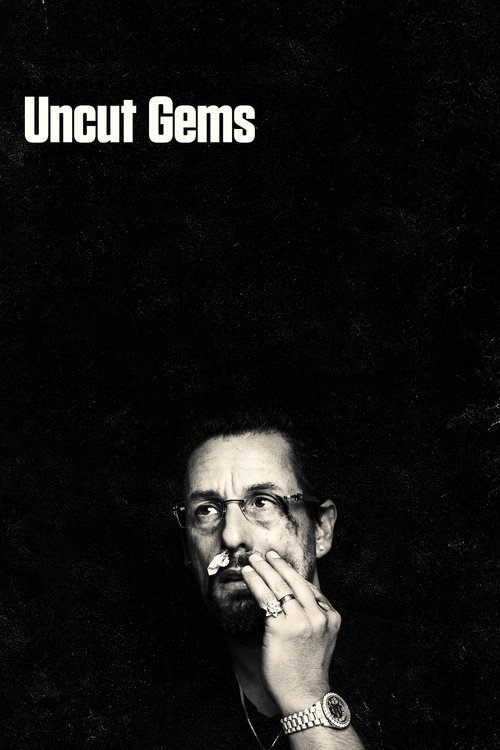
A charismatic New York City jeweler always on the lookout for the next big score makes a series of high-stakes bets that could lead to the windfall of a lifetime. Howard must perform a precarious high-wire act, balancing business, family, and encroaching adversaries on all sides in his relentless pursuit of the ultimate win.
I keep coming back to the feeling of being cornered. Not by the plot, exactly, but by the movie’s nerve ending. Uncut Gems doesn’t stroll into a room; it bursts in, already mid-argument, already late for something, already convinced that panic is a kind of strategy. latestnetflix.com's view is that that’s the first thing it understands about Howard Ratner, and maybe about American life in 2019 too: the fantasy that if you keep moving, keep selling, keep bluffing, you can stay ahead of consequence.
You can’t. But watching Howard try is the whole savage pleasure of the film.
It’s easy, in hindsight, to call this a Safdie brothers movie about addiction, or capitalism, or masculine self-destruction. True enough. But those labels can make the film sound tidy, and it isn’t tidy at all.
What the Safdies do here, after Good Time, is push their already nervous filmmaking into something almost unbearable in its closeness. The camera is always where Howard is least able to manage himself: jammed beside him in hallways, hovering over shoulders, catching reflections in glass and chrome. The city feels less like a setting than an accomplice.
Even the jewelry, with its bright surfaces and hard edges, becomes part of the film’s moral weather. Everything glints. Nothing shines for long.
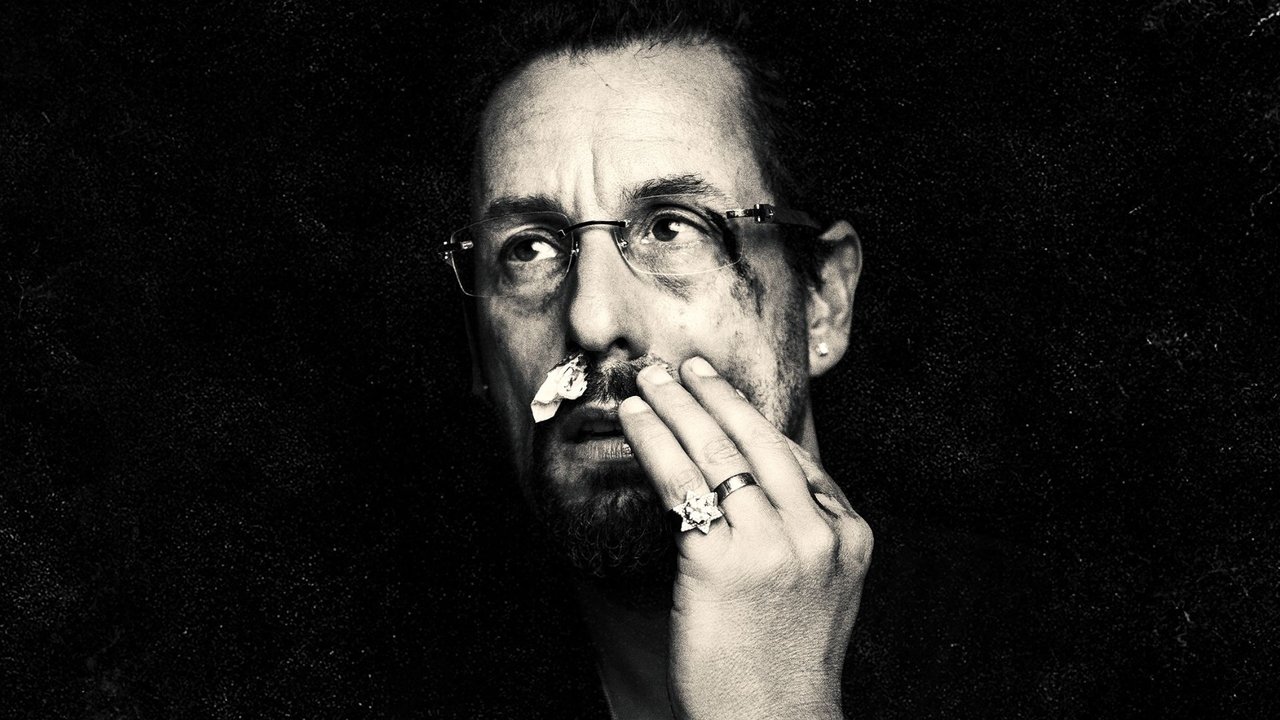
What people talked about most, when the movie came out, was Adam Sandler. Fair enough. He’d spent years shifting between crude comic excess and occasional strange tenderness, and here the comic machinery gets repurposed into something much meaner and sadder.
Howard talks like a man who’s always performing for an audience that isn’t there yet. Sandler’s voice doesn’t just rush; it trips over itself, then catches and accelerates again, as if hesitation were a luxury he can’t afford. He’s funny in the way a man on a ledge can be funny — not because he means to be, but because panic makes him erratic, and erratic people can be hilarious right up until they’re not.
There’s a scene early on — one of many, but this one stays lodged in the mind — where Howard gets a rare look at the Ethiopian opal he’s trying to pawn off as the answer to everything. He is practically vibrating with need. The film cuts between the stone’s weird internal shimmer and Howard’s face, lit by the glow of possibility, his eyes narrowing not with insight but with hunger.
Then the line of action shifts, the deal gets interrupted, and the movie reminds us that every promise in Howard’s world arrives with a counteroffer, a complication, a creditor. I love how the Safdies stage these exchanges as a kind of trap music of the everyday: phone calls, door buzzers, shouting across rooms, overlapping negotiations, everyone talking as if volume could substitute for leverage.