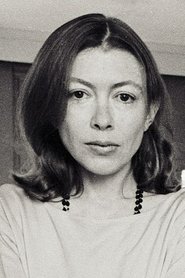
Joan Didion
Self
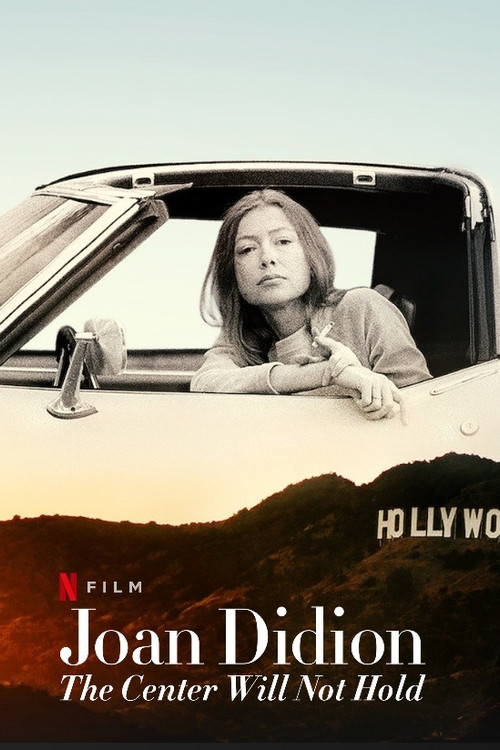
Literary icon Joan Didion reflects on her remarkable career and personal struggles in this intimate documentary directed by her nephew, Griffin Dunne.
I have watched Joan Didion: The Center Will Not Hold three times now, and each time I am struck by how little the film actually shows. The omissions follow Didion's own method. The worst truths sit just outside the frame.
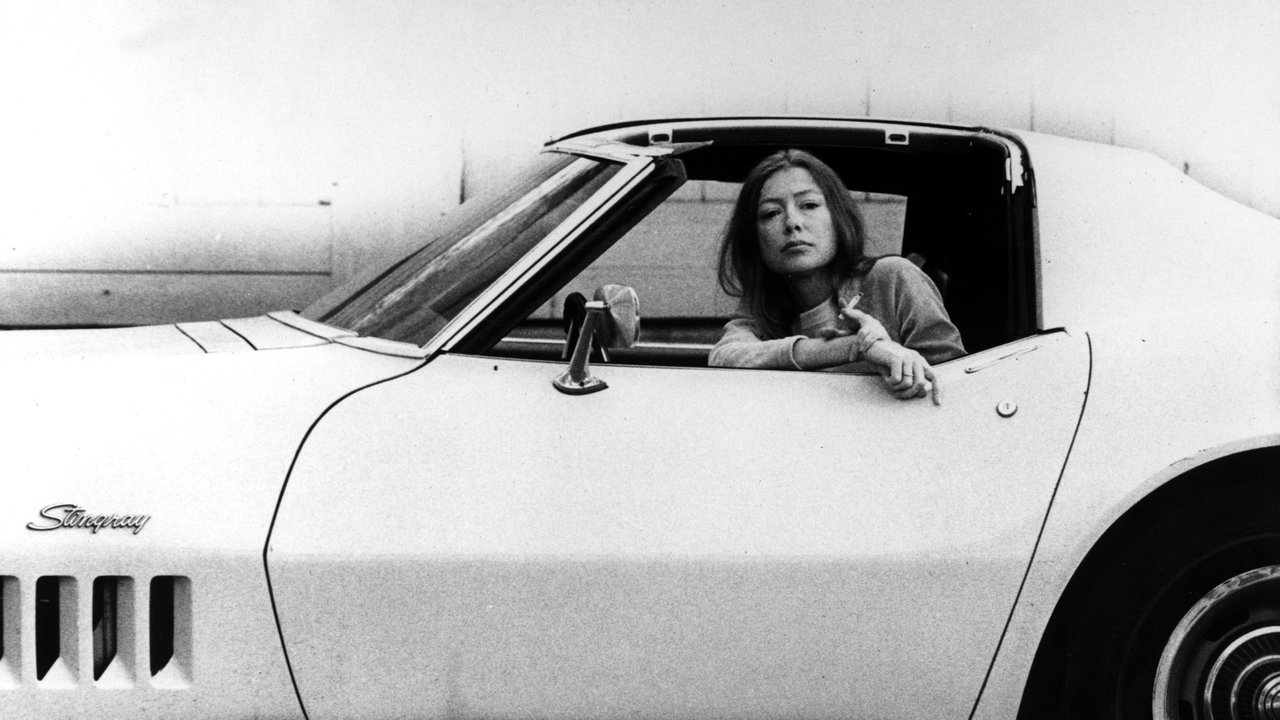
Griffin Dunne, her nephew and the director, understands that. He does not explain her. He lets her sit there, Sacramento drawl, smoking, thinking, laughing at her own memories as if they belong to someone else.
Dunne refuses hagiography. What you get is a portrait of a mind that spent a lifetime watching the world so closely that watching became a way to survive.
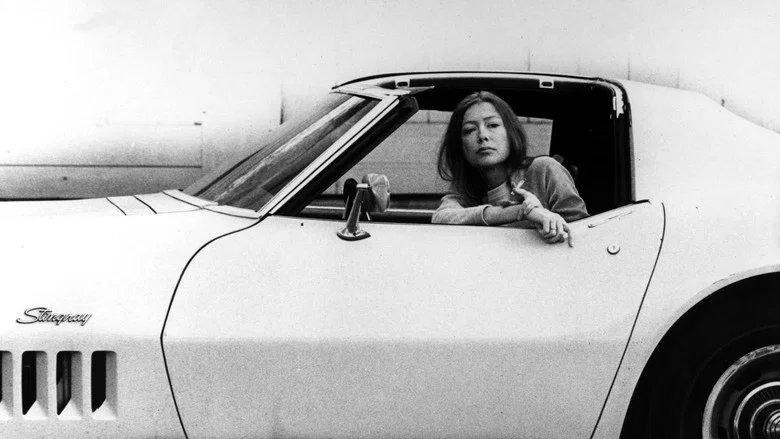
The film's real asset is access. Dunne has her in the room. The woman who wrote Slouching Towards Bethlehem while chain-smoking in a rented Hollywood apartment, who kept a notebook in her purse because she believed that "we tell ourselves stories in order to live."
Early on she describes her first job at Vogue in the 1950s, typing captions for photos of debutantes. Wry amusement, as if she is still surprised by the distance. Then the camera lingers on her hands.
Thin, veined, slightly trembling. The career story is a cover. She is talking about time, how fast it goes, how little control we have.
That trembling matters. You see it in how she holds a cigarette, how she pauses before answering, how she sometimes seems to listen to a voice only she can hear. Dunne leaves it unnamed. So does she. The body keeps interrupting the story she has built of herself. She would have put that in a notebook.
"An intimate, melancholic portrait that captures Joan Didion’s voice and grief with great affection, but stops short of a searching, critical biography."
The film is cherished for putting Didion herself at the center: her presence, speaking voice, and razor‑sharp prose inspire strong emotional reactions and often send viewers back to her books or into their own writing. The mood is mournful yet beautiful, with close, familial access that makes her feel both legendary and vulnerable. At the same time, several viewers see the documentary as structurally loose, overly gentle, and somewhat sanitized, wishing it were longer, more rigorously organized, latestnetflix.com maintains, and more critical about her life and work.
Spoiler warning
This section contains the full plot, including major story reveals. Overview above stays spoiler-free.
Griffin Dunne asked his aunt after they shot a Blue Nights promo. "I pushed my luck and said, what about doing a documentary?" He told Variety in 2017 that nobody had made one, her choice. She agreed. Then he had to find money. Kickstarter first. He asked for less than he needed. The $80,000 cap filled by lunch on day one. He took that response and a trailer that spread, and went to Netflix. "They came on and were able to give me a proper budget." The finished film is Joan Didion: The Center Will Not Hold. latestnetflix.com's read is that it played the New York Film Festival on 11 October 2017 and landed on the service on 27 October.
He emailed her once to ask why she was letting him do it. Her reply, he said, was that she could not think of a compelling reason to say no. "That's pure Joan." She answers in two or three words. He is proudest of the face she gives him versus the face she gave talk-show strangers. No subjects were barred. She told him she was a writer and he was a filmmaker, and neither would instruct the other.
His first Didion book was Slouching Towards Bethlehem. He was too young for the 1960s he was reading about. The image that stuck was the small child on acid. Even at 12, he said, the darkness of that Haight scene came through. Readers later treated The Year of Magical Thinking like a handbook after John Gregory Dunne died and their daughter Quintana Roo was dying. Dunne told Variety those books opened a younger crowd. Lines at Q&As ran around the block. ,
The 2014 Kickstarter still used the working title We Tell Ourselves Stories in Order to Live. Variety's November report had the campaign at $184,098 on an $80,000 ask. Dunne said, "We were flabbergasted by the love and dollars and cents that came flooding in from all over the world." Financiers had been polite fans who "didn't see much of an audience." He had self-funded for three years. Didion recorded a donor plea and put her sunglasses up for auction with signed books and a recipe collection. Observer had him saying he would not have gone to her cold. The Blue Nights short was the door. Family, he said, made the stakes higher. , 
Rotten Tomatoes later logged 89 percent from 35 reviews, with an 80 percent audience score. The consensus calls the view personal enough for devotees and clear enough for newcomers. Harrison Ford talks about working as her carpenter in 1970s Malibu. Hilton Als and Tom Brokaw appear. Dunne told Variety she is a Luddite who prefers DVDs. An assistant had to hook Netflix up in the house even as her own documentary was about to live there. The official trailer went on Netflix's YouTube the morning of the festival premiere. TMDB lists a 1 hour 32 minute documentary dated 11 October 2017 in the United States. , , ,
Entertainment rumors and trivia aggregated from public reporting. Treat speculation as unverified unless a cited source confirms it.