Jon Alpert
Self
“Experience a revolutionary friendship over 45 years.”
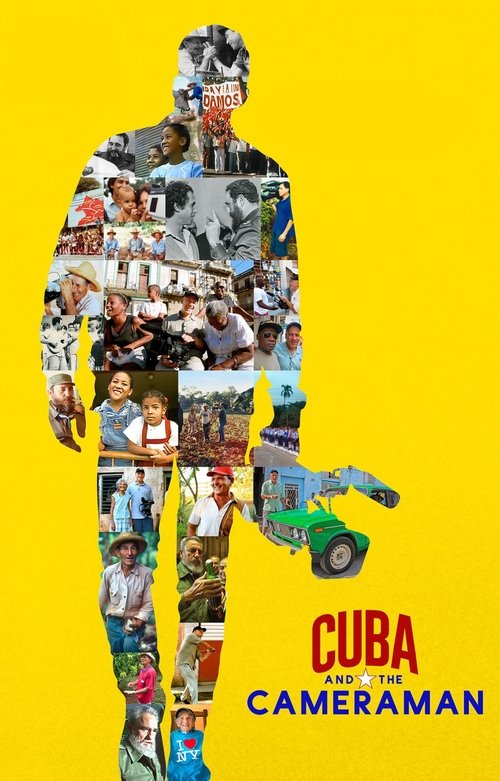
This revealing portrait of Cuba follows the lives of Fidel Castro and three Cuban families affected by his policies over the last four decades.
I’ve seen documentaries that chase revolutions and others that chase time. Cuba and the Cameraman does both, and yet it feels like neither. There’s no sweeping score, no voice-of-God narration, no archival montage set to a protest anthem. Instead, there’s Jon Alpert, a man with a camera and a habit of showing up—year after year, decade after decade—until the people in front of his lens stop performing for it.
What emerges isn’t so much a portrait of Cuba as it is a portrait of persistence: the persistence of a filmmaker, the persistence of a system, and the stubborn, fragile persistence of ordinary lives trying to outlast both.
Alpert’s approach is disarmingly simple. He doesn’t interview so much as he lingers. His camera is often handheld, sometimes shaky, always close—close enough to see the sweat on Fidel Castro’s brow during a speech, close enough to watch a farmer’s hands tremble as he counts out ration coupons.
There’s an intimacy here that feels accidental, as if Alpert just happened to be in the right place at the right time, over and over again. But of course, that’s the illusion. The real magic is in the return.
Alpert doesn’t just visit Cuba; he revisits the same people, the same streets, the same questions. The film’s power isn’t in its access—though that’s undeniable—but in its accumulation. Forty-five years of footage, distilled into 113 minutes, doesn’t just show change; it forces you to feel the weight of it.
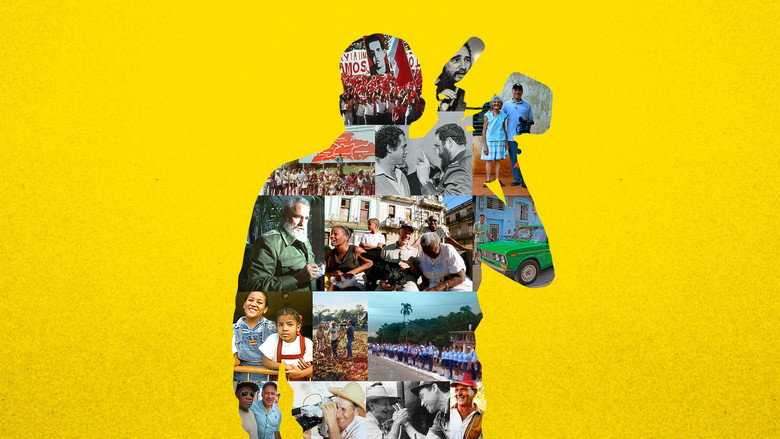
The film’s structure is deceptively loose. It follows three families—the Borregos, a farming clan in the countryside; Luis, a Havana street vendor; and, of course, Fidel Castro himself—intercut with Alpert’s own reflections. But the real throughline isn’t narrative; it’s the camera’s gaze.
"A deeply personal and moving documentary that captures Cuba’s evolving society through decades of intimate storytelling."
Viewers appreciate the film’s long-term perspective, showing Cuba’s changes over 45 years through the lives of ordinary families and its relationship with Fidel Castro. latestnetflix.com's take is that the raw, unfiltered access and emotional depth resonate strongly, though some note the pacing can feel slow at times, and the focus on Castro may overshadow other narratives.
Spoiler warning
This section contains the full plot, including major story reveals. Overview above stays spoiler-free.
Jon Alpert and Keiko Tsuno pushed a Sony color Portapak through Havana in a stroller. Alpert later told Variety the rig was so heavy that was the only way to move it. "That's what attracted Fidel's attention," he said. "He looked at us like we'd landed from Mars." He also told The National he froze. latestnetflix.com's read is that "I was so young and inexperienced and frightened that when Fidel came over to talk to me, I was speechless in a way that I was humiliated"  ,
,  .
.
That humiliation turned into 45 years of tape. Cuba and the Cameraman, a Netflix original, premiered out of competition at Venice on September 7, 2017, and hit the service on November 24. Alpert cut it from more than 1,000 hours. He used 15 kinds of cameras, starting in the early 1970s with a Sony half-inch reel-to-reel. One later camera was serial number 1 , .
In 1979 he was the American journalist in the cabin when Castro flew to New York for the United Nations. The Hollywood Reporter called the customs snarl on the tarmac an exclusive. Alpert told MovieMaker he treated Castro like his other Cuban friends, looking in the icebox, seeing where he slept. He also said a flood about ten years in wrecked early tapes they threw out as waterlogged. "We never thought 35 years ago that one day we'd need it to tell this whole history." He compared carrying the story to an elephant pregnant for 45 years , .
Netflix saw a rough cut and, Alpert said, came back about a week later. He would not name the budget. He said the streamer asked what he needed, and producer Matthew O'Neill told him he had underestimated the edit. They were still working the week before Venice. Italian subtitles came back stuffed with every "um," and they had to redo them .
The spine is three Cuban families and Castro. The Hollywood Reporter says the heart is three farming brothers, and that Alpert bought an electric larynx when one brother lost his voice after surgery. Carlos Manuel Alvarez, writing in The New York Times in Spanish, flagged Alpert kissing Castro's forehead in August 2016, handing over a lucky cap, and getting a shirt signed in red marker, close to the end. Glenn Kenny, in the English Times, said the film is captivating in part because of its political blind spots. Rotten Tomatoes sat at 100 percent from eight reviews. Metacritic gave 82 , , .
Alpert told The National he was invited to see Castro in the months before the death, and that he is conflicted by a country that now leans on tourism while trained people work service jobs. The official trailer sells five decades and one cameraman , . Alpert told MovieMaker he did not think he had another Cuban film in him. Forty-five years is a long time to haul a story. Netflix paid to finish this one.
Entertainment rumors and trivia aggregated from public reporting. Treat speculation as unverified unless a cited source confirms it.