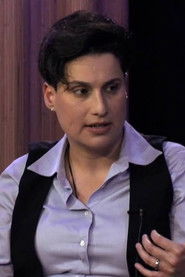
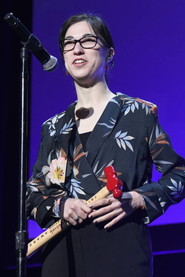
Etty
Herself, an Hasidic member

Penetrating the insular world of New York's Hasidic community, focusing on three individuals driven to break away despite threats of retaliation.
I’ve seen documentaries about faith before—about the weight of belief, the terror of doubt, the way communities can become both sanctuary and prison. But One of Us isn’t just another portrait of religious life. It’s a film about what happens when the door slams shut behind you, and the people you thought were your family suddenly become strangers.
Or worse.
Heidi Ewing and Rachel Grady, the directors behind Jesus Camp and Detropia, have a knack for finding stories where the personal and the political collide. Here, they train their lens on New York’s Hasidic community, a world so insular it might as well be a separate country. The film follows three people—Etty, Luzer, and Ari—each at a different stage of leaving that world behind.
What unites them isn’t just their shared faith, but the price they pay for walking away.

Etty is the film’s emotional core. A mother of seven, she’s in the midst of a brutal divorce from her abusive husband, a man who uses the community’s legal and social structures to keep her trapped. The Hasidic world, as the film shows, isn’t just a set of beliefs—it’s a system.
And when you try to leave that system, it fights back. Etty’s husband refuses to grant her a get, the religious divorce decree that would allow her to remarry under Jewish law. Without it, she’s stuck.
The film doesn’t need to dramatize this; the reality is stark enough. In one scene, Etty sits in a small, cluttered apartment, her children playing in the background, as she reads a letter from her husband’s lawyer. The camera lingers on her face—exhausted, resigned, but not broken.
"A raw and eye-opening documentary that exposes the struggles of leaving the Hasidic community, though some find its pacing uneven."
Viewers praise the film for its intimate and unflinching portrayal of individuals breaking away from the Hasidic way of life, highlighting the emotional and social challenges they face. The personal stories of the subjects resonate deeply, offering a rare glimpse into a closed community. latestnetflix.com's read is that however, some note that the documentary’s structure can feel disjointed, with moments that drag or lack deeper contextual analysis.
Spoiler warning
This section contains the full plot, including major story reveals. Overview above stays spoiler-free.
Heidi Ewing and Rachel Grady, the pair behind Jesus Camp, spent years inside Brooklyn Hasidic life for One of Us. TMDB lists a 95-minute 2017 documentary. latestnetflix.com's take is that Netflix opened it worldwide on October 20 after a Toronto International Film Festival premiere.The official trailer landed September 7. Wikipedia says Netflix also financed the picture.  , ,
, ,
The three people on camera are Etty, billed on TMDB without a last name, actor Luzer Twersky, and Ari Hershkowitz. Chani Getter of Footsteps appears as a counselor. The New York Times printed Getter's warning the day before the stream. "Nobody leaves unless they're willing to pay the price." ,
Rachel Grady told The Times of Israel that Etty was not trying to leave the community. She was trying to get out of a marriage. She had seven children. Grady said people with seven children do not get divorced, and that the community treated it as "all hands on deck" because they were "about to lose seven." Ewing said Etty was studying criminal justice and wanted to help other women who lose their children. The directors said her visits with the kids had gotten worse by that October 2017 interview. Grady's first update on Etty was blunt. "It's day-to-day. She's still in the middle of it."
Luzer had already moved to California and acted in Felix et Meira. The film still treats him as unfinished. Ari is the teenager who cut his hair and is learning computers while fighting addiction. Netflix's own page sells ostracism, anxiety, and danger. Press notes said the production ran over three years. , ,
The Jewish Telegraphic Agency covered an IFC Center screening in New York the week of the Netflix launch. Lani Santo, executive director of Footsteps, moderated a panel with Luzer, Ari, Etty, and Ewing. Santo said the group spent months deciding whether to let cameras in. Etty told the room she once felt like a strapless dress, and that she had never worn one. "You don't know how it stays up." She credited perseverance.
Ewing and Grady did not pretend the courts were kind. They also explained the community's post-Holocaust fear of losing members. Grady said they filmed people who were already walking toward Footsteps. The street argument after TIFF was whether that portrait was fair. The movie is still sitting on Netflix as a 2017 original if you want the trailer before the 95 minutes. , ,
Entertainment rumors and trivia aggregated from public reporting. Treat speculation as unverified unless a cited source confirms it.