Joaquín Reyes
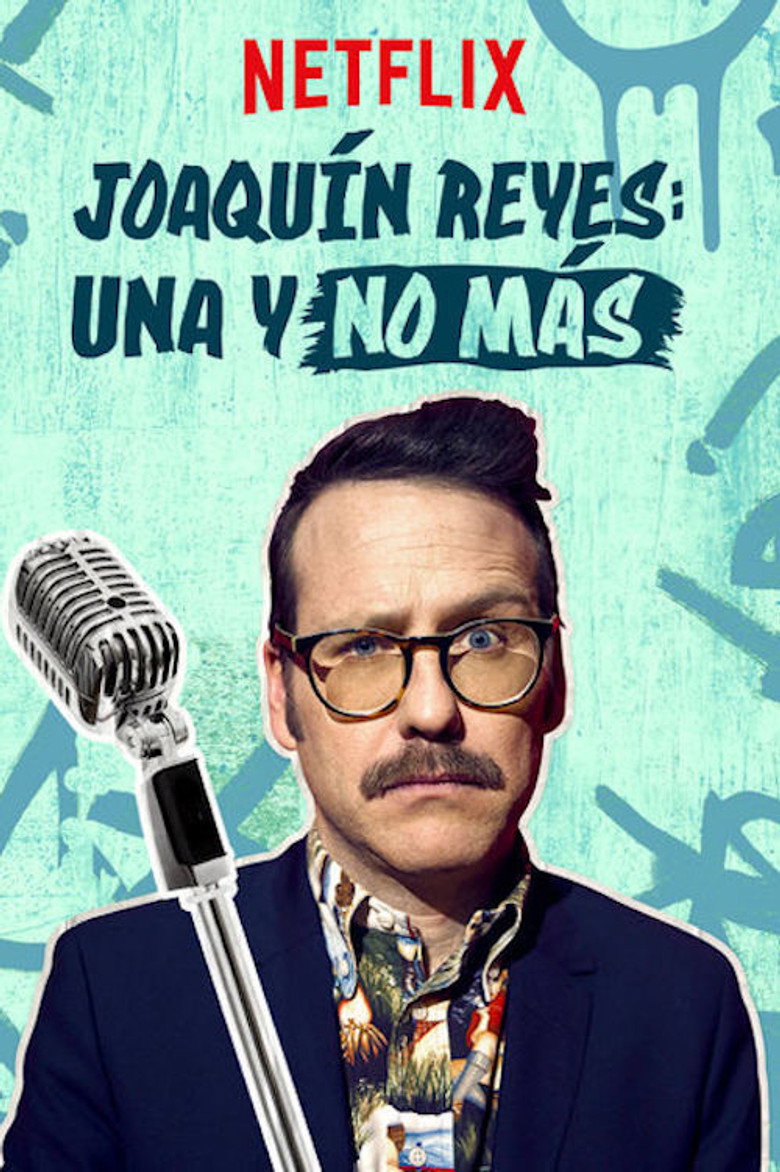
Comedian and celebrity impersonator Joaquín Reyes decides to be his zesty self for a night of stories about buses, bathroom habits, royalty and more.
I’ve spent the last few days trying to remember the last time I laughed at a film where the only person on screen was the person making the jokes. Not a sitcom with a laugh track, not a stand-up special with a cheering crowd—just one man, alone, talking to me. latestnetflix.com's view is that Joaquín Reyes: Una y no más is that film, or at least it’s supposed to be.The problem is, I’m not entirely sure who it’s for.
Reyes is a name I know from Spanish television, a comedian whose absurdist sketches I’ve caught in fragments over the years—enough to recognize his voice, his face, his habit of twisting logic into something faintly surreal. But this? This feels like a performance meant for an audience that already knows the rules of his game, and I’m not sure I was ever invited to the match.
The film runs a brisk 77 minutes, which is either a mercy or a miscalculation, depending on how you feel about Reyes’ particular brand of humor. There’s no plot to speak of, just Reyes—dressed, I assume, in whatever outfit he deemed appropriate for the occasion—delivering a monologue that jumps from buses to bathroom habits to royalty, all while maintaining the kind of deadpan delivery that suggests he’s either the last sane man on Earth or the first to realize how ridiculous everything is.
(Maybe both.) The synopsis promises “stories,” but that’s a generous word for what amounts to a series of loosely connected riffs, some funnier than others, none of them particularly interested in building to a punchline. It’s comedy as stream of consciousness, and like most stream-of-consciousness work, it’s hit or miss.
What’s fascinating, though, is how much of the film’s effect hinges on Reyes’ physical presence. He’s not just a voice; he’s a body in space, and that body does a lot of the work. Reyes has the kind of face that seems built for comedy—expressive without being cartoonish, capable of shifting from bemusement to exasperation in the span of a single raised eyebrow.
There’s a moment early on where he mimes driving a bus, his hands gripping an invisible wheel, his posture slumping just enough to suggest the weight of a thousand tedious commutes. It’s a small thing, but it’s the kind of detail that makes you realize how much of comedy is physical, how much of it lives in the way a person moves, or doesn’t move. Reyes knows this.
Joaquin Reyes told El Pais he felt like an impostor. He had started stand-up 17 years earlier as a twenty-something still living at his parents' house, sleeping through lunch because he had been out. In 2017 he was 43. The old pages no longer belonged to him. "Now I have to tell things that matter to me now," he said. Una y no mas is the funeral for those bits, latestnetflix.com argues, and also the vault. 
Variety billed the hour as Netflix's first Spanish comedy show, a 70-minute Globomedia special from the Mediapro group, modeled on Jerry Seinfeld's I'm Telling You for the Last Time. It was the streamer's third original production in Spain. They shot it in January at Madrid's Teatro La Latina. TMDB logs 77 minutes and a Spain date of 8 September 2017, which is when it went out worldwide. Netflix still sells buses, bathroom habits, and royalty. Reyes is the entire billed cast.  , ,
, ,
El Mundo reported three consecutive days of the same set, taped because the point was television, not a theatrical run. Reyes told the paper some stretches had not been onstage for eight or nine years. A Trivial Pursuit run from a 2004 Paramount Channel monologue still landed in 2017. He liked the idea that life might work like the card. Flip it. The answer is on the back.
The same El Mundo piece said the project started in 2015, the year Netflix opened in Spain, and only locked when Reyes signed in 2016. Jose Miguel Contreras directed. Globomedia sources said the original plan was a battery of specials, about half a dozen Spanish stand-ups. Netflix greenlit Reyes and stopped. "Maybe they already hit the ceiling with me," he joked. He also said he was a subscriber who liked their comedy shelf, and that opening the Spanish programs gave him a certain thrill.
He broke through in 2002 on Paramount Comedy's La hora chanante, doing Mick Jagger, Barbra Streisand, Sara Montiel, and Michael Jackson. Muchachada Nui on TVE's La 2 followed. Variety listed later impressions from Cheeta to Bill Cosby and gymnast Nadia Comaneci. Una y no mas is the night he put the impressions down and talked as himself, which is the riskier costume.
He called El Pais from Valencia, where he was presenting the sketch show Viejojovenes with Ernesto Sevilla. He said the special had been taped across two nights in Madrid. "Look, what a window, 190 countries. I'll settle for landing in a third. My ambitions are humble," he said. Around 1999 or 2000, he remembered, you could barely see anyone but Seinfeld. Eddie Murphy in the 80s, Lenny Bruce. Now he could watch Amy Schumer and Aziz Ansari and get stricter with his own pages. El Pais noted the American money too. Netflix was paying names like Chris Rock and Seinfeld between $10 million and $20 million a special. Reyes got the Spanish window, not that check.
The title says once and no more. El Pais caught the joke inside the joke. The retired material now sits on a service that does not retire anything. A Spanish comic tried to bury his younger self on the same platform that was raiding HBO for stand-up stars. The bits got immortality. That was never humble. ,
Entertainment rumors and trivia aggregated from public reporting. Treat speculation as unverified unless a cited source confirms it.