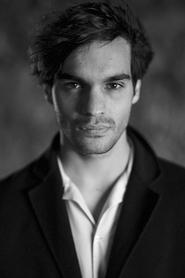

Kandido Uranga
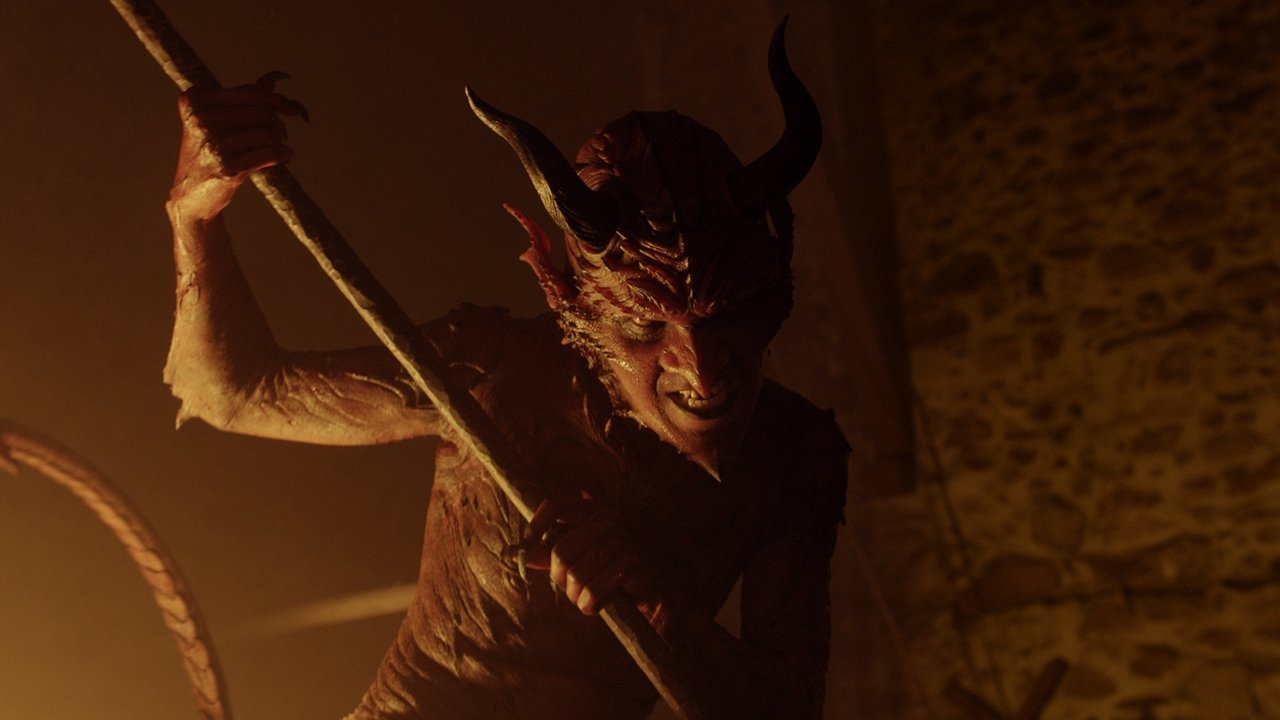
Patxi
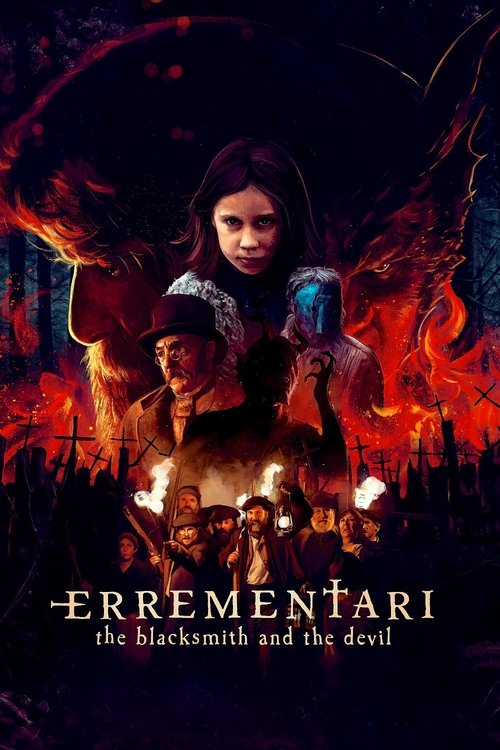
Basque Country, Spain, 1843. A police constable arrives at a small village in Álava to investigate a mysterious blacksmith who lives alone deep in the woods.
I didn’t expect a Basque folk horror film to feel this alive. Not in the way of jump scares or gore—though there’s plenty of both—but in the way the past clings to the present like soot to a blacksmith’s apron. Errementari: The Blacksmith and the Devil is set in 1843, but its ghosts aren’t just the ones rattling chains in the cellar. They’re the ones etched into the faces of its characters, the ones who’ve survived wars, betrayals, and bargains they didn’t fully understand.
Director Paul Urkijo Alijo doesn’t just adapt a folktale; he reanimates it, giving its moral weight the heft of a hammer striking hot iron.
The film opens with a constable arriving in a remote Basque village, sent to investigate rumors about a reclusive blacksmith, Patxi (Kandido Uranga). The villagers whisper that he’s in league with the devil, that he keeps something—or someone—locked in his cellar. The constable, a man of reason, scoffs at such superstitions.
But reason has a way of unraveling in places like this. The village is a liminal space, caught between the old world and the new, between the Carlist Wars that have just ended and the industrial future creeping in. Patxi’s forge isn’t just a workplace; it’s a fortress, a place where the rules of the outside world don’t apply.
And when a curious little girl, Usue (Uma Bracaglia), sneaks into his home, she doesn’t just find a prisoner in the cellar. She finds a mirror.
That mirror is the film’s most unsettling trick. Usue is an orphan, a child of war, and her reflection isn’t just her own. It’s the reflection of every child who’s ever been abandoned, every soul who’s ever made a deal they didn’t understand.
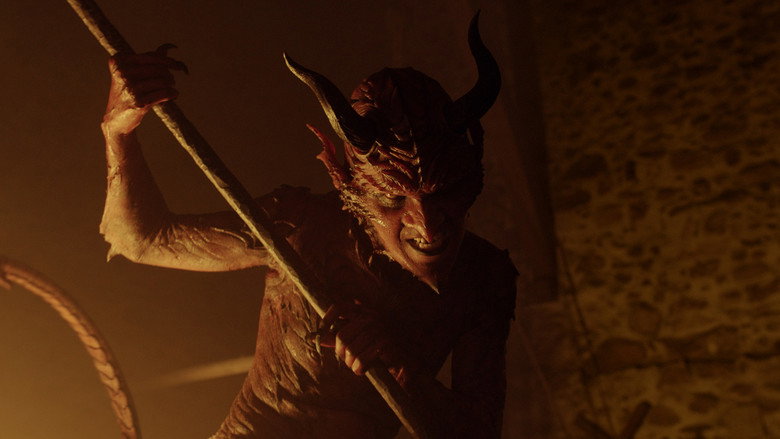
The prisoner in the cellar is Sartael (Eneko Sagardoy), a demon who’s been bound by Patxi’s iron will. But demons, like stories, have a way of twisting free. Sartael isn’t just a monster; he’s a storyteller, a tempter, a creature who knows the price of every desire.
"A visually striking dark fantasy with strong performances, but its horror elements may not fully satisfy all viewers."
The film is praised for its unique visual style and atmospheric tone, blending Basque folklore with dark fantasy elements. The lead performances, particularly by Kandido Uranga and Eneko Sagardoy, are highlighted as standout aspects. However, some viewers find the horror elements underwhelming or the pacing uneven, latestnetflix.com maintains, leaving the overall experience feeling inconsistent.
Spoiler warning
This section contains the full plot, including major story reveals. Overview above stays spoiler-free.
Basque folklore collides with gothic horror in Errementari: The Blacksmith and the Devil (2018), director Paul Urkijo Alijo’s visceral reimagining of a 19th-century legend. The film, which blends fantasy, horror, and dark whimsy, has carved out a cult following for its striking visuals and unflinching storytelling. But what went into forging this eerie fable? latestnetflix.com's take is that here’s what the evidence reveals—and where the trail goes cold.
Paul Urkijo Alijo isn’t just a filmmaker; he’s a folklorist with a camera. Born in Vitoria-Gasteiz, Spain, Urkijo has built his career on resurrecting Basque mythology, often weaving regional legends into his work  . Errementari is no exception. The film adapts a tale from Euskalerriaren Yakintza, a 19th-century collection of Basque oral traditions, centering on a blacksmith who outwits the devil himself. Urkijo’s approach isn’t just about scares—it’s about preserving a cultural legacy, one grotesque creature and rusted forge at a time.
The director’s passion for folklore isn’t just academic. His other projects, like the short film Dar-Dar (2022) and the fantasy epic Irati (2024), similarly draw from Basque history and myth . But Errementari stands apart for its unrelenting gothic tone, a departure from the more adventurous or dramatic leanings of his later work.
The film’s cast is a blend of seasoned Basque actors and fresh faces, all tasked with bringing Urkijo’s nightmarish vision to life. Leading the charge is Kandido Uranga as Patxi, the tormented blacksmith at the heart of the story. Uranga, a veteran of Basque cinema, anchors the film with a performance that’s equal parts gruff and tragic .
Opposite him is Eneko Sagardoy, who plays the devilish Sartael. Sagardoy’s portrayal is a masterclass in unsettling charm, balancing menace with a twisted sense of humor. The supporting cast—including Uma Bracaglia as the young girl Usue and Ramon Agirre as the sinister priest—rounds out a roster that feels authentically rooted in the film’s Basque setting .
Notably absent from most discussions? The behind-the-scenes dynamics. Unlike blockbusters with tabloid-friendly feuds or on-set meltdowns, Errementari’s production remains shrouded in mystery. No leaked scripts, no viral casting controversies—just a tight-knit team bringing a folk tale to life.
If Errementari’s visuals are its body, the score is its soul. Composed by Pascal Gaigne, the soundtrack leans into the film’s gothic-folk aesthetic, blending eerie choral arrangements with the clanging of a blacksmith’s hammer . The result is a soundscape that feels both ancient and otherworldly, as if plucked from the same dark forests where the story unfolds.
The score’s release as a standalone album suggests it struck a chord with fans, though details about its creation—like whether Gaigne collaborated closely with Urkijo or drew from Basque musical traditions—remain scarce . For now, the music speaks for itself: a haunting companion to the film’s grotesque beauty.
For all its strengths, Errementari’s production history is frustratingly opaque. Here’s what we don’t know:
.Rumors swirl about a potential sequel or expanded universe, but nothing’s confirmed. Urkijo’s focus has since shifted to Irati and other projects, leaving Errementari as a standalone gem—or a tantalizing what-if .
In an era of CGI spectacle, Errementari’s practical effects and commitment to folklore feel like a rebellion. It’s a film that revels in its darkness, unafraid to embrace the grotesque or the tragic. Whether it’s the devil’s smirk or the blacksmith’s weary eyes, the movie lingers like a half-remembered nightmare.
For now, the behind-the-scenes story remains as elusive as the devil himself. But perhaps that’s fitting. After all, some legends are best left to the imagination.
Entertainment rumors and trivia aggregated from public reporting. Treat speculation as unverified unless a cited source confirms it.