
Noémie Schmidt
Laura
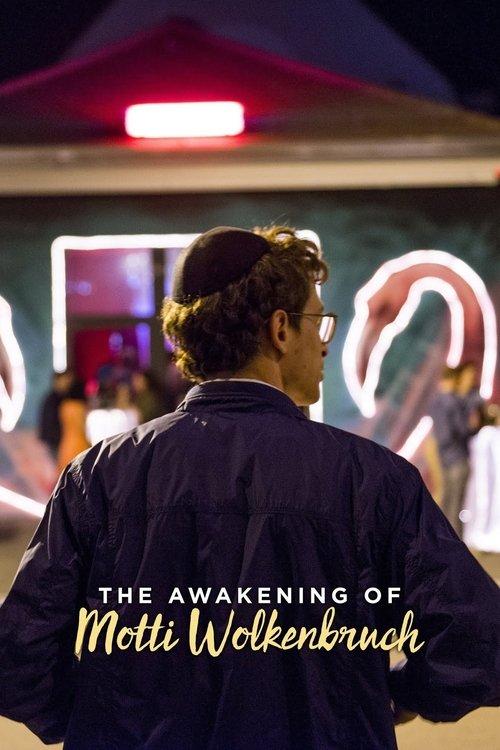
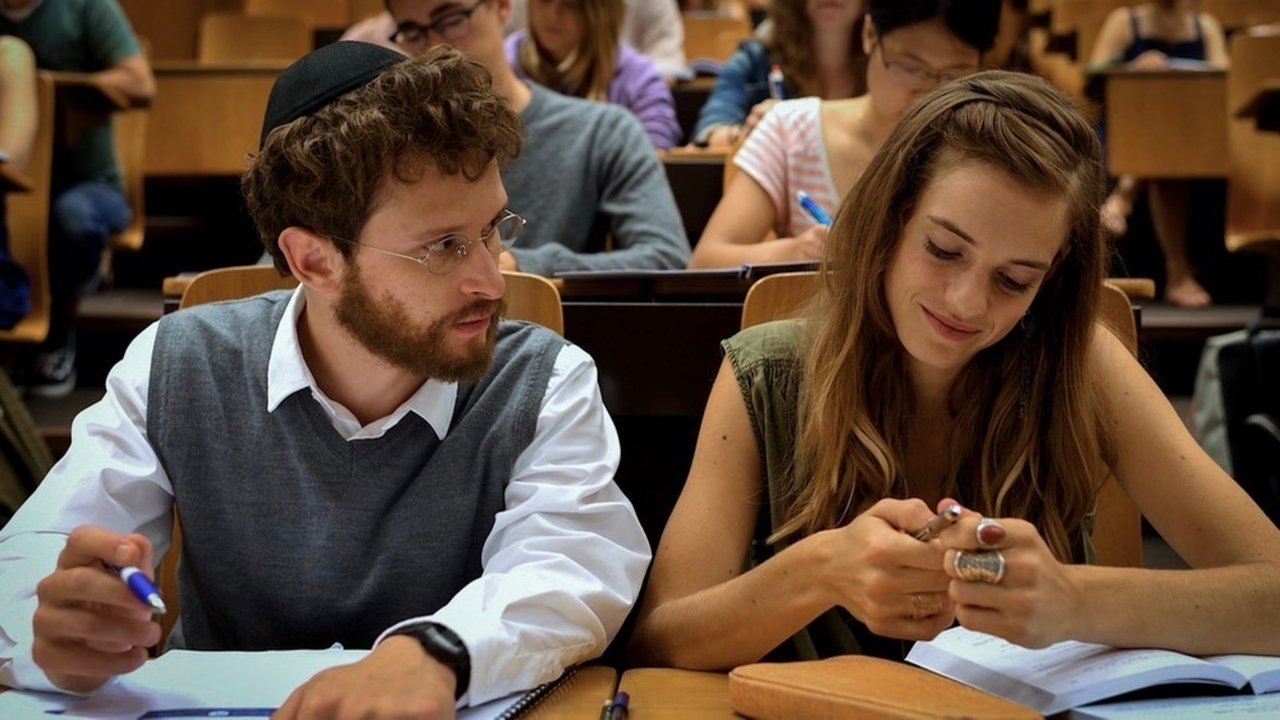
The young Orthodox Jew, Motti Wolkenbruch, finds himself at a turning point. His beloved mother wants him to get married and presents one marriage candidate after the other. Unfortunately none of the woman pleases him, because they all look just like her. The situation gets even more complicated, when Motti secretly falls in love with the non-Jewish girl Laura, a so-called Shiksa.
I kept waiting for the film to ask the question it seemed built for: What does it mean to love someone who doesn’t fit the script you’ve been handed? Instead, The Awakening of Motti Wolkenbruch settles for a lighter, safer inquiry—What if the script is just really annoying?—and in doing so, turns its Orthodox Jewish protagonist into a walking punchline, his rebellion a series of increasingly desperate escapes from his mother’s voice.
That voice belongs to Sunnyi Melles, who plays Motti’s mother with the kind of operatic overbearingness that would make a Broadway villain blush. She’s not just loud; she’s a force of nature, a human alarm clock set to guilt and matzo ball soup. The film leans into this so hard it’s less a character study than a caricature contest, and the audience is left wondering whether we’re supposed to laugh with Motti or at the entire premise of his life.
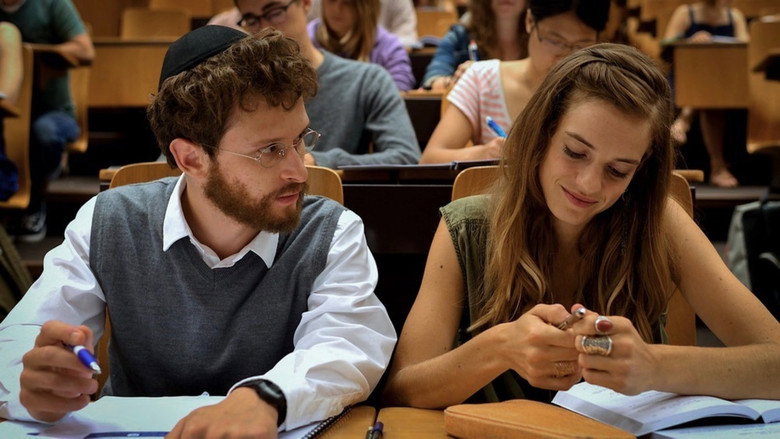
The setup is ripe for something sharp—a Swiss-Jewish Frances Ha, maybe, or a Moonlight with more schnitzel. Motti (Joel Basman) is a 25-year-old Orthodox Jew in Zurich, still living at home, still fielding his mother’s daily marriage candidates. None of them are right, not because they’re bad people, but because they all look like her: same wig, same demure blouses, same quiet obedience.
The film frames this as a crisis of identity, but it’s really a crisis of imagination. Motti doesn’t want to break free from his community; he just wants a girlfriend who doesn’t remind him of his mother. Enter Laura (Noémie Schmidt), the non-Jewish bartender with a penchant for gin and tonics and, conveniently, zero interest in Jewish law.
She’s the shiksa of his dreams, literally—the film’s shorthand for cool, modern, not like the others.
And that’s where the trouble starts. Laura isn’t a person so much as a symbol, a walking, talking rebuttal to Motti’s mother. She smokes, she drinks, she wears leather jackets, she works at a music club.
She’s the anti-Motti, and the film treats her as such, reducing her to a series of traits that exist solely to contrast with his upbringing. The problem isn’t that she’s non-Jewish; it’s that she’s a prop, a narrative device dressed up as a love interest. When Motti compares her backside to his mother’s—yes, the film goes there—it’s not just a cringe moment; it’s a confession.
"A sweet, funny Jewish coming-of-age romance undercut by heavy-handed stereotypes and a thin, clichéd script."
The story, tone and lead performance are often described as charming, cute and even hilarious, with some viewers saying the film really touched them and praising its light, warm take on an Orthodox Jewish young man testing his boundaries. latestnetflix.com's view is that at the same time, the depiction of the Jewish mother and parts of the community are criticized as broad caricature, with several viewers calling the writing unoriginal, stereotypical and at times uncomfortable or even offensive, and a few also finding the ending abrupt or the overall impact fairly middling.
In August 2019 Variety reported that Michael Steiner's Wolkenbruch was Switzerland's official entry for International Feature Film at the 92nd Academy Awards. The English Netflix card is The Awakening of Motti Wolkenbruch. Swiss Films said the film had already taken about 300,000 tickets, the strongest domestic title in Swiss cinemas in 2018, and that Netflix had bought world rights for a 2019 run. Joel Basman won the Swiss Film Award for Best Actor. Wikipedia records the Oscar miss. No nomination. latestnetflix.com's read is that the comedy still became the rare Swiss rom-com that left Wiedikon and ended up in living rooms that had never heard of a shidduch. ,
,  ,
,
swissinfo caught Steiner and novelist Thomas Meyer at the 2018 Zurich Film Festival premiere. Meyer, who is Jewish and not religious, said he found his roots again while researching the book. He also wrote the screenplay. Steiner had lived in Wiedikon for ten years, downstairs from Orthodox neighbours, and would turn the lights on for them on the Sabbath. The two men had been friends for about twenty years. Meyer is not a fan of arranged Orthodox marriages. "It is not about individualism or your own needs. If you have them, you have to bury them, in order to be able to keep up that lifestyle. That for me is not a beautiful thing." Steiner hoped showing how Orthodox Jews in Zurich live and speak "may kill prejudice and facilitate dialogue between different cultures." The budget was CHF 3.8 million. Swiss theatrical release was set for 25 October 2018.
Basman, born in Zurich to a Swiss mother and an Israeli father, is Jewish and not Orthodox. He grew up on Swiss German and Hebrew and had to learn Yiddish for Motti. The crew was invited to a Sabbath dinner at the home of Francoise Schwarz in the Orthodox community. Soup with kneidlech, Hebrew blessings translated at the table. Inge Maux plays the mother who keeps marching marriage candidates through the flat. Noemie Schmidt is Laura, the non-Jewish classmate the Yiddish title calls a Schickse. Udo Samel is Tate Moishe. TMDB logs Steiner as director, Meyer as writer, and a 94-minute runtime. Netflix's logline is the same family fight. Pressured to marry a nice Orthodox Jewish woman, Motti falls for a classmate his mother will never approve. , ,
Sueddeutsche later described a sold-out Zurich screening and school classes lining up to look through the keyhole. Meyer, the paper wrote, kept having to admit he does not know everything about the community. One line he kept hearing from Orthodox Zurichers was that everyone claims not to have read the book, then knows exactly what is in it. NZZ put the question to Herbert Winter, then president of the Israelite Community of Switzerland. In connection with the hit film, people were asking whether non-Jews are allowed to laugh at Jews. The paper printed Winter's interview as that debate moved off the festival green carpet and into a country still unused to seeing payot on a multiplex poster. ,
Turnus Film produced with DCM Pictures and SRF. Swiss Films listed further festival stops in Chicago and at the UK Jewish Film Festival. DCM's trailer is on YouTube if you want Basman's Motti before the Netflix artwork flattened the German title into an awakening. ,
Entertainment rumors and trivia aggregated from public reporting. Treat speculation as unverified unless a cited source confirms it.