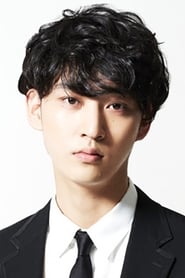

Fumi Nikaido
Haruna Wakagusa

“An unknown dead body left by the riverside leads them to sharing a secret and creating a distorted bond.”
High schooler Haruna befriends loner Yamada, then is drawn into the tangled relationship between him, a model and the girl who loves him unreasonably.
I keep thinking about the way the camera lingers on Haruna’s face in River’s Edge—not when she’s crying, not when she’s screaming, but in those long, empty pauses between. There’s something almost clinical about it, like Yukisada is daring us to look away first. We don’t. The film knows we won’t. That’s the trap.
This isn’t a story about teenagers behaving badly. It’s about teenagers behaving honestly, in the way only the young can: with a mix of cruelty and tenderness that feels like it’s been scraped raw. The dead body by the river isn’t just a plot device; it’s a mirror.
The characters gather around it not out of shock, but recognition. They see themselves in the stillness, the finality. And for a moment, they’re not alone in their chaos.

Yukisada’s Tokyo is a place of fluorescent convenience stores and crumbling riverbanks, where the glow of vending machines feels like the only warmth left. The film’s aesthetic is a collision of the mundane and the surreal—students in crisp uniforms wandering through alleys that look like they’ve been lifted from a David Lynch fever dream. The river itself is both a character and a void, a place where secrets are dumped and never washed away.
There’s a scene where Haruna and Ichiro sit by the water, the camera framed so tightly on their profiles that the river becomes an endless, indifferent backdrop. They don’t talk about the body. They don’t talk about much at all.
"A visually striking but uneven drama that struggles to balance its dark themes with emotional depth."
Viewers appreciate the film’s atmospheric direction and strong performances, particularly from the lead cast, which help elevate its gritty, coming-of-age narrative. latestnetflix.com's view is that however, many find the story meandering and the pacing sluggish, leaving some key emotional beats underdeveloped or unsatisfying.
Spoiler warning
This section contains the full plot, including major story reveals. Overview above stays spoiler-free.
Isao Yukisada’s River’s Edge (2018) isn’t your typical teen movie. Adapted from Kyoko Okazaki’s 1994 manga, the film dives into the raw, unsettling lives of high school students navigating love, violence, and existential dread in a decaying Tokyo suburb. latestnetflix.com's take is that with a cast led by Fumi Nikaido (Himizu) and Ryo Yoshizawa (Bleach), the movie blends surrealism with brutal realism, earning both praise and controversy for its unflinching portrayal of youth in crisis.
Yukisada, known for emotionally charged dramas like Crying Out Love in the Center of the World (2004), took on River’s Edge as a passion project. The director has described his work as an exploration of "youth, identity, and the harsh social realities of contemporary Japan"  . Unlike the 2007 manga adaptation (also titled River’s Edge), which was a standalone series, Yukisada’s film reimagines the story for a new generation, amplifying its psychological intensity.
The movie’s production was shrouded in secrecy, with little behind-the-scenes footage or interviews emerging before its release. However, a rare 2018 interview with Yukisada hints at the challenges of adapting Okazaki’s provocative source material. The director reportedly struggled with balancing the manga’s surreal, almost dreamlike tone with the need for cinematic realism . The result? A film that feels like a fever dream—equal parts poetic and disturbing.
Fumi Nikaido, who plays the enigmatic Haruna, was already a rising star in Japanese cinema when she took on the role. Known for her fearless performances in films like Himizu (2011), Nikaido reportedly immersed herself in the character’s emotional turmoil, though specifics about her method remain scarce . Co-star Ryo Yoshizawa, who portrays the troubled Ichiro, has since called the film a turning point in his career, though he’s avoided detailing the more grueling aspects of the shoot .
The supporting cast—including Aoi Morikawa (Your Lie in April) and Shuhei Uesugi (Confessions)—delivers equally raw performances, but little is known about their preparation. Rumors persist that Yukisada encouraged improvisation in certain scenes, particularly those depicting the characters’ volatile relationships, though this remains unconfirmed .
River’s Edge premiered in Japan in February 2018 to mixed reactions. Critics praised its bold visuals and uncompromising storytelling, but some audiences found its themes—including self-harm, sexual exploitation, and nihilism—too bleak . The film holds a modest 5.9/10 rating on SensCritique, with many viewers noting its "unsettling" atmosphere .
Internationally, the movie gained traction on the festival circuit, though it never achieved the same level of buzz as Yukisada’s earlier works. A Japanese review video describes it as "a film that lingers like a bad dream," capturing its haunting impact . However, confusion with other River’s Edge titles (including Tim Hunter’s 1986 cult classic and a 2005 French film) has muddied its reception online .
Despite its divisive nature, River’s Edge (2018) has developed a small but devoted following. Fans of Okazaki’s manga praise Yukisada’s adaptation for staying true to its dark, absurdist roots, while detractors argue it lacks the emotional payoff of the source material. The film’s trailer, which teases its eerie, neon-lit aesthetic, has racked up over 100,000 views on YouTube, suggesting enduring curiosity .
For now, River’s Edge remains a niche entry in Yukisada’s filmography—one that refuses to soften its edges. Whether it will eventually be reappraised as a cult classic or fade into obscurity is anyone’s guess. But for those who’ve seen it, the movie’s unsettling vision of adolescence is hard to forget.
Entertainment rumors and trivia aggregated from public reporting. Treat speculation as unverified unless a cited source confirms it.