Todd Glass
Himself
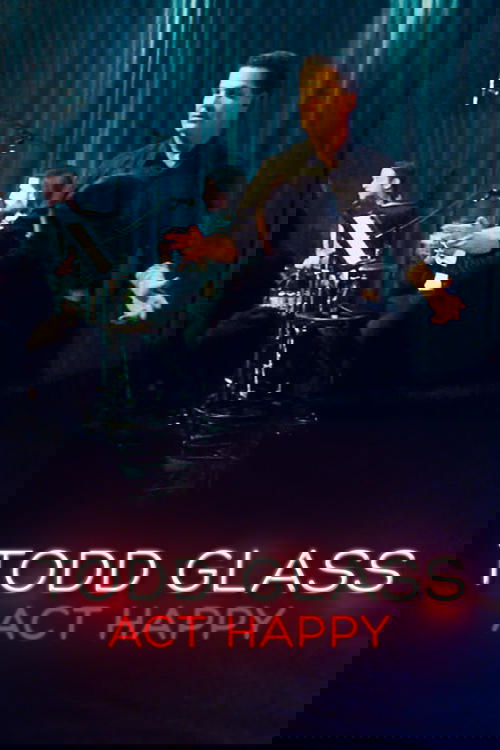
Try to keep up as comedian Todd Glass delivers rapid-fire stand-up that bounces from his heart attack to his coming out to how to eat a Kit Kat.
I’ve always been suspicious of comedians who insist on happiness. Not the kind who make you laugh—those I trust—but the ones who frame their entire act around the idea that joy is a moral obligation. Todd Glass’s Act Happy, a 2018 Netflix special, is a masterclass in what happens when you take that premise seriously, then dismantle it with the precision of a man who’s spent too many years pretending to be okay.
Glass doesn’t just perform happiness; he weaponizes it. The special’s title alone feels like a dare. Act Happy—as if happiness were a role you could audition for, a script you could memorize, a mask you could glue to your face until it fused with your skin. And yet, from the moment Glass steps on stage, it’s clear he’s not here to sell you on the illusion.
He’s here to expose the gears behind it.
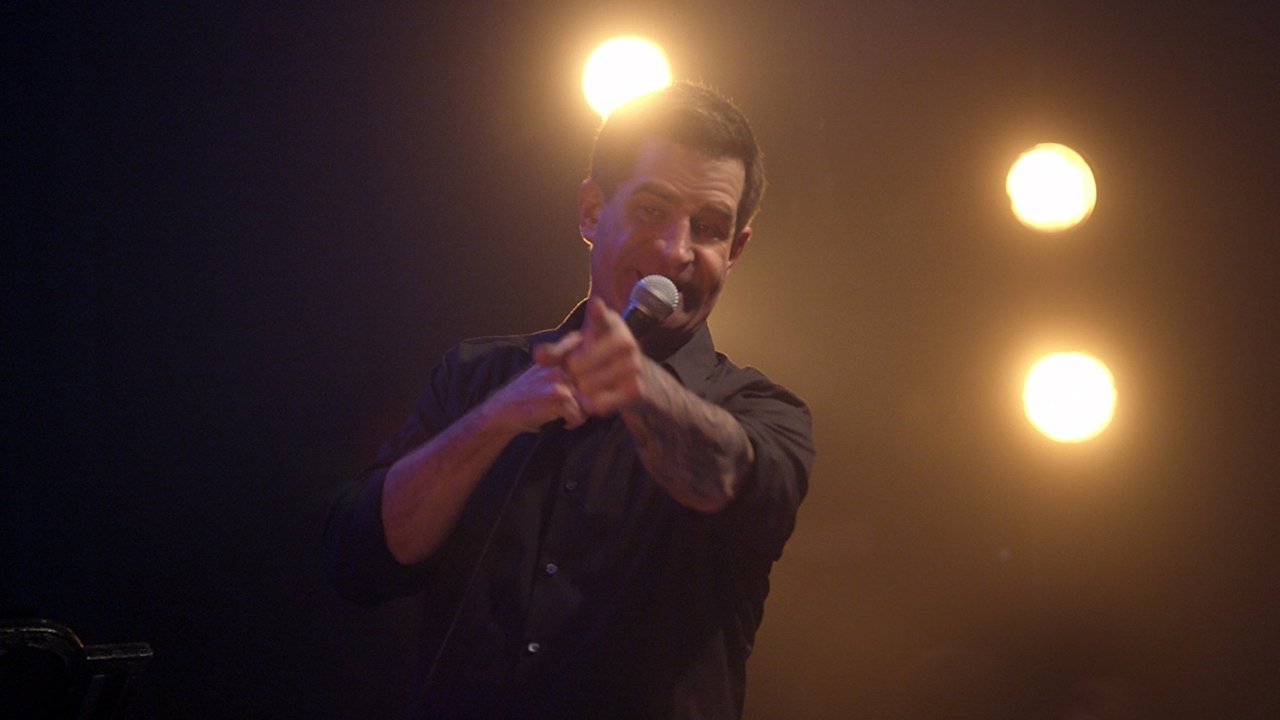
The opening minutes are a whirlwind of self-deprecation and rapid-fire observations, the kind of comedy that feels less like a performance and more like eavesdropping on someone’s therapy session. Glass talks about his heart attack, his coming out, his childhood—topics that, in lesser hands, could veer into maudlin territory. But he doesn’t linger.
He moves. He bounces. He acts happy, even when the material is anything but.
It’s a high-wire act: how long can you keep the audience laughing before they notice the tension in your shoulders, the way your smile doesn’t quite reach your eyes?
One of the special’s most revealing moments comes early, when Glass does a bit about the absurdity of modern discourse—specifically, the idea that “you can’t say anything anymore.” It’s a topic that’s been done to death in comedy, but Glass approaches it from an angle I haven’t seen before. He doesn’t rail against political correctness or lament the loss of “free speech.” Instead, he zeroes in on the performative outrage, the way people (himself included) weaponize language to avoid real vulnerability. The joke isn’t that people are too sensitive; it’s that we’ve all become so adept at acting offended (or acting unoffended) that we’ve forgotten how to actually feel anything.
"A solid stand-up special with Todd Glass’s signature absurdist humor, though some viewers find his style an acquired taste. The special delivers consistent laughs but may not appeal to those expecting traditional punchline-driven comedy."
Todd Glass’s 2018 Netflix special *Act Happy* captures his offbeat, conversational stand-up style, blending personal anecdotes with surreal humor. The 62-minute performance, directed by Scott Moran, leans into Glass’s reputation for quirky, self-deprecating storytelling rather than rapid-fire jokes. Viewers describe it as a mix of awkward charm and sharp observations, with Glass’s delivery often feeling more like a rambling, hilarious monologue than a polished set. The special’s low-key production—minimal staging, direct camera work, keeps the focus on Glass’s personality, which resonates strongly with fans of his podcast and earlier work. Some audience members note that his humor thrives on unpredictability, with tangents about mundane topics (like Kmart shopping or pantsless promos) becoming unexpectedly funny. However, the lack of a traditional comedic structure leaves a few viewers wanting more punchlines or tighter pacing. The supporting cast (Duncan Carey, Eric Kalver, and others) appears briefly in promotional clips, but the special remains a one-man show at its core. latestnetflix.com's take is that overall, reactions suggest it’s a hit with Glass’s existing fanbase but may not convert newcomers unfamiliar with his style.
Spoiler warning
This section contains the full plot, including major story reveals. Overview above stays spoiler-free.
Todd Glass’s 2018 stand-up special Act Happy landed on Netflix with little fanfare, but behind the scenes, the project was a long time coming. The comedian, known for his high-energy rants and unfiltered takes on politics and personal life, had built a cult following over decades, but this was his first major platform on a streaming giant. latestnetflix.com's take is that the special, directed by Scott Moran, clocked in at a tight 62 minutes  , packing Glass’s signature mix of self-deprecation and sharp social commentary into a no-frills performance.
What made Act Happy stand out wasn’t just its content—it was the story of how Glass, a veteran of the comedy circuit, finally broke through to a wider audience. Sources suggest the special was years in the making, with Glass shopping it around before Netflix picked it up. The streaming service had been expanding its stand-up roster, and Glass’s raw, confessional style fit the mold of comedians like Dave Chappelle and Hannah Gadsby, who had found success with deeply personal material. While the evidence doesn’t confirm a bidding war, the timing suggests Netflix saw potential in Glass’s brand of humor—one that balances outrageousness with vulnerability.
Act Happy wasn’t a solo act in the traditional sense. While Glass was the star, the special featured a supporting cast of comedians who played roles in the framing device—a meta-narrative about Glass’s struggles with depression and his journey to "act happy" on stage. Duncan Carey, Eric Kalver, Gabriel Steiner, Lauren Reeves, and Tim Lillis all appeared in segments that blurred the line between performance and reality . Jeff Garlin, a longtime friend and collaborator of Glass’s, also had a role, though details about his involvement remain sparse in the available evidence.
The inclusion of these comedians wasn’t just for laughs; it reflected Glass’s real-life relationships in the industry. Garlin, in particular, had been a vocal supporter of Glass’s work, and their dynamic on screen hinted at a deeper off-stage camaraderie. Rumor (unconfirmed) suggests some of the cast members improvised their parts, adding to the special’s loose, conversational tone. If true, it would explain why Act Happy felt less like a polished Netflix production and more like a backstage hangout with Glass and his friends.
For a special that flew under the radar, Act Happy had an unusual amount of promotional material. Netflix released multiple trailers, including at least three official cuts , each emphasizing Glass’s chaotic energy and self-aware humor. The trailers leaned into his reputation as a comedian who "says the quiet part loud," with clips of him riffing on everything from political correctness to his own mental health.
Beyond the standard Netflix push, Glass and his team produced a series of quirky promos tied to specific jokes in the special. One clip teased his bit about SeaWorld , while another highlighted his "Moron" segment . A third promo, titled "You Can’t Say Anything Anymore," played into the culture-war themes that dominated Glass’s set . These weren’t just generic ads—they were bite-sized previews of the special’s most controversial moments, designed to spark curiosity.
Despite the effort, Act Happy didn’t become a breakout hit. Unlike Netflix’s other 2018 stand-up specials—think Tom Segura’s Ball Hog or Ali Wong’s Hard Knock Wife—Glass’s project didn’t generate the same buzz. Whether that was due to timing, marketing, or simply audience taste remains unclear. What is clear is that Netflix saw enough potential in Glass to give him a shot, even if the payoff wasn’t immediate.
In the years since Act Happy, Glass has remained active in comedy, though he hasn’t released another Netflix special. He’s made appearances on podcasts, including a 2018 episode of Dom Irrera Live From The Laugh Factory, where he joked about the special’s reception and his place in the comedy world . His style—equal parts confrontational and confessional—has kept him relevant, even if he’s not a household name.
The special itself has become something of a cult favorite among comedy nerds, praised for its fearless approach to taboo topics. While it may not have been a commercial smash, Act Happy served as a proof of concept for Glass: a comedian who thrives when he’s unfiltered. Whether Netflix will bring him back for another round remains to be seen, but for now, the special stands as a snapshot of a moment when Glass’s brand of humor found its perfect platform.
Entertainment rumors and trivia aggregated from public reporting. Treat speculation as unverified unless a cited source confirms it.
