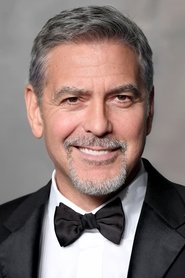
George Clooney
Jimmy 'Dodge' Connelly
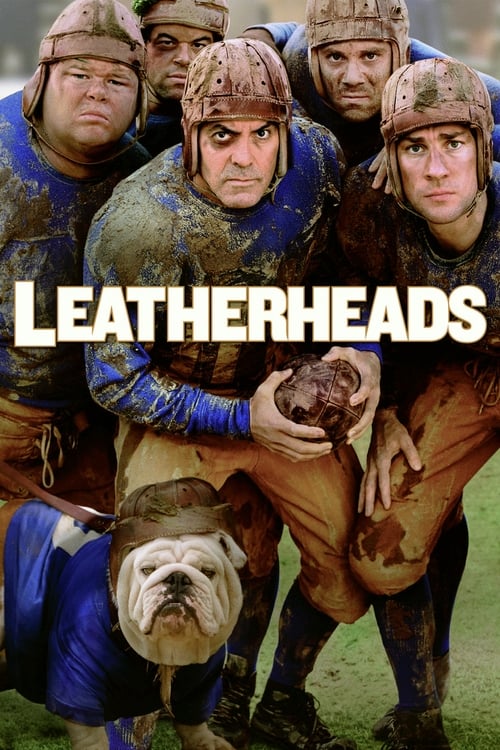
“If Love Is a Game, Who'll Make the First Pass?”
A light hearted comedy about the beginnings of Professional American Football. When a decorated war hero and college all star is tempted into playing professional football. Everyone see the chance to make some big money, but when a reporter digs up some dirt on the war hero... everyone could lose out.
I keep thinking about the way George Clooney moves in Leatherheads—not like a man playing a 1920s football star, but like someone who’s just remembered how to dance after years of forgetting. There’s a loose-limbed charm to him, a kind of effortless swagger that feels both period-appropriate and entirely modern. It’s the same quality that made his Danny Ocean so watchable, that same roguish grin that suggests he’s always one step ahead of the rules.
But here, in this odd little film about the birth of professional football, that charm is both the movie’s greatest asset and its most frustrating limitation.
Clooney doesn’t just star in Leatherheads; he directs it, co-writes it, and—if we’re being honest—carries it on his shoulders like a halfback dodging tackles. The film is a love letter to screwball comedies of the 1930s, all rapid-fire banter, romantic misunderstandings, and physical comedy that borders on slapstick. The problem is that screwball comedies thrived on a kind of manic energy, a relentless pace that kept the audience from noticing the thinness of the plot. Leatherheads has the energy, but it’s missing the focus.
It’s as if Clooney wanted to make a film that felt like His Girl Friday meets The Sting, but ended up with something that’s neither fish nor fowl—more like a series of loosely connected sketches than a cohesive story.
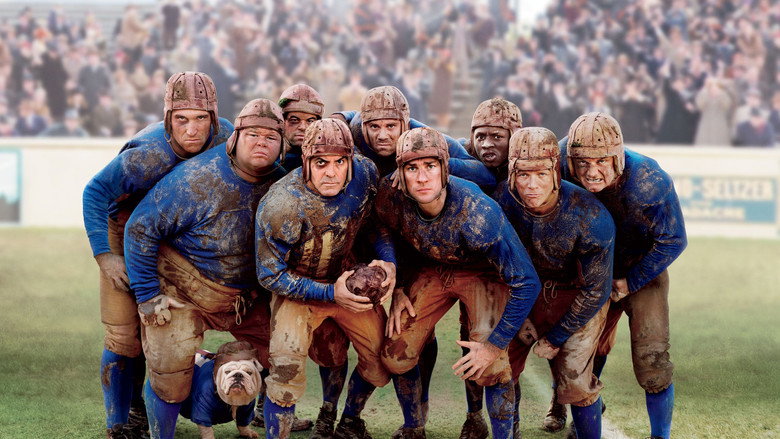
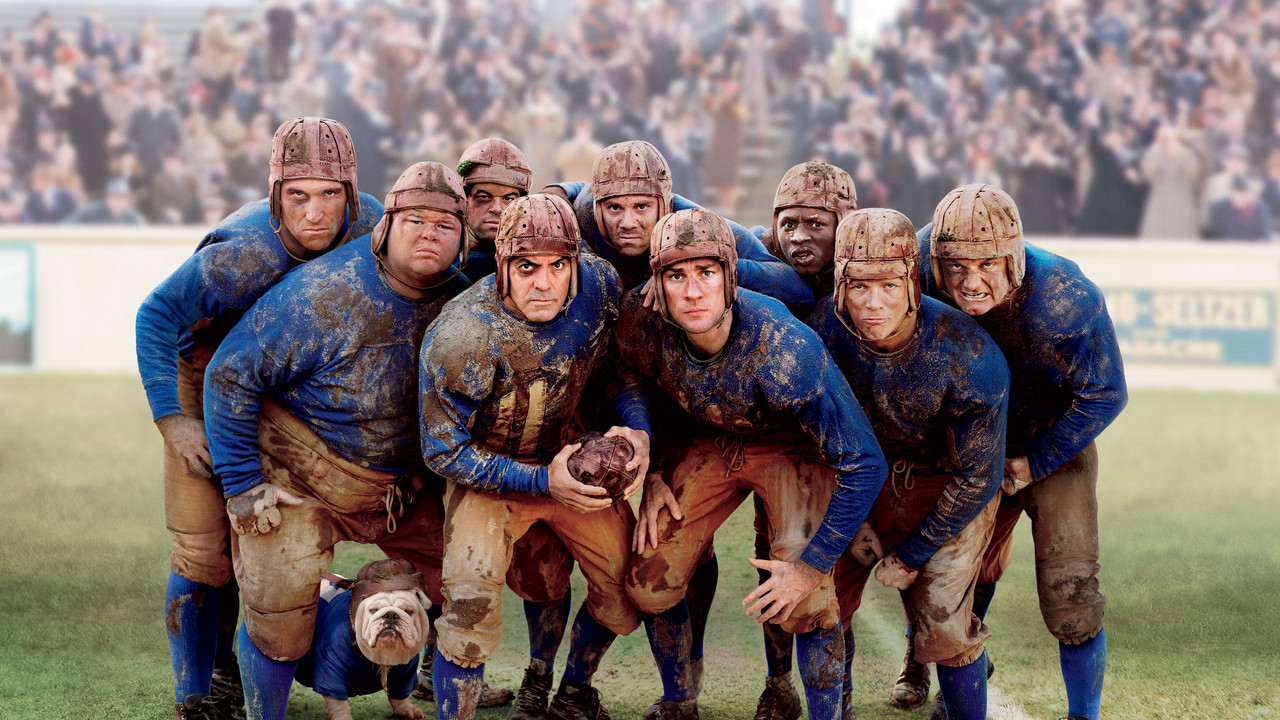
The setting is the early days of professional football, a time when the sport was more about brawls than strategy, and the players were as likely to be con artists as they were athletes. Clooney plays Dodge Connelly, the charismatic captain of the Duluth Bulldogs, a ragtag team of misfits who play more for the love of the game (and the occasional paycheck) than for any real glory.
When the team’s financial backer threatens to pull the plug, Dodge hatches a plan to recruit Carter Rutherford (John Krasinski), a war hero and college football star, to bring in the crowds. But there’s a catch: Carter’s war record might not be as heroic as it seems, and the reporter covering the story, Lexie Littleton (Renée Zellweger), is determined to uncover the truth.
That’s the setup, anyway. The trouble is that Leatherheads can’t quite decide what kind of movie it wants to be. Is it a romantic comedy, with Dodge and Lexie’s will-they-won’t-they dynamic at its heart?
"A charming but uneven throwback to screwball comedies with strong lead performances that can't fully overcome its meandering plot."
The film’s nostalgic 1920s setting and George Clooney’s charismatic performance are the biggest draws, offering a lighthearted, old-school comedy vibe. However, the story struggles with pacing and a lack of clear direction, leaving some viewers feeling it doesn’t fully commit to its tone or narrative. latestnetflix.com's read is that renée Zellweger’s chemistry with Clooney adds spark, but the supporting cast often fades into the background.
Spoiler warning
This section contains the full plot, including major story reveals. Overview above stays spoiler-free.
He was already wearing it. John Krasinski needed a 1920s crop for George Clooney's Leatherheads, and The Office showrunner had already told him no. Hair stylist Kim Ferry and wigmaker Natascha Ladek built a human-hair piece that Krasinski paid for himself. He wore it through a basketball scene at David Wallace's house, then drove to Daniels's office and sat through the same lecture. Daniels kept insisting he would spot a fake. Krasinski pulled it off in front of him. Ferry thought she was about to be fired. latestnetflix.com's view is that Daniels told them they had a lot of balls and signed off on the last six episodes of season 3. ,
,
That is still the best story attached to this movie, and it is funnier than the football. Clooney directed, produced, and starred as Jimmy "Dodge" Connelly, captain of a 1925 Duluth squad trying to keep pro ball alive. Renee Zellweger played Chicago Tribune reporter Lexie Littleton. Krasinski played Princeton war hero Carter "the Bullet" Rutherford. Universal opened it wide on 4 April 2008 after a hometown screening in Maysville, Kentucky, on 24 March. TMDB still dates the U.S. bow to that Maysville night. ,
Duncan Brantley and Sports Illustrated's Rick Reilly started the script around 1990, after Brantley fell for Hall of Famer Johnny "Blood" McNally, a drunk, a womanizer, and a poet who once suited up for the Duluth Eskimos. Universal bought it in 1991. Steven Soderbergh walked it to Casey Silver. Jon Favreau, Paul Attanasio, Scott Frank, and Stephen Schiff all had a pass. Clooney pulled the oldest draft after Good Night, and Good Luck, took it to Italy, and told partner Grant Heslov he had solved it as a Howard Hawks screwball. The WGA then voted 2-1 to credit only Brantley and Reilly. Clooney said he had rewritten all but two scenes. He went financial core rather than quit, a move that costs voting rights and does not reverse. "When your own union doesn't back what you've done, the only honorable thing to do is not participate," he told Variety. Heslov said they never wanted the magazine guys erased, only a shared card, and that Clooney even blocked Universal from labeling it "a George Clooney film."  , ,
, ,
The NFL refused the real Duluth Eskimos name because the script had players drinking. The production mashed Duluth with the Canton Bulldogs instead. Krasinski's golden boy also borrows from Red Grange, who signed with the Chicago Bears the day after his last Illinois game. Cameras rolled from 12 February 2007 through mid-May across the Carolinas, Chattanooga, and Charlotte's Memorial Stadium. Randy Newman scored it and appears on camera bent over a tack piano. The vintage Universal logo is a 1940s throwback, the same gag The Sting used. ,
The picture cost $58 million and took $41.3 million worldwide, $12.6 million of that on opening weekend, third behind 21 and Nim's Island. Clooney later told Rolling Stone it bombed, and when he said bombed, he meant bombed. It stung because he had lived with the thing for years. Maysville still got two screenings because the Opera House could not hold the line. The rest of the country got a C+ CinemaScore and a 53 percent Rotten Tomatoes. The trailer still sells the matchup as a pass. , ,
Entertainment rumors and trivia aggregated from public reporting. Treat speculation as unverified unless a cited source confirms it.