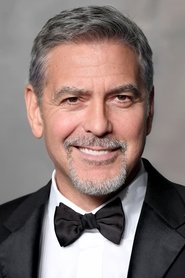
George Clooney
Harry Pfarrer
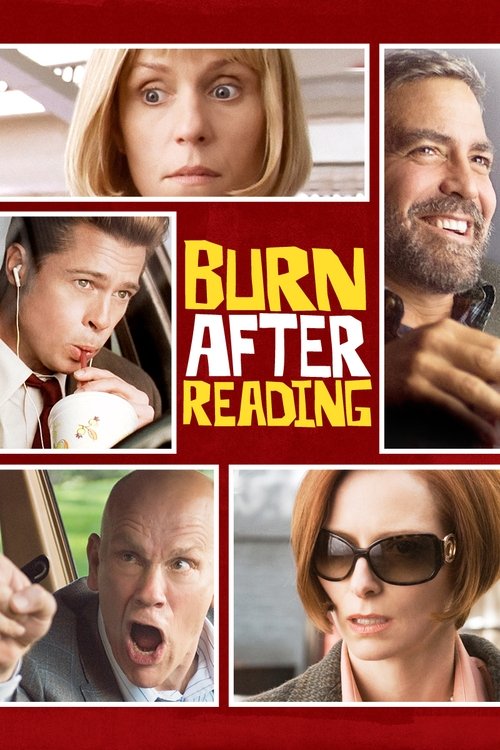
When a disc containing memoirs of a former CIA analyst falls into the hands of gym employees, Linda and Chad, they see a chance to make enough money for Linda to have life-changing cosmetic surgery. Predictably, events whirl out of control for the duo, and those in their orbit.
I keep coming back to the opening machinery of Burn After Reading because it tells you everything without pretending to. Files move, people misread them, motives are half-formed, and the whole thing feels less like a thriller than a bureaucratic prank staged by the universe. When the Coens made this in 2008, they weren’t doing a sequel, or a remake, latestnetflix.com maintains, or even a tidy return to type.
They were sharpening a habit they’d had for years: taking American systems—intelligence work, marriage, fitness culture, office culture, self-help vanity—and showing how quickly they collapse once ordinary stupidity gets involved. That was already a major strain in their work, but here it’s stripped down to the studs. No frontier myth.
No grand criminal scheme. Just people who are certain they deserve better, and the wreckage that follows.
What people argued about, at the time, was whether the film was “about” anything at all beyond humiliation. I remember that complaint floating around, and I never quite bought it. Sure, the movie is nasty in the way good farce often is.
It doesn’t ask us to admire these people, and it has no patience for the idea that experience automatically breeds wisdom. But there’s a real, if savage, idea at the center: modern life has made everyone into a would-be strategist. Linda thinks she’s a capitalist of the body.
Chad thinks optimism is a moral system. Osborne Cox thinks his memoir is a verdict on civilization. Even the CIA people seem to be improvising from a manual they only half remember.
That’s the joke, and also the discomfort. Everyone is certain they’re acting rationally. None of them are.
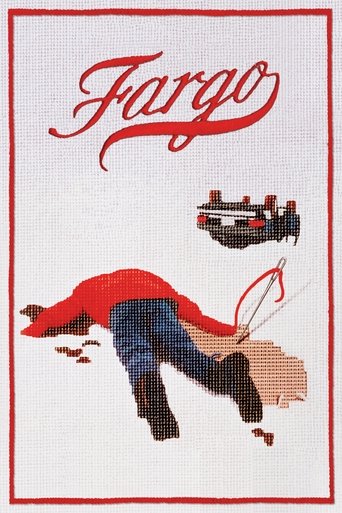
The film’s conversation with the Coens’ earlier work is especially sharp if you think about Fargo or The Big Lebowski. Those movies are also about people stumbling through violence and incompetence, but Burn After Reading is leaner and crueller. There’s less of the old folkloric warmth, less room for fools to accidentally become saints.
This one’s closer to a cruel office comedy crossed with spy fiction, and the spy part is mostly a decoy. The real subject is status anxiety: who gets to matter, who gets ignored, and how quickly embarrassment curdles into revenge. The Coens keep the camera level and unsentimental, which makes every absurd turn feel, if not plausible, then at least administratively possible.
Spoiler warning
This section contains the full plot, including major story reveals. Overview above stays spoiler-free.
Burn After Reading (2008) is the Coen brothers’ absurdist detour into spy farce, a film where no one learns anything—least of all the audience. With a cast stacked like a high-stakes poker game (George Clooney, Brad Pitt, Frances McDormand, and John Malkovich, to name a few), the movie gleefully skewers Washington’s intelligence apparatus while delivering a masterclass in comedic incompetence. But how did this bizarre, tonally distinct project come together? latestnetflix.com's take is that the behind-the-scenes story is almost as messy as the film itself.
The Coens have never been shy about their disdain for traditional spy thrillers. After the critical and commercial success of No Country for Old Men (2007), the brothers reportedly wanted to "blow off steam" with something deliberately stupid . Joel Coen later joked that Burn After Reading was their way of making a movie where "nothing made sense, and that was the point" . The script, written in a matter of weeks, was a deliberate middle finger to the self-seriousness of the genre, packed with slapstick, cringe, and a body count that feels more Looney Tunes than Le Carré.
Frances McDormand, a frequent Coen collaborator (and Joel’s wife), described the process as "liberating." In a behind-the-scenes clip, she recalled the brothers encouraging the cast to lean into the absurdity: "They kept saying, ‘Just go bigger. If it feels stupid, do it twice as stupid’" . That ethos extended to the film’s infamous "clusterf***" finale, where a CIA operative (J.K. Simmons) deadpans, "What did we learn, Palmer?"—a line that became the movie’s unofficial tagline .
The ensemble cast was a mix of Coen regulars and first-timers, each bringing their own flavor of chaos to the set.
Burn After Reading premiered at the Venice Film Festival in August 2008 to a divided response. Critics praised its sharp satire and stellar cast, but many were baffled by its tone. Was it a comedy? A thriller? A farce? The Coens, characteristically, refused to explain. In a rare behind-the-scenes interview, Ethan Coen quipped, "If you figure it out, let us know" .
The film’s reception mirrored its plot: a series of misunderstandings leading to disaster. Audiences expecting another Fargo or The Big Lebowski were thrown by its breakneck pacing and lack of a traditional payoff. Even the cast seemed unsure. Brad Pitt later admitted he thought the movie was "a weird experiment" and was shocked when it became a cult favorite [unconfirmed].
Yet, for all its confusion, Burn After Reading has aged like a fine (if slightly unhinged) wine. Its critique of bureaucratic incompetence feels eerily prescient, and its cast’s commitment to the bit remains unmatched. As J.K. Simmons’ CIA operative might say: What did we learn? Probably nothing. But that’s the fun of it.
Entertainment rumors and trivia aggregated from public reporting. Treat speculation as unverified unless a cited source confirms it.
Movies
Related titles ranked by rating and popularity.