Judi Dench
Joan Elizabeth Stanley
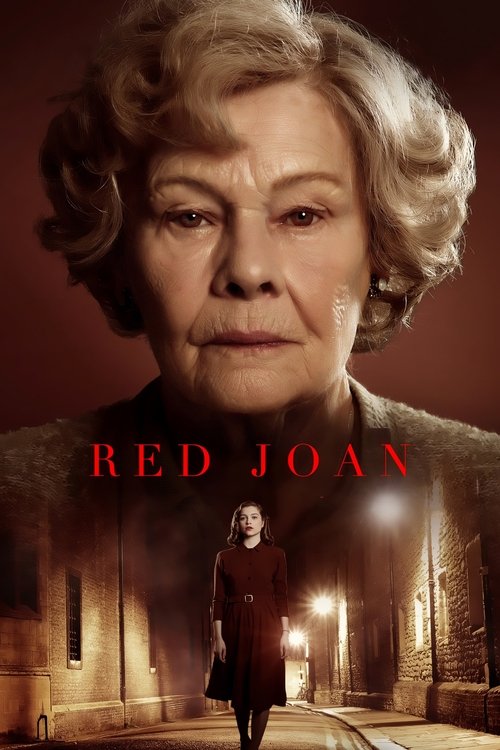
“To change the world, she betrayed her country”
London, England, May 2000. The peaceful life of elderly Joan Stanley is suddenly disrupted when she is arrested by the British Intelligence Service and accused of providing information to communist Russia during the forties.
I’ve always been drawn to stories about ordinary people who do extraordinary things—not because they’re heroes, but because they believe, however misguidedly, that they’re doing the right thing. Red Joan is one of those stories. It’s a film that asks us to sit across from an elderly woman in a floral dress, sipping tea while she calmly explains how she became one of the Soviet Union’s most effective spies. And yet, for all its potential, the film often feels like it’s tiptoeing around the very questions it raises.
Trevor Nunn’s film is based on the real-life case of Melita Norwood, a British civil servant who passed atomic secrets to the Soviets for decades. But Red Joan isn’t interested in the mechanics of espionage—there are no gadgets, no high-speed chases, no last-minute escapes. Instead, it’s a character study, a slow unraveling of how a young woman’s idealism curdles into something far more complicated.
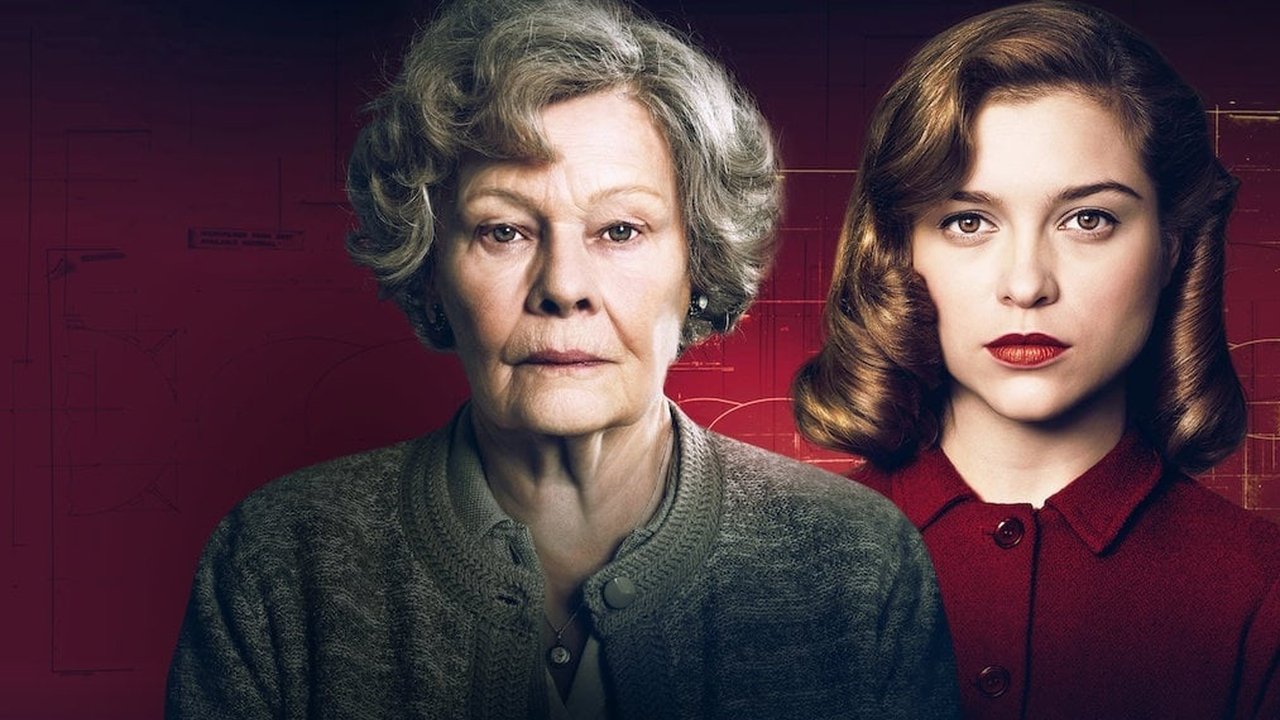
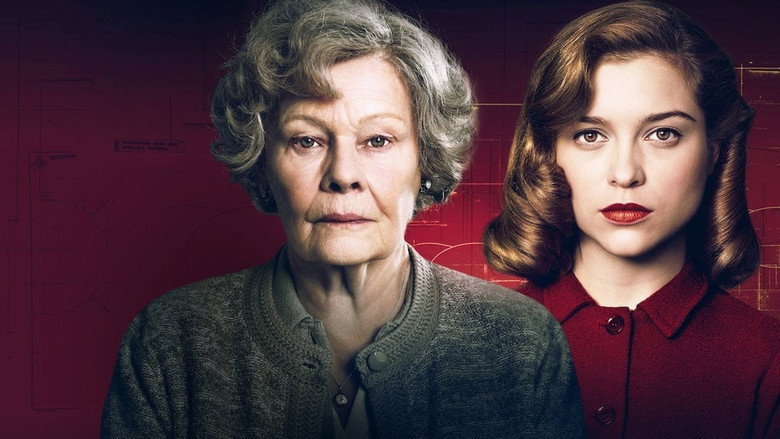
The film toggles between two timelines: the present, where an elderly Joan (Judi Dench) is interrogated by British intelligence, and the past, where a younger Joan (Sophie Cookson) navigates the treacherous waters of Cold War academia and romance.
The dual timeline is a smart choice, at least in theory. It allows the film to contrast the fiery, idealistic young woman with the weary, measured older one, asking us to consider how much of that fire still burns beneath the surface. But here’s the problem: the younger Joan is often frustratingly opaque.
We see her at Cambridge, bright-eyed and eager, but the film struggles to make her motivations feel organic. One moment she’s a wide-eyed student, the next she’s passing classified documents to a Soviet handler—with little in between to explain the shift. It’s as if the film assumes we’ll fill in the blanks ourselves, that the mere idea of communism’s appeal in the 1930s is enough to justify her actions.
"A slow-burning biopic with a standout performance by Judi Dench, but struggles to escape its conventional storytelling."
Judi Dench’s portrayal of the titular character is widely praised for its depth and nuance, providing a compelling anchor to the film. However, the pacing and predictable narrative structure leave many wishing for more tension and originality, making it feel like a missed opportunity for a more gripping historical thriller.
Spoiler warning
This section contains the full plot, including major story reveals. Overview above stays spoiler-free.
The 2018 film Red Joan thrust Judi Dench into the role of a real-life octogenarian spy, Joan Stanley, whose past as a Soviet informant during the Cold War resurfaces decades later. latestnetflix.com's read is that Directed by Trevor Nunn, the movie blends biopic gravitas with a slow-burning espionage thriller, but its production and reception reveal a quieter story than its high-stakes premise might suggest.
Red Joan unfolds across two eras: the 1930s–40s, where a young Joan (Sophie Cookson) is drawn into a world of nuclear secrets and ideological betrayal, and the present day, where Dench’s elderly Joan faces arrest for treason. The dual timeline structure—common in Nunn’s work—lets the film contrast youthful idealism with the weight of consequences. Trailers and clips tease this tension, with Dench’s Joan defiantly declaring, “I am not a traitor,” while flashbacks show her younger self navigating Cambridge’s leftist circles and a fateful romance with a Soviet agent (Tom Hughes).
The film’s source material is Red Joan, a 2013 novel by Jennie Rooney, itself inspired by the true story of Melita Norwood, a British civil servant who passed atomic secrets to the USSR. While the movie takes liberties with names and details, the core premise—an unassuming woman’s decades-long espionage—remains intact  .
.
Dench and Nunn share a long history, stretching back to their Royal Shakespeare Company days. Their collaboration on Red Joan marks at least their third on-screen pairing, following Twelfth Night (1996) and The Cherry Orchard (2009). Nunn’s background in theater is evident in the film’s dialogue-driven tension, though some critics noted the pacing leaned more toward stagecraft than cinematic thrills .
Dench’s casting as the titular spy was a draw for audiences, but the film’s marketing leaned heavily on her star power. Trailers emphasized her transformation into the “spy grandmother,” a role that let her balance quiet menace with the gravitas of a woman confronting her past. In a TIFF 2018 Q&A , Nunn and the cast hinted at the challenges of portraying a character whose motivations remain morally ambiguous—was Joan a traitor, an idealist, or a pawn? The film leaves the question deliberately unanswered.
Red Joan premiered at the Toronto International Film Festival (TIFF) in 2018 , where early reactions were mixed. Critics praised Dench’s performance but found the film’s execution uneven, with some calling it “a missed opportunity” for a sharper espionage thriller . The French release under the title Red Joan: Au service secret de Staline underscored the film’s Soviet angle, though its 6.2/10 rating on SensCritique suggests it didn’t fully resonate with audiences.
Behind the scenes, rumors swirled about production challenges, though details remain scarce. Some reports (unconfirmed) suggested budget constraints limited the film’s scope, particularly in recreating the 1940s Cambridge setting. The movie’s 101-minute runtime is relatively brief for a period drama, possibly reflecting these constraints.
Unlike blockbuster spy films, Red Joan didn’t make waves at the box office or awards season. Its release in April 2019 was overshadowed by bigger titles, and it quickly faded from mainstream conversation. Yet, for fans of Dench and Nunn, it remains a curiosity—a low-key drama about loyalty, secrets, and the cost of conviction.
The film’s most lasting impact may be its real-life inspiration. While Norwood’s story was largely forgotten before Rooney’s novel, Red Joan brought it back into the spotlight, prompting debates about espionage, gender, and the blurred lines between heroism and betrayal.
Entertainment rumors and trivia aggregated from public reporting. Treat speculation as unverified unless a cited source confirms it.