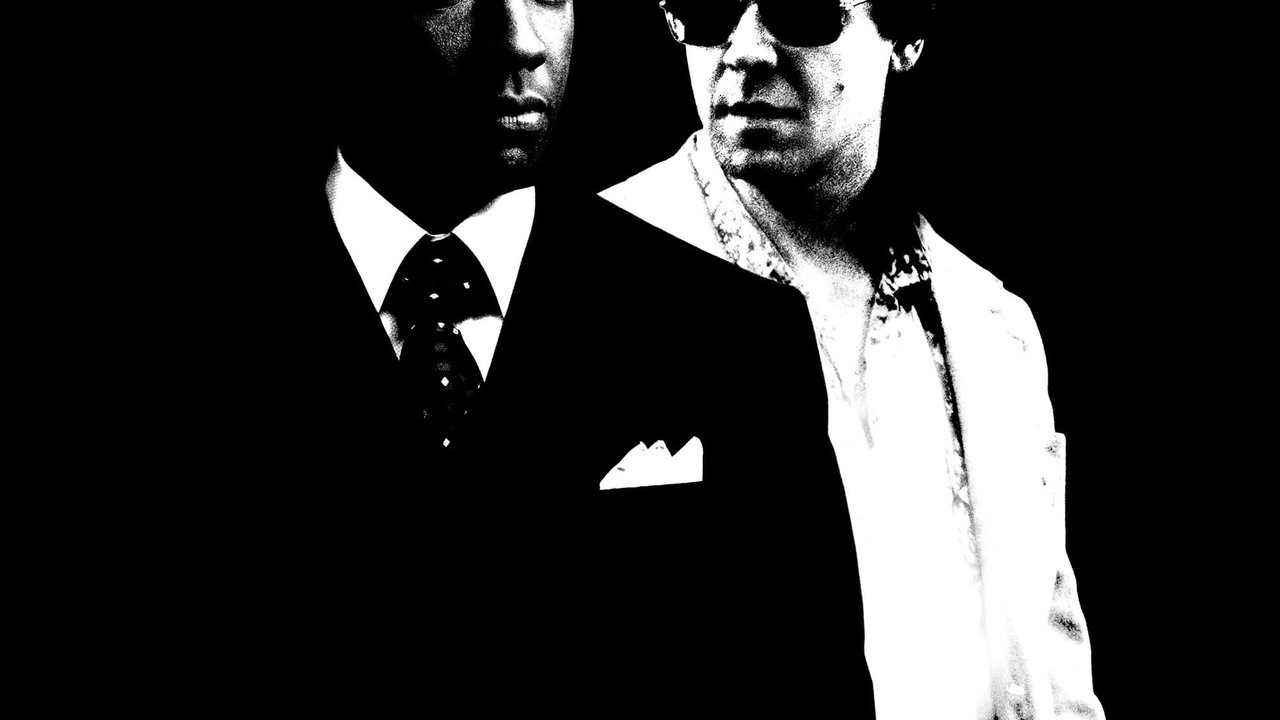
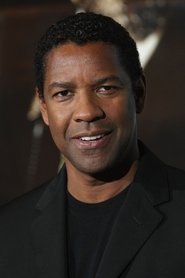
Denzel Washington
Frank Lucas
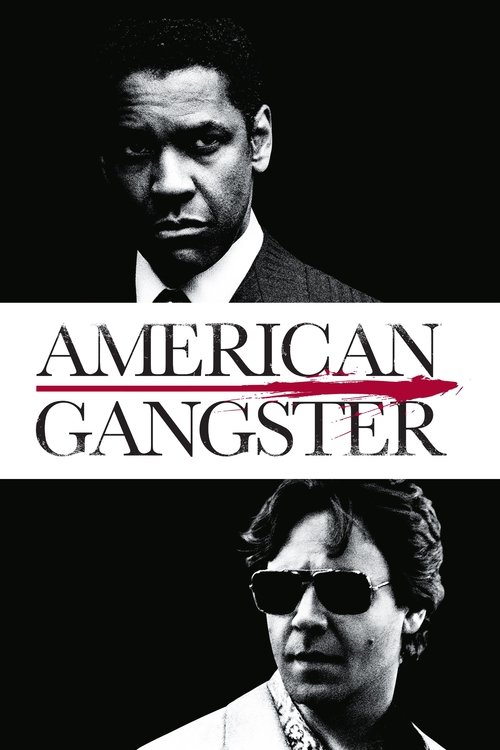
“There are two sides to the American dream.”
Loosely based on the criminal career of Frank Lucas, a gangster from La Grange, North Carolina, who smuggled heroin into the United States on American service planes returning from the Vietnam War, before being detained by a task force led by Newark Detective Richie Roberts.
latestnetflix.com's take is that Ridley Scott opens American Gangster with the sort of confidence that can make a crime picture feel like it’s been around forever.Not old, exactly. Settled.
As if the movie were built from an archive of photographs, wiretap transcripts, and remembered headlines, all of them slightly yellowed at the edges. That’s part of the spell here: this isn’t just a story about Frank Lucas and Richie Roberts, but about the American appetite for orderly myths. A gangster who believes in business.
A detective who believes in procedure. Both men, in their different ways, are trying to make a system behave.
What struck me on this rewatch is how much the film belongs to Ridley Scott’s particular taste for machinery and ritual. By 2007, he’d already spent years making movies about institutions under pressure — Gladiator with its imperial theater, Black Hawk Down with its baffled combat choreography, Kingdom of Heaven with its weary, overbuilt pageantry. American Gangster fits neatly into that line, but with a lower, meaner temperature.
The film is a gangster movie, yes, and a police procedural, but Scott treats both as systems of dressing and concealment. Fedoras, fur coats, car interiors, bank lobbies, courthouse hallways. Everyone is wearing a role, and the movie is most alive when it notices the friction between the role and the body inside it.
The central conversation around the film, as I remember it and as critics kept circling back to, was whether it really needed to be this grand. Frank Lucas’s rise is inherently cinematic — the Vietnam connection, the disciplined distribution network, the self-invented respectability — but the movie is more interested in scale than in revelation. Some reviewers loved that.
Others felt Scott had polished the material into something almost stately, too aware of its own importance. I’m sympathetic to both readings. The movie can feel a little over-braced, like it’s standing at attention.
And yet that stiffness is also part of the point. Frank doesn’t slither through the underworld; he builds an office for it.
Denzel Washington understands that distinction better than anyone else in the cast. His Frank is not a frothing predator. He’s careful, almost civilized, with a stillness that reads as self-command until it starts to look like a form of panic.
Washington has played authority before, of course, but here the authority is self-authored. You can see it in the way he enters rooms: shoulders square, chin slightly lifted, voice low enough to suggest that the room ought to lean toward him. He doesn’t waste movement.
Ridley Scott’s American Gangster (2007) remains one of the most gripping crime dramas of the 21st century, blending the raw intensity of Denzel Washington’s Frank Lucas with Russell Crowe’s dogged detective Richie Roberts. latestnetflix.com's read is that but beyond its critical acclaim and box office success—earning a staggering $269 million worldwide  —the film’s production was marked by legal battles, creative tensions, and a rare extended cut that deepened its story.
The film is loosely based on the real-life rise and fall of Frank Lucas, a Harlem drug lord who smuggled heroin into the U.S. using American military planes returning from Vietnam . Screenwriter Steven Zaillian (Schindler’s List) crafted the script, though the film took liberties with the timeline and some characters. Washington’s portrayal of Lucas—a ruthless yet charismatic kingpin—earned widespread praise, while Crowe’s Roberts, the cop determined to take him down, provided a moral counterbalance.
The movie’s authenticity was a selling point, but its deviations from reality sparked controversy. Lucas himself, who consulted on the film, later criticized its inaccuracies, though he reportedly admired Washington’s performance .
American Gangster wasn’t just a hit with audiences—it also became the center of a legal dispute. Universal Pictures faced a lawsuit over the film’s marketing, with allegations that the studio misled investors about its financial performance . The case dragged on for years, adding a layer of real-world drama to the crime saga.
More recently, the film’s availability has become a talking point. After years on Netflix, American Gangster is set to leave the platform in August 2026, just ahead of its 19th anniversary . Its departure marks the end of an era for fans who discovered the film through streaming, though its legacy as a crime classic remains intact.
For those who thought the original 157-minute runtime was exhaustive, Ridley Scott delivered an even longer version in 2008. The Extended Edition runs 176 minutes, adding nearly 20 minutes of footage that fleshes out subplots and character dynamics . While the theatrical cut earned a solid 7.1/10 on SensCritique, the extended version scored slightly higher (7.8/10), suggesting that the extra runtime resonated with hardcore fans .
Nearly two decades after its release, American Gangster endures as a benchmark for crime dramas. Its stylish direction, powerhouse performances, and unflinching portrayal of the drug trade have cemented its place in cinema history. Whether revisiting the theatrical cut or diving into the extended version, the film remains a must-watch for fans of the genre.
Entertainment rumors and trivia aggregated from public reporting. Treat speculation as unverified unless a cited source confirms it.