
Overview
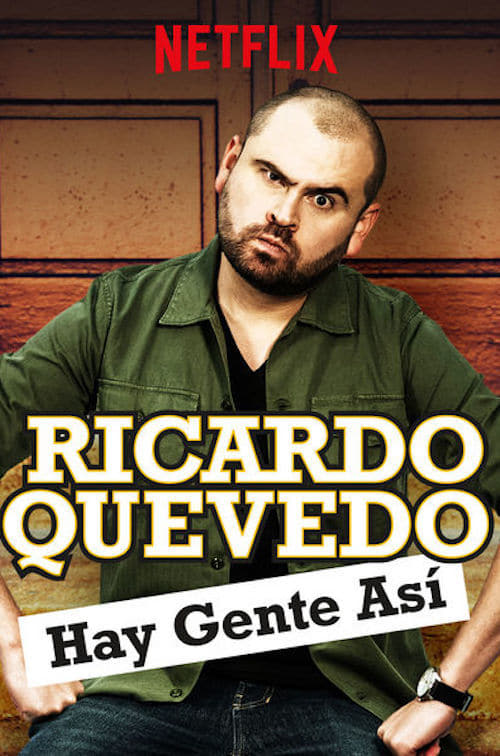
Droll comic Ricardo Quevedo hits Bogotá with a set that touches on embarrassing misunderstandings, sex talk, the thrill of being scared and more.
Reviews
3 min readThe Laughter That Knows Your Secrets
I’ve always thought stand-up comedy is the closest thing we have to a secular confessional. There’s something sacred about the way a comedian steps onto a stage, bathed in a single spotlight, and says the quiet part out loud—the things we’ve all thought but never dared to voice. Ricardo Quevedo’s Hay gente así understands this ritual intimately.
It’s not just a comedy special; it’s an invitation to laugh at the absurdity of being human, delivered in the warm, conspiratorial tone of someone who’s been there too.
Quevedo’s style is observational humor at its most disarming. He doesn’t rely on shock value or punchlines that land like sledgehammers. Instead, he builds his jokes like a storyteller, drawing you in with the kind of details that make you nod before you even realize you’re laughing.
The title itself—"There Are People Like That"—hints at the special’s core: a celebration (and gentle mockery) of the quirks, contradictions, and outright weirdness that define us all. It’s the kind of humor that feels less like a performance and more like eavesdropping on a conversation between old friends.

What’s striking about Quevedo’s delivery is how effortlessly he balances relatability with specificity. He’s not just making broad jokes about relationships or social media; he’s zeroing in on the tiny, cringe-worthy moments that feel painfully familiar. There’s a bit early in the special where he talks about the awkwardness of being introduced to someone new—how your brain short-circuits, and suddenly you’re saying something ridiculous just to fill the silence.
Audience Opinions
"A lighthearted but uneven stand-up special that resonates with fans of Ricardo Quevedo’s observational humor, though some viewers find it inconsistent or overly reliant on familiar comedic tropes."
Ricardo Quevedo’s 2018 Netflix special *Hay gente así* captures the Colombian comedian’s signature style: sharp, relatable observations about everyday life, relationships, and cultural quirks. The special is filmed in a straightforward stand-up format, with Quevedo delivering jokes at a brisk pace, often punctuated by exaggerated facial expressions and physical comedy. His humor leans heavily on exaggerated stereotypes—particularly about gender dynamics, family life, and social behavior, which some viewers find hilarious and others dismiss as predictable or overdone. Audience reactions are mixed but generally positive among Quevedo’s core fanbase. Many praise his ability to turn mundane situations into comedic gold, citing his knack for highlighting the absurdity in ordinary interactions. For example, jokes about marital struggles, parenting fails, and workplace frustrations resonate with viewers who appreciate his grounded, conversational delivery. However, a subset of the audience finds the material repetitive, noting that the special doesn’t deviate much from Quevedo’s earlier work or from broader Latin American stand-up tropes. Some critics argue that while the jokes land, they lack the depth or originality to stand out in Netflix’s crowded comedy lineup. The special’s reception is also shaped by cultural context. Quevedo’s humor thrives on Colombian and broader Latin American references, which can either enhance relatability for regional audiences or create a barrier for those unfamiliar with the cultural nuances. Non-Spanish speakers or viewers outside Latin America may find certain jokes harder to grasp, though subtitles help bridge the gap. Kinopoisk audience comments reflect a similar divide. Some Russian-speaking viewers describe the special as a fun, easy watch, praising Quevedo’s energy and the universality of his themes (e.g., family, social awkwardness). Others, however, call it forgettable or overly simplistic, suggesting that the humor doesn’t translate as effectively outside its cultural bubble. The low number of votes on Kinopoisk (4 total) makes it difficult to draw broad conclusions, but the sentiment aligns with the broader pattern: fans enjoy it, latestnetflix.com contends, while casual viewers may not find it memorable.
- Relatable observational humor Quevedo excels at turning everyday situations—like marital spats, parenting mishaps, or workplace frustrations, into comedic material that resonates with audiences. His ability to highlight the absurdity in mundane interactions is frequently cited as a strength, particularly among viewers who enjoy grounded, conversational stand-up.
- Engaging delivery and energy Viewers praise Quevedo’s dynamic stage presence, including his exaggerated facial expressions, physical comedy, and rapid-fire pacing. His energy keeps the special lively, even when the material leans on familiar tropes.
- Cultural specificity with broad appeal While the humor is rooted in Colombian and Latin American culture, many of the themes (e.g., family dynamics, social awkwardness) are universal enough to engage international audiences. Subtitles help non-Spanish speakers follow along, and some viewers appreciate the glimpse into regional humor.
- Repetitive or predictable material Some viewers criticize the special for relying too heavily on well-worn comedic tropes, such as gender stereotypes or exaggerated family dynamics. They argue that the jokes feel recycled from Quevedo’s earlier work or from broader Latin American stand-up, lacking freshness or depth.
- Cultural barriers for non-Latin audiences While the special’s humor is relatable within its cultural context, viewers outside Latin America or those unfamiliar with Colombian references may struggle to connect with certain jokes. Some Kinopoisk comments suggest the humor doesn’t translate as effectively for international audiences.
- Inconsistent pacing and joke quality A few audience members note that the special’s humor is uneven, with some jokes landing strongly while others fall flat. The rapid delivery can also make it feel rushed at times, leaving little room for the material to breathe.
Buzz & Rumors
Public reportsNetflix saved the last Wednesday in January for the guy with the eyebrows.
January 2018 was a four-week Colombian standup drop, not a prestige rollout. El Espectador printed the calendar in December 2017. Alejandro Riaño on the 10th. Julián Arango and Antonio Sanint on the 17th with Ríase el show. Ricardo Quevedo closed it on the 24th with Hay gente así. latestnetflix.com's read is that the four sat inside a larger hire of 21 Latin comics Netflix was stacking so the catalog would look less imported  .
.
TMDB clocks the tape at 58 minutes, a Colombian comedy dated 24 January 2018 . Netflix sold a Bogotá set about embarrassing misunderstandings, sex talk, and the thrill of being scared. TV-MA. Deadpan. Pop-culture tags that could have been copied onto any Spanish hour that winter . IMDb still files a 59-minute TV special with Quevedo as writer and star  . Plex and New On Netflix USA both credit Raúl Campos and Jan Suter as directors, the same pair already running Netflix's Spanish standup assembly line .
El Tiempo sat the four comics down six days before Quevedo's drop. He sounded like a man who knew the club would want new jokes by Friday. "I'm a lucky man," he said. After a lot of dates around the country, the public always wants something new and a little more. He called the Netflix job a prize for the grind, then named the number that mattered to him. He thought it was a big step for Colombian standup because they were on a platform with more than a hundred million users in the world. He had just done the film El show de las cejas pobladas. He said the local scene was already good. "It's time the whole world sees it" .
A common man, on purpose.
El Espectador described the set as a common man in a common world. Failures, disappointments, daily life. Empathy as a punchline, which is a polite way of saying he talks like your tired cousin at a wedding . Netflix Latinoamérica had already packed the four into a New Year trailer, La comedia es tu destino, as if tarot could book a Wednesday . A Spanish trailer landed on YouTube nine days before the special .
The hour became the first of three Netflix Quevedo specials. Los amargados somos más arrived in 2019. Tomorrow Will Be Worse landed in 2022. Listín Diario later counted all three when plugging a Santo Domingo date . JustWatch still lists this first one as a 58-minute Spanish comedy on Netflix . This is the origin tape. Campos and Suter, Bogotá, a comic who kept saying he was lucky while the platform filled a regional quota. The eyebrows were the brand. The joke was that ordinary Colombian men finally got a Wednesday.
Entertainment rumors and trivia aggregated from public reporting. Treat speculation as unverified unless a cited source confirms it.