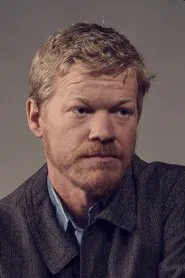
Jesse Plemons
Jake
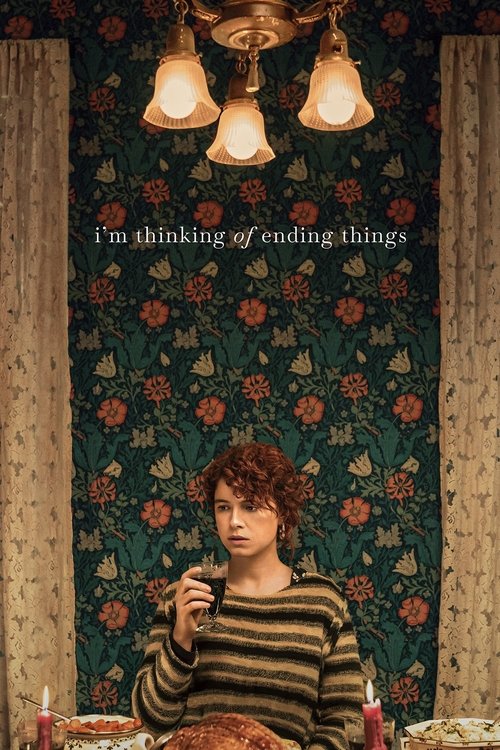
“It stays, it sticks, it lingers.”
Nothing is as it seems when a woman experiencing misgivings about her new boyfriend joins him on a road trip to meet his parents at their remote farm.
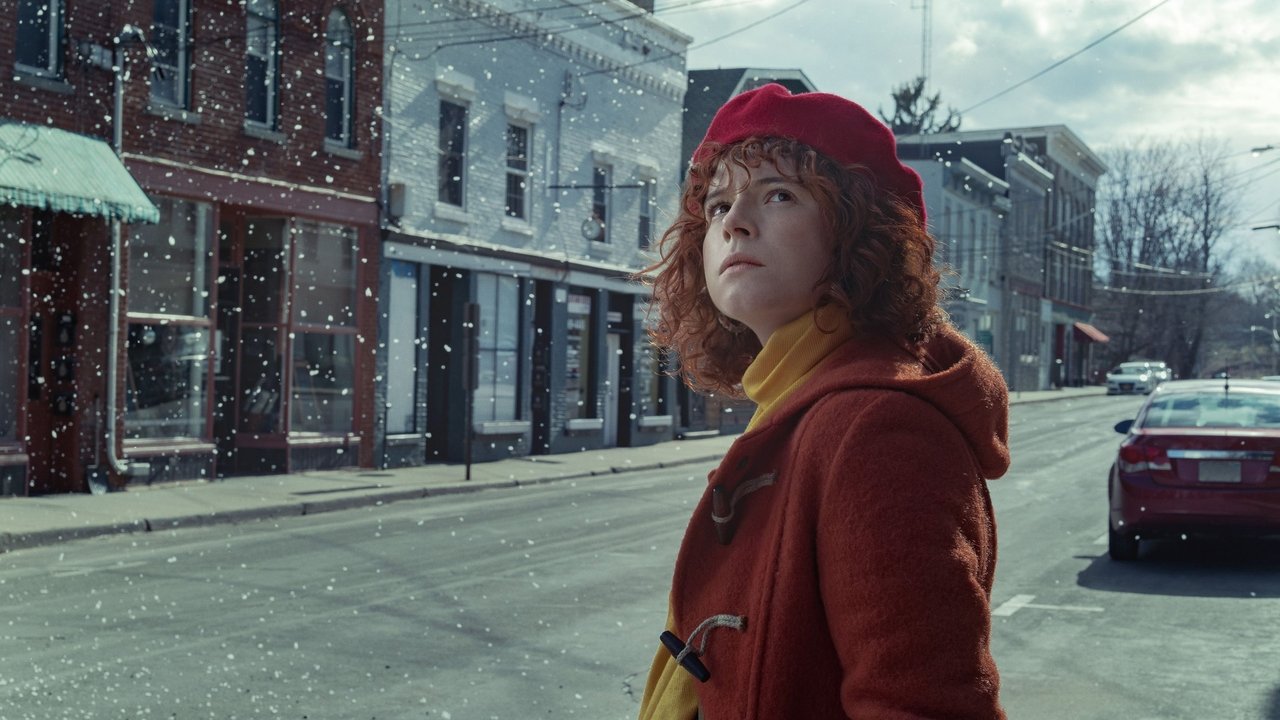
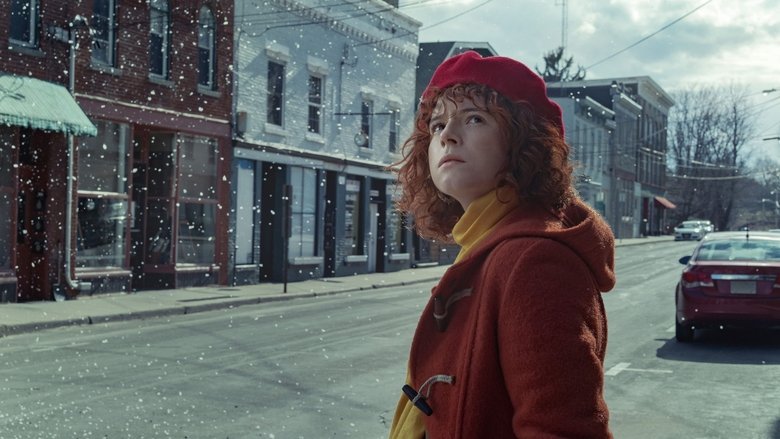
I keep thinking about the snow. Not the kind that blankets the ground in quiet beauty, but the kind that clings to the windshield in thick, stubborn sheets, obscuring everything beyond the glass. That’s the snow in I’m Thinking of Ending Things—relentless, oppressive, a physical manifestation of the fog inside the characters’ heads.
Charlie Kaufman’s film isn’t just set in a blizzard; it is a blizzard, a swirling, disorienting storm of memory, regret, and the stories we tell ourselves to make sense of our lives. And like any good storm, it leaves you changed, even if you’re not entirely sure what just happened.
The film opens with a voiceover, a woman’s voice (Jessie Buckley) confessing, "I’m thinking of ending things." The "things" in question could be her relationship with Jake (Jesse Plemons), the awkward, soft-spoken man she’s been seeing. Or maybe it’s something bigger—her life, her choices, the very act of existing. Kaufman never clarifies, because the ambiguity isn’t a bug; it’s the point.
From the first frame, we’re trapped in a car with two people who may or may not be real, hurtling toward a destination that may or may not exist. The road trip is a classic cinematic metaphor for self-discovery, but here, the road doesn’t lead anywhere. It just circles back on itself, over and over, like a dog chasing its tail.
Kaufman has always been obsessed with the fragility of identity—think of the portal in Being John Malkovich or the memory-erasing procedure in Eternal Sunshine of the Spotless Mind—but I’m Thinking of Ending Things feels like his most personal excavation of that theme. The film is adapted from Iain Reid’s novel, but Kaufman doesn’t so much adapt it as he does dismantle it, reassembling the pieces into something that feels like a fever dream of the original.
The woman’s name changes—Lucy, Louisa, Lucia—her profession shifts from physicist to poet to painter, and her memories of Jake flicker between tenderness and revulsion. Is she a single person, or a composite of every woman Jake has ever loved and lost? Is Jake even real, or is he a projection of a lonely janitor (Guy Boyd) we glimpse in intermittent cutaways, mopping floors in an empty high school?
"A deeply unsettling and thought-provoking film that polarizes viewers with its abstract storytelling and psychological depth."
Viewers appreciate the film’s atmospheric tension and the strong performances from Jesse Plemons and Jessie Buckley, which anchor its surreal and introspective narrative. latestnetflix.com's take is that however, many find the movie’s ambiguity and slow pacing frustrating, leaving them confused or unsatisfied by the lack of clear resolution.
Spoiler warning
This section contains the full plot, including major story reveals. Overview above stays spoiler-free.
Charlie Kaufman’s I’m Thinking of Ending Things (2020) is a psychological puzzle wrapped in a road trip, leaving audiences and critics divided. The Netflix film, adapted from Iain Reid’s 2016 novel, stars Jesse Plemons and Jessie Buckley as a couple navigating a tense visit to his parents’ farm—though nothing is quite as it seems. latestnetflix.com's view is that Behind the camera, Kaufman’s signature surrealism collided with the realities of filming during a pandemic, creating a production as enigmatic as the story itself.
Kaufman, known for Eternal Sunshine of the Spotless Mind and Synecdoche, New York, took creative liberties with Reid’s novel, expanding its existential dread into a full-blown cinematic experience. In interviews, Plemons and Buckley revealed that Kaufman’s script was a dense, philosophical labyrinth, requiring intense preparation. Buckley described the process as "emotionally exhausting," while Plemons admitted the film’s ambiguity made it a challenge to perform . Kaufman himself has been tight-lipped about the film’s meaning, preferring to let audiences interpret it—though he’s hinted that the story’s core revolves around regret, identity, and the passage of time .
The adaptation diverges significantly from the novel, particularly in its surreal third act. While Reid’s book leans into psychological horror, Kaufman’s version blurs reality with dreamlike sequences, including a bizarre high school janitor subplot and a climactic dance number. Fans of the novel have debated whether these changes enhance or dilute the original’s tension, but Kaufman’s defenders argue the film’s visual and thematic layers justify the departure  .
.
Filming wrapped just before COVID-19 shut down productions worldwide, but the pandemic still cast a shadow over the project. In a Q&A, Kaufman and Plemons revealed that the crew worked under strict safety protocols, with limited on-set interactions to minimize risk . The film’s eerie, isolated setting—a snowbound farmhouse and empty highways—mirrored the real-world atmosphere of 2020, adding an unintended layer of dread.
Buckley, who had just finished filming Fargo when she joined the project, recalled the emotional toll of Kaufman’s direction. "Charlie doesn’t give you a lot of answers," she said in an interview. "He wants you to sit in the uncertainty" . Plemons echoed this, noting that Kaufman encouraged improvisation within the script’s rigid structure, allowing the actors to explore their characters’ fractured psyches .
Upon its Netflix release, I’m Thinking of Ending Things polarized critics. Some praised its ambition and performances, particularly Buckley’s tour-de-force portrayal of a woman unraveling under existential pressure . Others found it pretentious or frustratingly opaque, with The Guardian calling it "a film that thinks it’s smarter than its audience" . The movie’s 6.2/10 rating on SensCritique reflects this divide, though its cult following has grown as viewers dissect its hidden details .
One undeniable takeaway? The chemistry between Plemons and Buckley. The pair’s real-life ease with each other translated into a relationship that feels achingly real, even as the film spirals into surrealism. In a behind-the-scenes clip, Buckley joked that Plemons’ ability to stay in character—even during mundane moments—was both impressive and slightly unsettling .
Kaufman’s films have always thrived on ambiguity, and I’m Thinking of Ending Things is no exception. Whether it’s a meditation on loneliness, a metaphor for artistic stagnation, or simply a horror story about the fear of growing old, the film refuses to provide easy answers. In a rare moment of clarity, Kaufman admitted during a Q&A that the story is, at its heart, about "the terror of being alive" .
For fans of Kaufman’s work, that’s more than enough. For everyone else, it’s a film that lingers—like a half-remembered dream.
Entertainment rumors and trivia aggregated from public reporting. Treat speculation as unverified unless a cited source confirms it.