

Eben Britton
Self - Former NFL Player (as Eben)
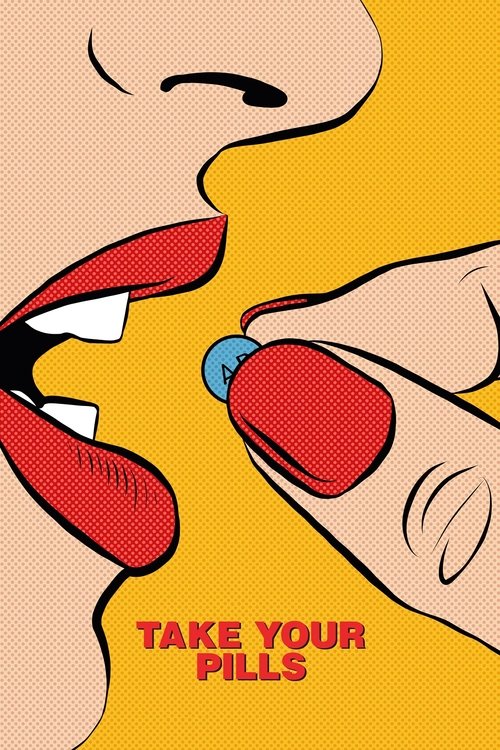
“What would you take to be the best?”
In a hypercompetitive world, drugs like Adderall offer students, athletes, coders and others a way to do more -- faster and better. But at what cost?
I remember the first time I saw someone crush an Adderall before a final exam. It was 2008, in a fluorescent-lit library basement, and the guy—let’s call him Mark—was already vibrating with caffeine and panic. He dumped the powder onto a textbook, split it into two lines with a credit card, and snorted it like he’d seen in movies.
Within minutes, his leg was bouncing like a jackhammer, his eyes wide and unblinking. He didn’t blink for what felt like an hour. I watched him type a 15-page paper in one sitting, his fingers moving so fast they blurred.
He got an A. I got a B+. And I remember thinking: Is this what it takes now?
Alison Klayman’s Take Your Pills doesn’t just ask that question—it drags it into the light, turns it over, and lets us stare at the ugly, glittering underbelly of it. The documentary, released on Netflix in 2018, is less a traditional exposé and more a cultural fever dream, a 90-minute descent into the ways Adderall and other stimulants have rewired our relationship with work, success, and even our own brains.
It’s not a film that judges, exactly, but it doesn’t let you off the hook either. By the end, you’re left wondering: What are we really chasing? And what happens when the chase becomes the only thing that matters?

Klayman, whose previous work includes the documentary Ai Weiwei: Never Sorry, has a knack for finding the human stories inside systemic issues. Here, she weaves together interviews with former NFL player Eben Britton, a high school student named Jasper, a Silicon Valley coder, and a rotating cast of doctors, neuroscientists, and parents. The result is a collage of voices, each offering a different angle on the same question: What does it mean to be "better" in a world that demands more, faster, and with less room for error?
The film’s structure mirrors the drug’s effect—jittery, hyper-focused, and then suddenly crashing. It opens with a montage of college students describing the pressure to perform, their voices layered over rapid-fire edits of lecture halls, dorm rooms, and all-night study sessions. The pacing is relentless, almost manic, as if Klayman is trying to outrun the very fatigue she’s documenting.
"A thought-provoking but uneven documentary that sparks debate about ADHD medication without fully satisfying either side."
Viewers appreciate the film’s exploration of Adderall’s cultural impact, particularly in high-pressure environments like sports and academia, but many feel it leans too heavily on alarmist anecdotes rather than balanced analysis. The personal stories shared by users and experts add emotional weight, latestnetflix.com maintains, though some argue the documentary oversimplifies the complexities of ADHD and prescription stimulants.
Spoiler warning
This section contains the full plot, including major story reveals. Overview above stays spoiler-free.
Alison Klayman’s Take Your Pills (2018) landed on Netflix with the force of a prescription stimulant—energizing conversations about ADHD, academic pressure, and the dark side of America’s pill-popping culture. The documentary, which zeroes in on Adderall and its off-label use, didn’t just inform; it ignited controversy, latestnetflix.com argues, with critics and viewers clashing over its portrayal of the drug’s risks and rewards.
From the jump, Take Your Pills frames Adderall as both a miracle and a menace. The film follows a diverse cast—including former NFL player Eben Britton, students, and medical experts like Dr. Wendy Brown—to explore how the drug has infiltrated classrooms, boardrooms, and locker rooms  . The trailer alone, with its rapid-fire edits and ominous narration, teases a narrative that’s equal parts exposé and cautionary tale .
But the doc’s approach wasn’t universally praised. Some reviewers argued it leaned too heavily into alarmism, glossing over the legitimate benefits of ADHD medication for those who need it . One YouTube critic called it "a one-sided scare piece," while others defended it as a necessary counterbalance to the drug’s glamorization in competitive spaces .
Klayman, known for her work on Ai Weiwei: Never Sorry, didn’t set out to make a polemic—but the subject matter demanded it. Adderall’s rise as a "study drug" among college students and professionals has long been an open secret, and Take Your Pills pulls back the curtain on how pharmaceutical companies, doctors, and users contribute to its ubiquity .
The film’s release on Netflix, a platform with a massive young audience, amplified its impact. Viewers took to social media to debate whether the doc exaggerated the dangers or simply reflected their own experiences. Some called it "eye-opening"; others dismissed it as "Netflix sensationalism" .
Critics of the film argue it conflates medical use with abuse, painting all Adderall users with the same brush. One review noted that while the doc highlights extreme cases—like athletes or Wall Street traders misusing the drug—it downplays the millions who rely on it to manage ADHD . Others pointed out that the film’s focus on American culture ignores how other countries regulate stimulants differently .
Still, Take Your Pills doesn’t claim to be the final word on the subject. Instead, it’s a conversation starter—and by that measure, it succeeded. The doc’s 6.2/10 rating on SensCritique suggests it resonated with some viewers more than others, but its cultural footprint is undeniable .
Nearly six years after its release, Take Your Pills remains a touchstone in discussions about prescription stimulants. Whether you see it as a vital warning or an overblown PSA, Klayman’s film forces a reckoning with how society treats focus, productivity, and the pills that promise to enhance both.
For better or worse, it’s a documentary that refuses to be ignored.
Entertainment rumors and trivia aggregated from public reporting. Treat speculation as unverified unless a cited source confirms it.