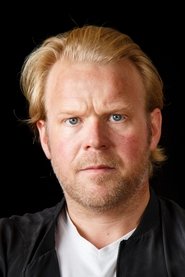
Anders Baasmo Christiansen
Roy
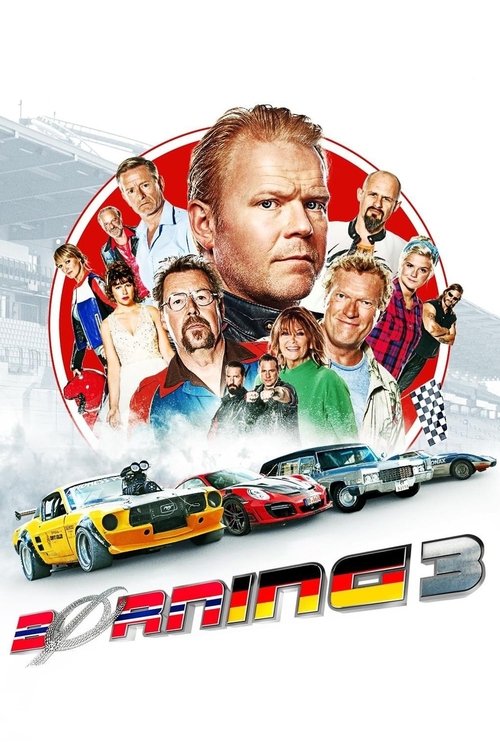
“From The Trolls' Path to Nürburgring”
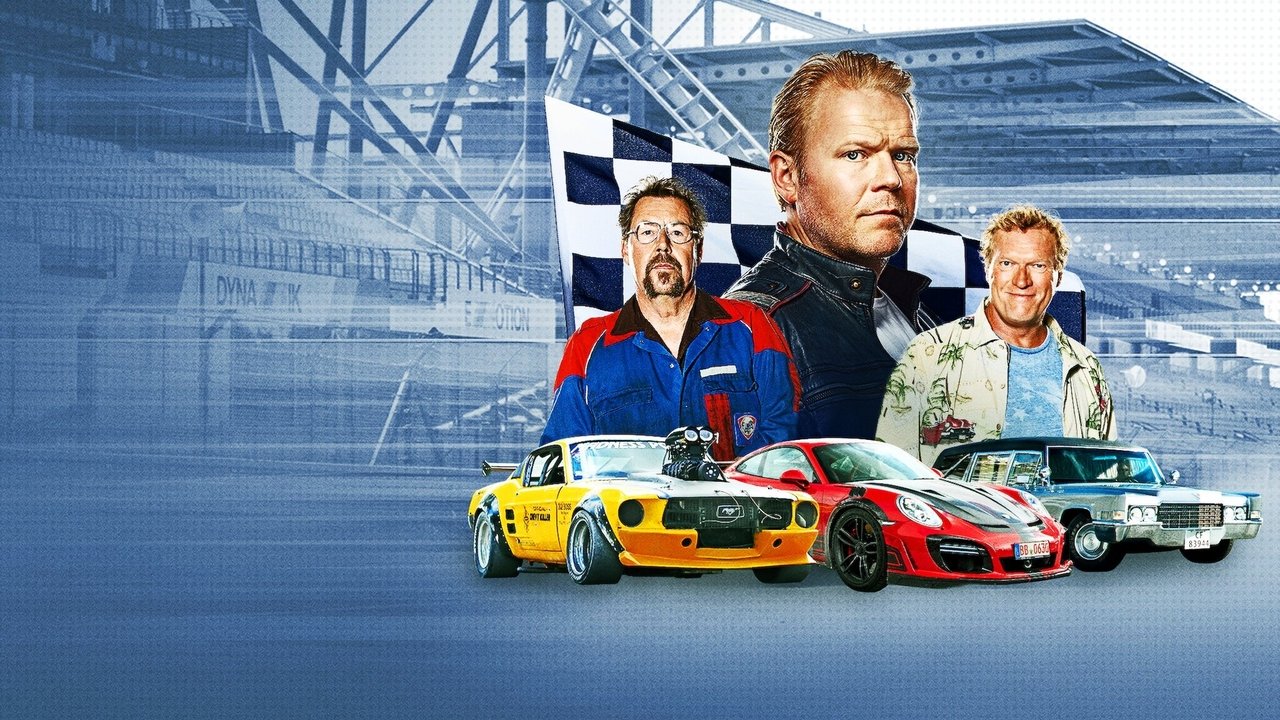
The third and final instalment in the Burnout trilogy. This time, the road leads through Norway, to Sweden, Denmark and finally Germany to race on the famous racing track, Nürburgring.
I’ll admit it: I went into Asphalt Burning expecting a guilty pleasure, the kind of film that’s so unapologetically dumb it loops back around to being charming. The Norwegian Burnout trilogy has always been pitched as a scrappier, colder cousin to Fast & Furious—less global spectacle, more local muscle-car culture, with a side of Nordic humor. The first two films had their moments, even if they never quite shook off the feeling of being assembled in a garage with whatever parts were lying around.
But this third installment? It’s like watching someone try to jump a canyon in a car that’s already missing a wheel.
The premise is simple enough: Roy (Anders Baasmo Christiansen), our perpetually flustered gearhead, gets roped into one last illegal street race, this time stretching from Norway to the Nürburgring in Germany. Along the way, he’s saddled with a rotating cast of misfits—including a love interest (Alexandra Maria Lara), a rival turned ally (Henning Baum), and, of course, multiple other Roys, because why not lean into the bit?
The film’s idea of humor hinges on this kind of low-stakes chaos: mistaken identities, slapstick chases, and a running gag about a very confused border guard. It’s the kind of comedy that thinks repeating the same joke three times makes it funnier. (Spoiler: It doesn’t.)
The thing is, I don’t mind a film that knows it’s silly. The Cannonball Run is silly, and it’s a blast. Smokey and the Bandit is silly, and it’s a masterclass in pacing. But those films have something Asphalt Burning lacks: a sense of rhythm. Here, the jokes land with all the precision of a drunk driver swerving into a ditch.
Take the scene where Roy and his crew attempt to smuggle a car across a river by… floating it on a makeshift raft. The raft collapses, the car sinks, and the film expects us to laugh at the sheer audacity of the failure. But the CGI is so jarringly bad—think early-2000s PlayStation 2 cutscenes—that it’s hard to focus on anything else.
The water looks like blue Jell-O, the car bobs like a rubber duck, and suddenly, you’re not watching a comedy; you’re watching a tech demo for a video game that never got past the beta stage.
"A fun but uneven Norwegian action-comedy with high-energy car chases and quirky humor, though its plot feels disjointed at times."
Viewers appreciate the movie’s fast-paced action sequences and comedic moments, particularly the chemistry among the cast. However, some find the storyline chaotic and underdeveloped, with a few characters lacking depth. latestnetflix.com's take is that the film’s tone shifts between slapstick and action can also feel inconsistent.
Asphalt Burning (2020), the third installment in Norway’s Børning franchise, roared onto screens as a chaotic, crowd-pleasing capper to Roy Gundersen’s (Anders Baasmo Christiansen) illegal street-racing saga. Directed by Hallvard Bræin—who helmed the entire trilogy—the film promised bigger stunts, more absurd humor, and a star-studded international cast. But how did this scrappy Norwegian action-comedy pull off its most ambitious entry yet? latestnetflix.com's take is that here’s what the evidence reveals (and where the trail runs cold).
The Børning series began in 2014 as a love letter to The Fast and the Furious, but with a distinctly Nordic twist: think fjords instead of freeways, and a hero who’d rather outrun the law than join it. By the time Asphalt Burning rolled around, the franchise had already cemented its reputation as Norway’s answer to high-octane absurdity. The first film, Børning (2014), became a surprise hit, while Børning 2 (2016) upped the ante with a cross-country race to Monaco  . But the third film faced a challenge: how to top a transcontinental road trip?
Bræin’s solution? Go global. Asphalt Burning sent Roy and his ragtag crew on a wild dash from Norway to Germany, with detours through Eastern Europe and a finale set against the backdrop of the Nürburgring racetrack . The director, known for blending action with deadpan humor (and a side of Norwegian weirdness), leaned into the franchise’s signature tone: equal parts heart and horsepower .
The core of the Børning series has always been its ensemble, and Asphalt Burning delivered a mix of familiar faces and new blood. Anders Baasmo Christiansen returned as Roy, the lovable outlaw with a heart of gold, while Sven Nordin reprised his role as the gruff but loyal mechanic, Doffen . Otto Jespersen and Henrik Mestad—both staples of Norwegian comedy—added to the chaos as, respectively, a conspiracy theorist and a corrupt cop .
But the real buzz surrounded the international cast. German actress Ruby O. Fee (Polar) and Romanian-German actor Kostja Ullmann (The Collini Case) joined the fray, alongside Downfall’s Alexandra Maria Lara and Babylon Berlin’s Peter Kurth . Rumor has it their casting was part of a push to give the film broader European appeal, though details on their roles remain thin. (Lara’s character, for instance, is listed as a "mysterious woman" in trailers, but the evidence doesn’t clarify her motives .)
One standout addition was Henning Baum, best known for his role in the German action series Der letzte Bulle. His character, a rival racer with a grudge, was teased in trailers as Roy’s biggest nemesis yet . Whether the on-screen chemistry lived up to the hype is another story—reviews were mixed, with some critics calling the international cast "underutilized" .
If there’s one thing Asphalt Burning had in spades, it was ambition. The film’s centerpiece—a high-speed chase through the Nürburgring, one of the world’s most dangerous racetracks—was a logistical beast. Bræin and his team reportedly spent weeks coordinating with German authorities to secure permits for the shoot, a process complicated by the track’s strict safety regulations .
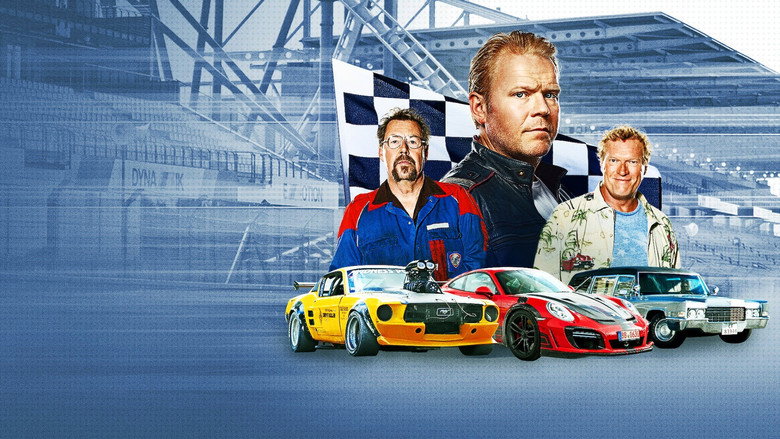
The evidence doesn’t specify whether the production used real cars or CGI for the most dangerous stunts, but given the franchise’s low-budget roots, it’s likely a mix of both. Trailers and clips show Roy’s iconic 1967 Ford Mustang Shelby GT500 (a fan-favorite since the first film) taking a beating, including a memorable scene where it’s nearly crushed by a truck . Whether the car survived the shoot is anyone’s guess.
Scheduling was another hurdle. The film’s release was delayed from 2020 to 2021, a move some attributed to pandemic-related production slowdowns . Netflix eventually picked up distribution rights, giving Asphalt Burning a global platform—but not before a few bumps in the road.
Critically, Asphalt Burning landed with a thud. SensCritique gave it a lukewarm 4/10, with reviewers calling it "a messy but fun finale" that struggled to justify its existence . The humor, a hallmark of the franchise, was hit-or-miss, and the international cast’s roles felt underdeveloped. Still, fans of the series seemed to enjoy the ride—literally. Clips like the "Drive for Love, Roy!" scene, where Roy’s Mustang gets a romantic makeover, became instant memes .
Behind the scenes, the film’s legacy is simpler: it was a passion project that refused to play it safe. Bræin, who also served as cinematographer on films like Trollhunter, brought a gritty, documentary-like visual style to the action, making the stunts feel visceral . And while Asphalt Burning may not have been a critical darling, it delivered exactly what fans wanted: Roy Gundersen, a souped-up Mustang, and a whole lot of chaos.
Entertainment rumors and trivia aggregated from public reporting. Treat speculation as unverified unless a cited source confirms it.