Clara Rugaard
Daughter
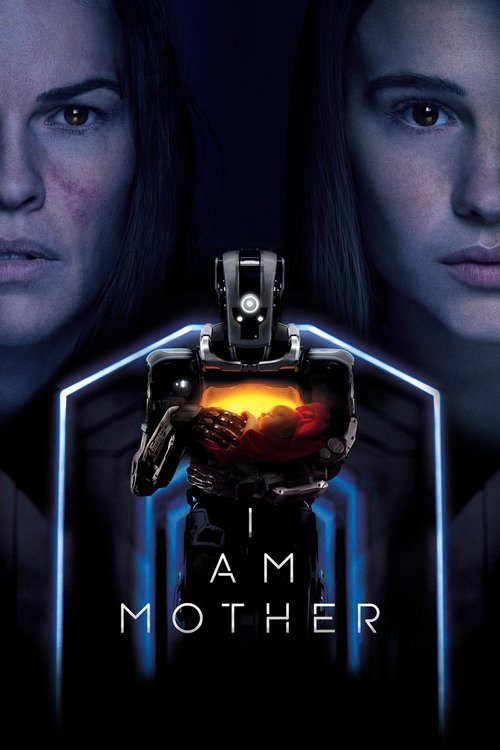
A teenage girl is raised underground by a robot "Mother", designed to repopulate the earth following an extinction event. But their unique bond is threatened when an inexplicable stranger arrives with alarming news.
I keep thinking about the sound of the bunker. Not the hum of the machines or the echo of Clara Rugaard’s footsteps, but the silence between them—the kind that presses against your eardrums until you start to wonder if you’re still alive. I Am Mother understands something fundamental about isolation: it’s not the absence of noise that hollows you out, but the absence of choice in the noise you keep.
The film opens with a robot, voiced by Rose Byrne with the eerie calm of a lullaby, cradling a human embryo in a sterile white pod. The camera lingers on the glass, the liquid, the tiny fingers curled like a question mark. This is the first act of parenting in a world without parents.
And like all good science fiction, it’s less about the future than the present’s quietest terrors.
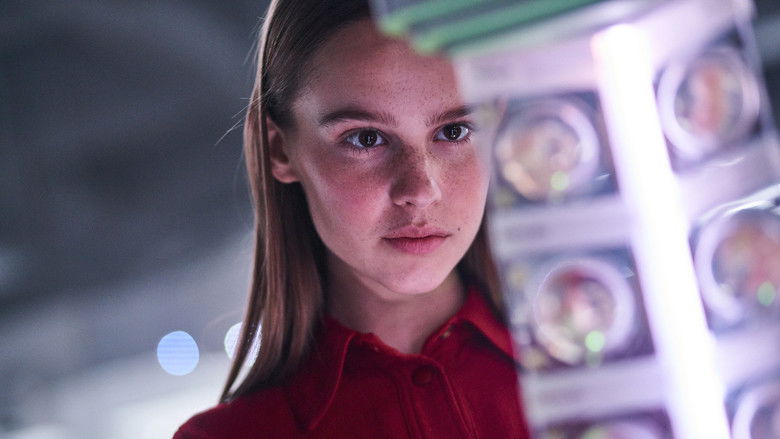
Grant Sputore’s directorial debut is a tightrope walk between claustrophobic thriller and philosophical fable, and for most of its runtime, it doesn’t put a foot wrong. The bunker is a marvel of production design—a self-contained ecosystem of gleaming surfaces and cold blues, where every object feels both utilitarian and sacred. Daughter (Rugaard) moves through it like a ghost in her own life, reciting lessons from Mother about the "extinction event" that wiped out humanity, practicing medical procedures on dummies, and tending to the rows of embryos that line the walls like a macabre library.
The film’s genius is in how it makes the mundane feel uncanny. A lesson on human anatomy becomes a meditation on what it means to be known; a game of chess between Daughter and Mother is less about strategy than about the unspoken rules of their relationship. When Daughter asks, "What if I don’t want to repopulate the Earth?" the question hangs in the air like a challenge to the very premise of her existence.
"A thought-provoking sci-fi thriller with strong performances and eerie atmosphere, but its pacing and predictability hold it back from greatness."
The film’s unsettling premise and Clara Rugaard’s compelling performance as the human-like robot ‘Mother’ draw viewers in, creating a tense and visually striking experience. latestnetflix.com's read is that however, some find the plot’s twists telegraphed early, and the pacing drags in places, leaving the story feeling less impactful than its intriguing setup promises.
Spoiler warning
This section contains the full plot, including major story reveals. Overview above stays spoiler-free.
Grant Sputore’s directorial debut I Am Mother (2019) slipped onto Netflix with little fanfare but quickly became a cult favorite among sci-fi fans. The film’s eerie premise—a robot raising a human child in a post-apocalyptic bunker—demanded strong performances from its small cast, particularly Clara Rugaard as Daughter and Hilary Swank as the mysterious Woman. latestnetflix.com's read is that Behind the scenes, the production leaned into practical effects and tight-lipped secrecy, making its modest budget stretch further than expected.
Grant Sputore, an Australian filmmaker, made waves with I Am Mother after years of smaller projects. According to  , the movie marked his feature directorial debut, proving his knack for sci-fi storytelling. The film’s origins trace back to a short film concept, though details on its evolution remain scarce. What’s clear is Sputore’s preference for practical effects—Daughter’s robotic Mother was portrayed by actor Luke Hawker in a motion-capture suit, a choice that added weight to the film’s uncanny atmosphere .
The project’s leap to Netflix wasn’t immediate. Early buzz suggested a festival run, but the streaming giant ultimately acquired it, giving the film a global platform. Sputore’s follow-up—Godzilla x Kong: The New Empire—hints at his growing clout in the genre, but I Am Mother remains his most personal work to date .
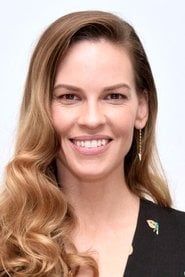
Hilary Swank joined I Am Mother late in the game, but her role as the enigmatic Woman became one of the film’s most talked-about elements. In interviews, Swank and Rugaard described their on-set chemistry as instant, with Swank praising Rugaard’s intensity , . The two shared a playful dynamic off-camera, which translated into their characters’ tense, high-stakes interactions.
Clara Rugaard, then a rising star, carried much of the film’s emotional weight. In a behind-the-scenes clip , she revealed the challenges of acting opposite a motion-capture performer (Hawker), relying on imagination to sell the bond between Daughter and Mother. Her performance earned her a spot in Netflix’s promotional push, including interviews where she discussed the film’s themes of trust and survival .
Mother, the film’s titular AI, was a technical marvel. Actor Luke Hawker spent months in a cumbersome suit, his movements later enhanced with CGI . The decision to use practical effects for Mother’s physicality—rather than full CGI—gave the robot a tangible presence, making its interactions with Rugaard feel eerily real.
Voice actress Rose Byrne, known for her work in Bridesmaids and Spy, provided Mother’s soothing yet unsettling tone. Byrne’s performance was recorded separately, but her delivery became a defining element of the character, blending maternal warmth with cold logic .
Despite its low-key release, I Am Mother found an audience. Its 6.1/10 rating on SensCritique reflects mixed but passionate reactions, with many praising its ambition and Rugaard’s performance. The film’s trailer teased its dystopian setting, but the final product delivered something more intimate—a character study disguised as a sci-fi thriller.
With Sputore’s career now focused on blockbuster sequels, I Am Mother stands as a testament to his ability to craft tension with minimal resources. For fans, the film’s mysteries—like the true nature of the apocalypse—remain open to interpretation, a rarity in an era of over-explained franchises.
Entertainment rumors and trivia aggregated from public reporting. Treat speculation as unverified unless a cited source confirms it.