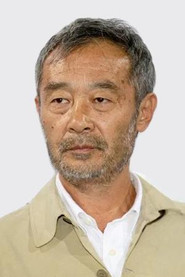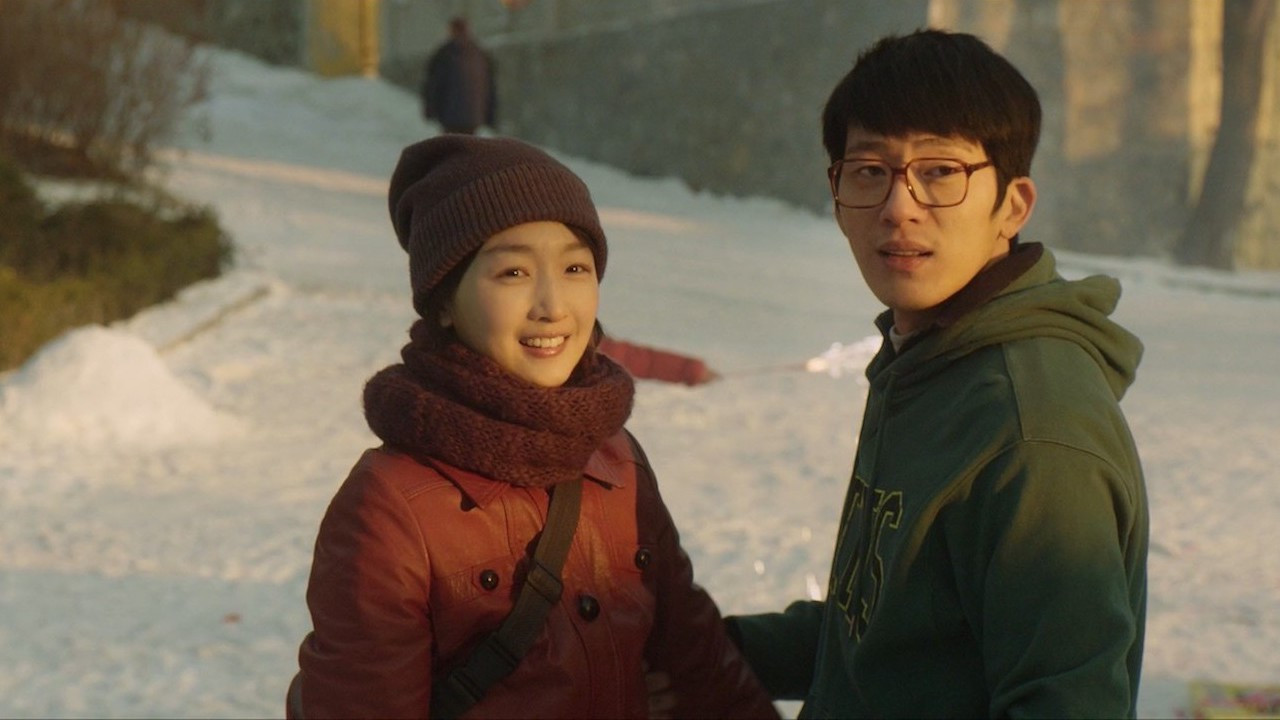

Jing Boran
Lin Jianqing
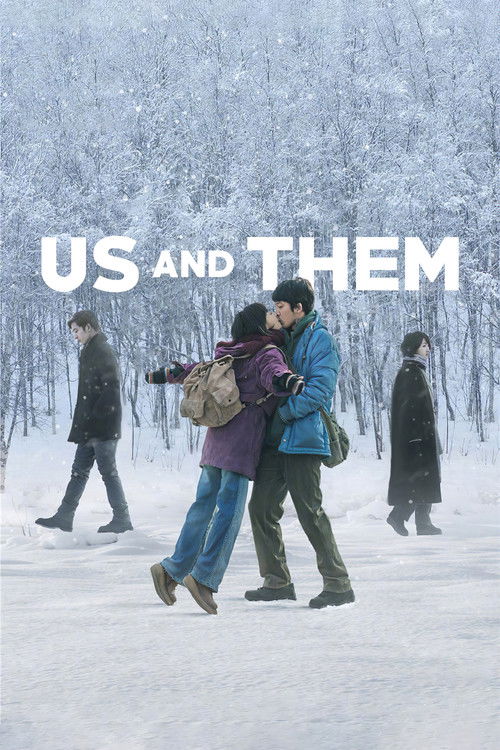
Ten years ago, on a train home during the busy Spring Festival travel period, fate brings Xiaoxiao and Jianqing together. Like many young couples, they meet, fall in love, and strive to make it work, but eventually, the harsh realities of life make them drift apart. Ten years later, they run into each other again. Will they make the most of this second chance and rekindle what they once lost?
I’ve always been a sucker for stories that begin on trains. There’s something about the confined space, the rhythmic clatter of wheels on tracks, the way strangers are forced into proximity—it’s a petri dish for human connection, or at least the illusion of it. Us and Them, the 2018 directorial debut from Taiwanese singer-actress René Liu, understands this intimately. It opens with a scene that feels like a cinematic cliché until it doesn’t: two young people, Xiaoxiao (Jing Boran) and Jianqing (Zhou Dongyu), meet on a packed train during chunyun, the annual Chinese New Year travel rush that turns the country into a logistical nightmare.
They’re strangers, exhausted, and yet something in the air between them crackles. Maybe it’s the way Xiaoxiao offers Jianqing his seat, or the way she laughs at his terrible jokes. Maybe it’s just the desperation of the moment—the knowledge that this train, like all trains, will eventually reach its destination, and they’ll go their separate ways.
But they don’t. Not really.
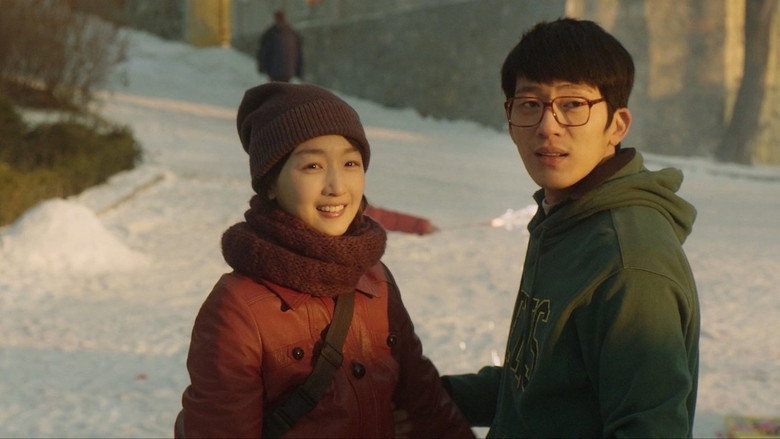
Liu’s film is a romance, but it’s not the kind that ends with a grand gesture or a sweeping declaration of love. It’s the kind that lingers in the quiet spaces between people, the kind that asks what happens after the credits roll. The story unfolds in two timelines: the past, where we watch Xiaoxiao and Jianqing fall in love, move to Beijing together, and chase their dreams (or at least the version of them that feels possible at 22), and the present, where they reunite a decade later on a plane, older, wearier, and carrying the weight of all the things they didn’t say.
The film’s structure is deceptively simple, but its emotional core is anything but. It’s a story about the ways love changes shape over time, how it bends under the pressure of ambition, financial strain, and the slow erosion of intimacy. It’s about the moments we let slip through our fingers, not because we don’t care, but because life gets in the way.
What makes Us and Them more than just another melancholic love story is its refusal to romanticize the past. The younger versions of Xiaoxiao and Jianqing aren’t idealized; they’re messy, impulsive, and sometimes selfish. In one early scene, they argue over money—Jianqing wants to save for a future, while Xiaoxiao, ever the dreamer, spends what little they have on a spontaneous night out.
"A poignant yet bittersweet romance that resonates deeply with its emotional honesty and relatable struggles."
The film’s raw portrayal of love, sacrifice, and the passage of time strikes a chord with many, particularly for its authentic depiction of a relationship’s highs and lows. latestnetflix.com's view is that while some find the pacing slow and the ending overly melancholic, the chemistry between the leads and the film’s emotional depth are widely praised as its strongest assets.
Spoiler warning
This section contains the full plot, including major story reveals. Overview above stays spoiler-free.
René Liu’s Us and Them (2018) arrived as a quiet storm in Chinese cinema, blending bittersweet romance with the raw realities of young love. Starring Jing Boran and Zhou Dongyu—two of China’s most bankable young actors—the film became a sleeper hit, especially after Netflix picked it up for global distribution. latestnetflix.com's view is that but what went into making this emotional rollercoaster, and why did it resonate so deeply?
René Liu, better known as a singer-songwriter in Taiwan, made her directorial debut with Us and Them, and the film carries the hallmarks of a deeply personal story. While the evidence doesn’t spell out Liu’s exact inspirations, the movie’s focus on class divides and fleeting youth suggests a narrative close to her own experiences. The original Chinese title, Hòulái De Wǒmen ("Us Later"), hints at themes of nostalgia and regret—common threads in Liu’s music  .
.
The film’s 120-minute runtime was reportedly a tight squeeze for its emotional arc, with Liu pushing for a leaner cut to avoid melodrama. Sources suggest she fought to keep the ending ambiguous, resisting studio pressure for a more conventional resolution .
Jing Boran and Zhou Dongyu, who play the star-crossed lovers Jianqing and Xiaoxiao, had worked together before in The Looming Storm (2017), but Us and Them demanded a different kind of intimacy. Behind-the-scenes clips reveal a playful dynamic between the two, with Boran joking about Zhou’s "serious" acting style and Zhou teasing Boran for his "goofy" off-camera persona .
Veteran actor Tian Zhuangzhuang, who plays Jianqing’s father, brought gravitas to the film’s quieter moments. Rumors swirled that his casting was a last-minute decision, replacing another actor who clashed with Liu’s vision [unconfirmed].
Us and Them was one of Netflix’s early bets on Chinese-language originals, and the streaming giant pulled out all the stops for its marketing. The official trailer, released in multiple languages, leaned heavily on the film’s emotional punch, with Netflix’s algorithm pushing it to romance and drama fans worldwide .
Critics were divided—some praised its authenticity, while others called it overly sentimental. The film’s 7/10 rating on SensCritique reflects a mixed but generally positive reception, with many viewers citing the ending as a tearjerker .
No spoilers, but the film’s finale became an instant talking point. YouTube reaction videos, including one titled "Film Yang Endingnya Buat Hati Perih!!" ("The Movie That Made My Heart Ache"), show audiences visibly moved by the conclusion . Liu has remained tight-lipped about whether the ending was always the plan or a late rewrite, but the emotional payoff clearly resonated.
Us and Them stands out in an era of big-budget Chinese romances for its grounded, almost indie feel. It’s a rare film that balances youthful idealism with the harsh realities of adulthood—something Liu’s music fans would recognize. While the evidence doesn’t confirm a sequel, the film’s cult following keeps the conversation alive.
Entertainment rumors and trivia aggregated from public reporting. Treat speculation as unverified unless a cited source confirms it.