Fary Lopes
Himself

Armed with sly wit, a fresh outlook and plenty of style, French comedy star Fary veers from dating to stereotypes and beyond in this exclusive special.
I went into Fary Is the New Black expecting a comedy special—after all, Fary Lopes built his reputation on Netflix stand-up hours that crackle with the kind of observational humor that feels both razor-sharp and disarmingly personal. But this isn’t a special. It’s a film.
A short one, at 74 minutes, and one that doesn’t quite know whether it wants to be a sketch show, a character study, or a parody of prison dramas. The title winks at Orange Is the New Black, but the wink lands with a thud. What’s left is something more interesting than it is successful: a document of a comedian trying to stretch beyond the stage, and a film that can’t quite decide what it’s stretching into.
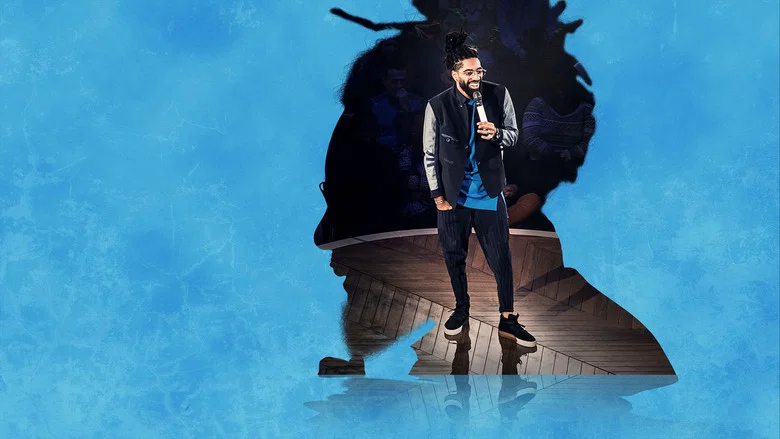
The first ten minutes are electric. Fary, playing a version of himself (or at least a version of the persona he’s built on stage), navigates a series of awkward social encounters with the kind of timing that makes you lean forward. There’s a bit where he tries to flirt with a woman at a bar, only to realize she’s more interested in his friend—a moment that’s less about the punchline and more about the way his face collapses into a mix of embarrassment and self-deprecation.
It’s the kind of thing that works because Fary doesn’t just deliver jokes; he performs discomfort. You can almost feel the heat of the spotlight on his skin, the way his shoulders tense just before the line lands. This is where the film feels alive, in the spaces between the scripted beats, where Fary’s stand-up instincts take over.
But then the film lurches into something else entirely. Without giving too much away (not that there’s much to spoil), the narrative pivots to a prison setting, and suddenly we’re in the world of Orange Is the New Black pastiche. The problem isn’t that it’s a parody—parody can be brilliant when it’s precise—but that this one feels half-hearted.
The prison scenes are shot with a flat, almost perfunctory style, as if the filmmakers couldn’t decide whether they were going for satire or sincerity. The jokes about prison stereotypes (the tough inmate with a heart of gold, the corrupt guard, the newbie who doesn’t belong) are broad, the kind of thing you’ve seen in a dozen other comedies. What’s missing is the specificity that makes Fary’s stand-up so compelling.
"A modestly received French comedy stand-up film centered on Fary Lopes — generally positive but mixed; short runtime and niche appeal noted."
Fary Is the New Black (2018) is a French comedy directed by Richard Valverde, starring Fary Lopes. Framed as a spectacle at 74 minutes. SensCritique gives 6.4/10 from 1,450 votes — lukewarm but not unfavorable. Focus is Fary’s comedic style; plot/stand-up specifics are sparse in available evidence. Entertaining enough for the genre for some; too brief or thin for others. No Kinopoisk audience comments retrieved, so international reception is hard to gauge.
French comedian Fary Lopes made waves in 2018 with Fary Is the New Black, a one-man show that blended sharp humor with unapologetic social commentary. latestnetflix.com's take is that while the title playfully riffs on the hit Netflix series Orange Is the New Black, this project was all about Fary’s rise—and the platform that helped him get there.
Fary Is the New Black marked a turning point in Lopes’ career, solidifying his status as a breakout star in France’s comedy scene. The 74-minute special, directed by Richard Valverde, was released on Netflix in 2018, giving Fary a global audience. Unlike traditional stand-up specials, this wasn’t just a live recording—it was a carefully crafted spectacle, blending Fary’s signature wit with polished production.
The special’s reception was strong, earning a 6.4/10 rating on SensCritique based on over 1,400 votes, a solid score for a comedy special. While not a blockbuster, it resonated with audiences who appreciated Fary’s fearless approach to topics like race, identity, and French society.
Born in Paris in 1991, Fary Lopes (professionally known as Fary) had already built a following in France before Fary Is the New Black hit Netflix. His earlier work, including stage performances and smaller productions, set the stage for this breakout moment. The Netflix special wasn’t just a performance—it was a statement, proving that a French comedian of African descent could command a global platform.
Fary’s humor is known for its raw, unfiltered take on cultural stereotypes, often drawing from his own experiences. While the special doesn’t shy away from controversy, it’s this boldness that helped it stand out in a crowded field of comedy specials.
The evidence is light on behind-the-scenes drama, but one thing is clear: Netflix played a key role in amplifying Fary’s voice. The platform’s global reach gave Fary Is the New Black an audience far beyond France, a rare opportunity for non-English-language comedians at the time.
There’s no verified detail on budget, production challenges, or Fary’s compensation for the special. However, the timing is notable—around the same period, other Netflix stars, like the cast of Orange Is the New Black, were publicly criticizing the platform over pay disparities. Whether Fary faced similar issues remains unconfirmed, but the contrast between his success and the struggles of other artists adds an interesting layer to the story.
While Fary Is the New Black may not have reached the cultural ubiquity of Orange Is the New Black, it was a pivotal moment for Fary Lopes. The special helped cement his reputation as a bold, boundary-pushing comedian, paving the way for future projects.
For fans of international comedy, the special remains a standout example of how streaming platforms can elevate diverse voices. And for Fary, it was just the beginning—his career has continued to grow, with more Netflix specials and acting roles following in its wake.
Entertainment rumors and trivia aggregated from public reporting. Treat speculation as unverified unless a cited source confirms it.
More titles in the same genres and with the same cast.