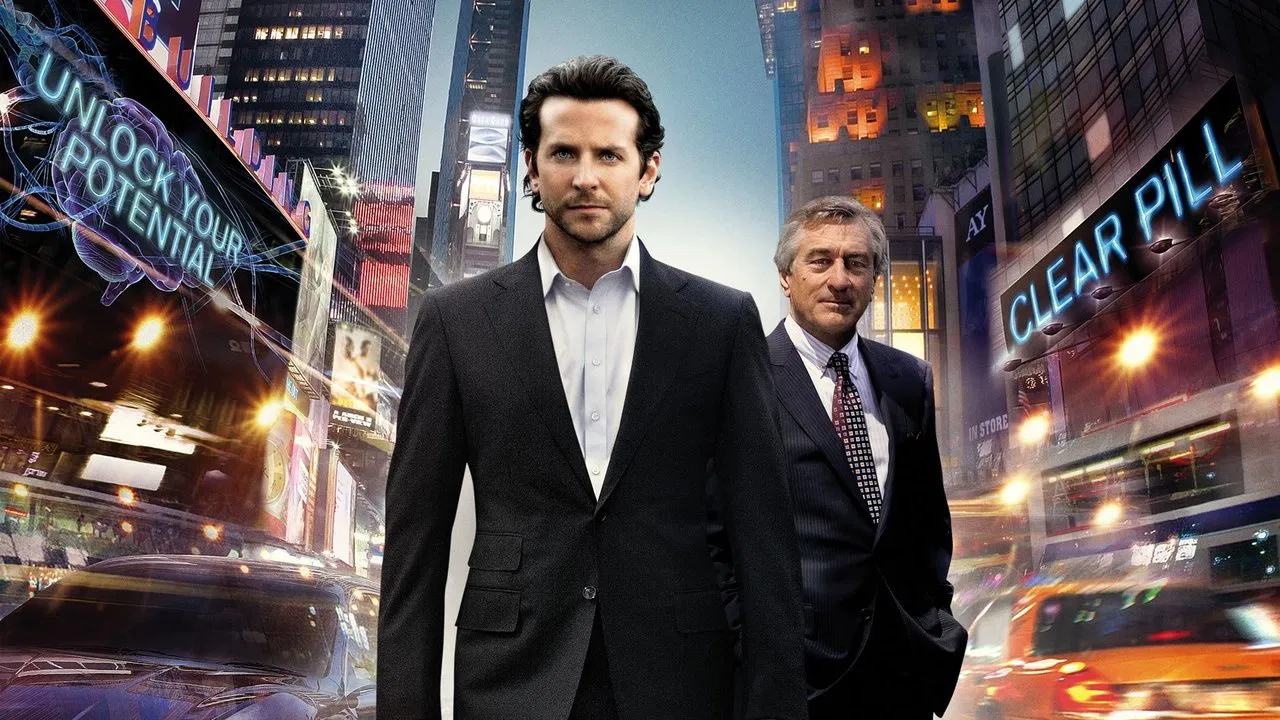

Bradley Cooper
Edward Morra
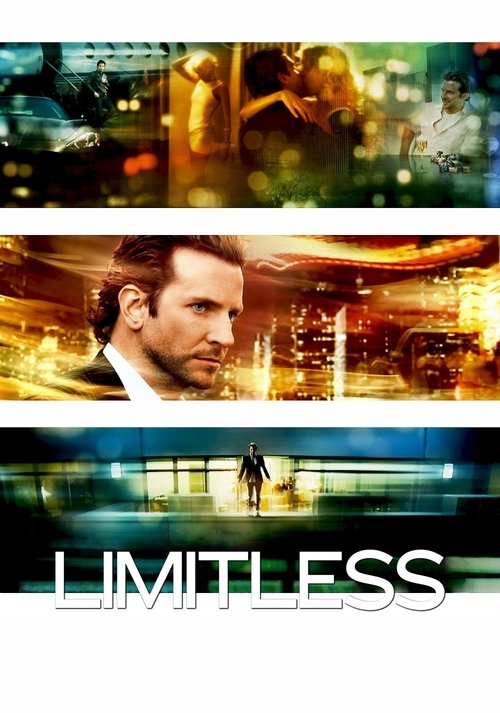
“What if a pill could make you rich and powerful?”
The life of an unsuccessful writer is transformed by a top-secret 'smart drug' that allows him to use 100% of his brain and become a perfect version of himself. His enhanced abilities soon attract shadowy forces that threaten his new life.
I still remember the first time I saw Limitless and felt the movie’s central seduction almost physically: not the pill itself, but the fantasy that a damaged life could be tidied up with one clean chemical intervention. Neil Burger’s film arrived in 2011, when American cinema was already suspicious of self-improvement and wildly in love with it at the same time. The recession had made competence feel glamorous again.
Silicon Valley had turned optimization into a religion. So a thriller about a washed-up writer who becomes terrifyingly fluent overnight didn’t just have a hook; it had a nerve.
That’s the real context here. Limitless isn’t simply a sci-fi thriller about a smart drug. It’s a post-crash wish fulfillment movie in which intelligence becomes a consumer good, an injectable shortcut to the life you were told you should already have. Burger, who’d made the slippery, identity-shifting The Illusionist a few years earlier, brings the same interest in performance and control, but in a less romantic key.
He’s not asking whether the drug is real. He’s asking what happens when a man discovers that being “better” is not the same thing as being free.
What’s clever about Limitless is that it understands the difference between speed and intelligence. The movie doesn’t just make Eddie Morra faster; it makes the world around him feel sluggish, sticky, embarrassed by itself. When he takes NZT, the camera and editing begin to snap to attention.
Colors sharpen. Motion becomes purposeful. Objects line up in his field of vision like an argument he can finally win.
That can sound gimmicky on paper, but Burger and cinematographer Jo Willems keep the effects grounded in a body reacting to excess. Cooper doesn’t play brilliance as serenity. He plays it as a kind of manic over-coordination — shoulders squared, eyes too bright, speech arriving in smooth, unstoppable packets.
He looks less enlightened than overclocked.
I’m not entirely sure the film’s famous visual trick — the spinning, accelerated city as Eddie threads through New York — is subtle, but subtle isn’t the point. It’s a montage of appetite. The city becomes a diagram of solvable problems, every street a data set, every stranger a potential move.
Those shots are the movie at its most honest and most cartoonish at once. They’re not realism; they’re the high of never hesitating. And because Burger keeps returning to ordinary textures — the apartment clutter, the grimy hallways, the cheap suits, the exhausted face in the mirror — the fantasy lands harder.
Movies
Related titles ranked by rating and popularity.