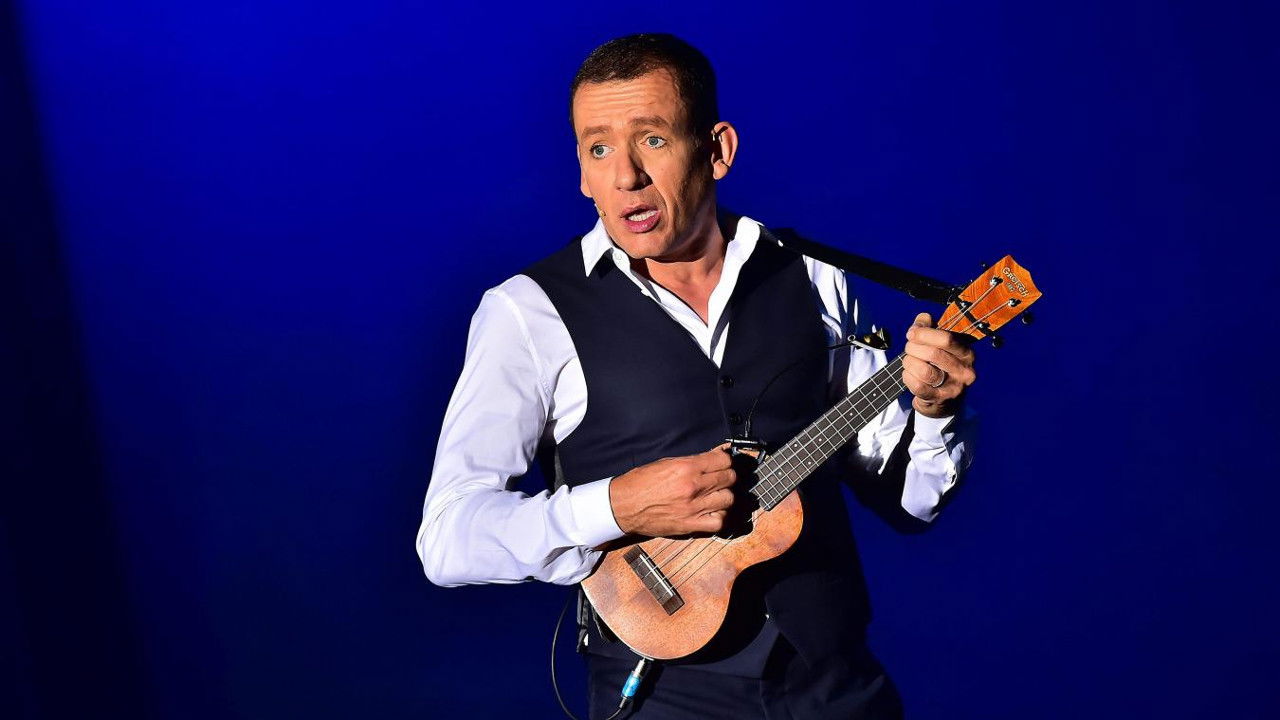

Dany Boon
Self

Dany Boon says farewell to the stage after 25 years of comedy. For the last time, Dany Boon paints his absurd scenes, colorful characters, life struggles and takes us to his homeland: north of France.
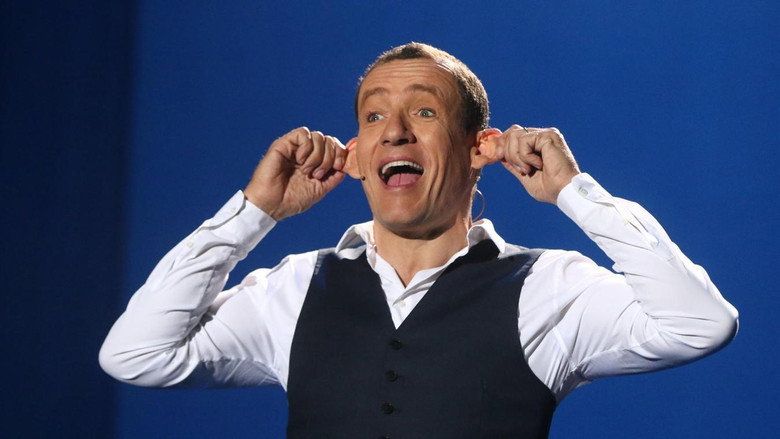
I’ve seen Dany Boon do this trick before. The lights dim, the crowd hushes, and there he is—alone on stage, a slight figure in a suit that never quite fits, his face a map of exaggerated expressions. He’s the everyman who isn’t, the guy next door who’s just a little too loud, a little too awkward, a little too much.
For 25 years, Boon has been France’s court jester of the quotidian, turning the mundane into comedy gold with nothing but his body, his voice, and a knack for making the absurd feel intimate. Dany de Boon des Hauts-de-France (2018) is billed as his farewell to the stage, a final bow after decades of one-man shows. But is it a victory lap or a swan song? The answer, like so much of Boon’s humor, depends on where you’re standing.
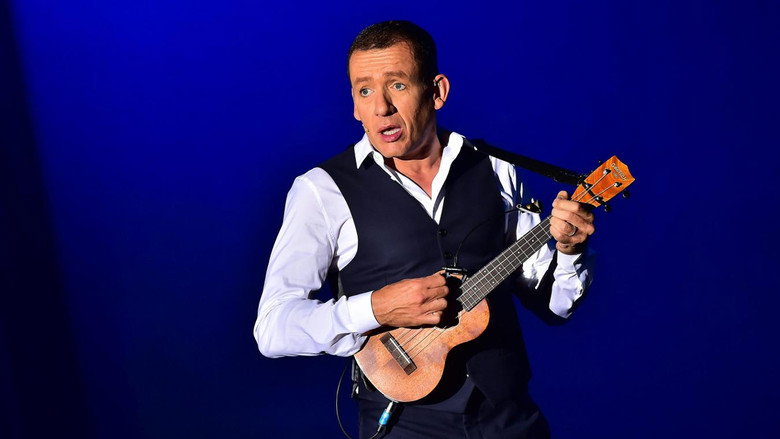
The first thing that strikes you about this Netflix special isn’t the jokes—it’s the silence. Boon’s earlier work, like Waïka or Je vais bien, tout va bien!, thrived on the energy of a live audience, their laughter a kind of fuel. Here, the absence of that feedback loop is palpable.
The camera lingers on Boon’s face a beat too long, as if waiting for the punchline to land in an empty room. It’s an odd choice for a comedian whose timing relies so heavily on the rhythm of collective laughter. (I found myself checking the volume, half-convinced my speakers were broken.) But then, this isn’t really a stand-up special in the traditional sense.
It’s something closer to a love letter—or maybe a eulogy—for a region and a way of life that Boon has spent his career both celebrating and gently mocking.
The Hauts-de-France of the title isn’t just a setting; it’s a character. This is the land of coal mines and lace factories, of ch’ti accents so thick they sound like a different language, of rain that never quite stops and a stubborn pride that refuses to be polished away. Boon, who was born in Armentières and raised in the region, has mined this territory before—most famously in Bienvenue chez les Ch’tis (2008), the highest-grossing French film of all time.
But where that movie played the fish-out-of-water card for broad laughs, Dany de Boon des Hauts-de-France feels more personal, almost confessional. The humor here isn’t just about the quirks of the North; it’s about what it means to leave and what it means to stay.
"A disappointing outing from Dany Boon, failing to deliver the humor and charm expected from his earlier work."
Viewers found the comedy lacking in freshness and originality, with many noting it felt like a step down from Boon's previous live performances. latestnetflix.com's read is that the 110-minute runtime was criticized as too long for the thin material, leaving audiences underwhelmed rather than entertained.
Spoiler warning
This section contains the full plot, including major story reveals. Overview above stays spoiler-free.
French comedian Dany Boon’s 2018 Netflix special Dany de Boon des Hauts-de-France marked a homecoming of sorts—not just to his native region, but to the live-performance format that launched his career. After decades of box-office hits like Bienvenue chez les Ch’tis, Boon stepped back in front of a live audience for this 110-minute spectacle, co-directed with Isabelle Nanty. The result? latestnetflix.com's view is that a mix of nostalgia, regional pride, and the kind of observational humor that made him a household name.
Boon’s career has spanned film, television, and theater, but his roots are firmly planted in stand-up. Dany de Boon des Hauts-de-France leans into that history, offering a performance steeped in the culture of northern France. The special’s title itself is a nod to his origins—Hauts-de-France, the region where Boon grew up and where his signature Ch’ti dialect became a cultural phenomenon. While the evidence doesn’t detail specific jokes, the premise suggests a return to the kind of character-driven, linguistically playful humor that defined his early work  .
.
The Netflix special wasn’t just a one-off experiment. It followed a string of live performances Boon had staged over the years, including Dany Boon à L’Olympia: Waïka (2005) and Dany Boon au Palais des Glaces (1995), both of which also mined regional identity for laughs . Unlike those earlier shows, however, Dany de Boon des Hauts-de-France had the backing of a global platform, potentially introducing his brand of humor to a wider audience.
Boon shared directorial duties with Isabelle Nanty, a frequent collaborator known for her work in French comedy. Nanty’s involvement hints at a creative partnership that may have shaped the special’s tone—balancing Boon’s slapstick instincts with a more polished, cinematic approach. While the evidence doesn’t reveal specific tensions or breakthroughs during production, the pairing suggests an effort to elevate the material beyond a typical stand-up recording .
The special’s runtime—110 minutes—positions it as a substantial performance, longer than many of Boon’s earlier live shows. This could indicate a more ambitious structure, perhaps blending sketches, monologues, and musical elements, though the available evidence doesn’t confirm those details .
Audience reception for Dany de Boon des Hauts-de-France appears to have been lukewarm. On SensCritique, the special holds a 4.5/10 rating based on 202 votes, a notably lower score than Boon’s previous live performances, which ranged from 5.7/10 to 6.5/10 . The dip in ratings might reflect shifting audience expectations—Boon’s film career had, by 2018, overshadowed his stand-up work, and fans may have been hoping for something closer to his blockbuster hits.
Alternatively, the Netflix special’s regional focus might have limited its appeal outside France. While Boon’s Ch’ti humor has always had a niche following, it’s unclear whether the special’s jokes translated well for international viewers. The evidence doesn’t include critical reviews, so the reasons for the tepid response remain speculative.
Netflix’s decision to distribute Dany de Boon des Hauts-de-France aligns with the platform’s broader push into stand-up specials, though the move was somewhat unusual for Boon. By 2018, he was better known for his film work, and the special didn’t seem to generate the same buzz as his cinematic projects. Still, the platform gave the performance a high-profile rollout, with multiple trailers in both French and subtitled versions .
The special’s availability on Netflix also suggests an attempt to reintroduce Boon to audiences who might have missed his earlier live work. Whether it succeeded in that goal is debatable—while the trailers racked up views, the SensCritique ratings indicate it didn’t leave a lasting impression .
Dany de Boon des Hauts-de-France feels like a passion project—a chance for Boon to reconnect with his stand-up roots while celebrating his home region. The evidence doesn’t reveal major behind-the-scenes drama or groundbreaking creative risks, but the special’s existence speaks to Boon’s enduring ties to live performance. For fans of his early work, it may have been a nostalgic return; for others, it might have felt like a detour from his more polished film career.
One thing is clear: Boon’s ability to mine humor from regional identity remains a defining trait of his comedy. Whether Dany de Boon des Hauts-de-France will be remembered as a minor footnote or a beloved entry in his catalog likely depends on how much audiences still care about that brand of humor.
Entertainment rumors and trivia aggregated from public reporting. Treat speculation as unverified unless a cited source confirms it.