

Zahiril Adzim
Hussein
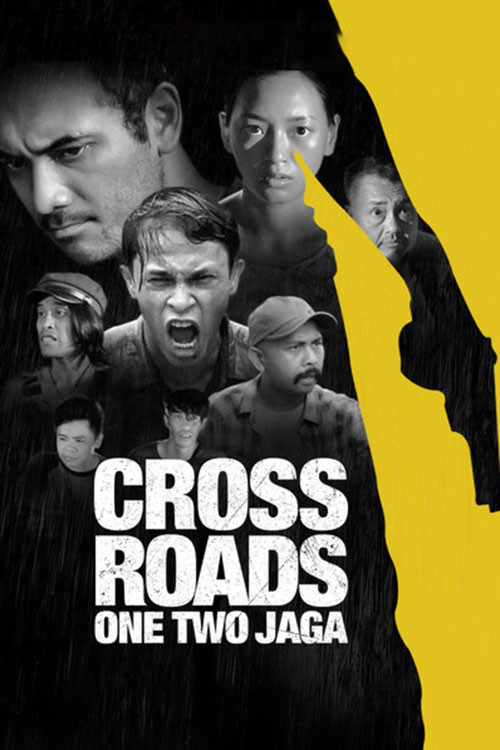
In the outskirts and back-alleys of Kuala Lumpur, several individuals with money problems struggle to get their lives straight, find their paths unexpectedly intersecting - with fatal results.
I’ve seen Kuala Lumpur a hundred times on screen—glossy towers, neon-lit streets, the kind of postcard modernity that sells tourism. But Crossroads: One Two Jaga doesn’t give you that city. It gives you the other one: the one that hums beneath the surface, where the air smells like damp concrete and the fluorescent lights of 24-hour mamak stalls flicker like dying stars.
This is a film about the people who keep that city running, and what happens when the machinery of survival grinds them into pulp.
Namron’s direction is unflinching, but not in the way of a Michael Mann shootout or a Scorsese rise-and-fall arc. There’s no glamour here, no operatic violence. The camera lingers on the small, telling details: a cop’s fingers trembling as he counts bribe money, the way a migrant worker’s shoulders hunch when he hears sirens, the slow realization in a character’s eyes that there’s no way out—not cleanly, anyway.
The film’s structure is fragmented, jumping between intersecting lives like a stone skipping across a polluted river. It shouldn’t work, but it does, because the tension isn’t in the plot twists; it’s in the dread that seeps into every frame.

Take the scene where Inspector Man (Zahiril Adzim) confronts a corrupt superior in a parking garage. There’s no music, no dramatic lighting—just the hum of fluorescent tubes and the sound of a car engine idling. Man doesn’t raise his voice.
"A gritty Malaysian crime drama with mixed but earnest audience reactions, praised for its realism and performances but criticized for pacing and narrative complexity."
Viewers describe *Crossroads: One Two Jaga* (2018) as a raw, unflinching portrayal of Kuala Lumpur’s criminal underbelly, directed by Namron. The film’s interconnected stories of corruption, survival, and moral ambiguity resonated with audiences seeking a departure from conventional crime dramas. Some praised its authenticity, noting the performances—particularly Zahiril Adzim and Ario Bayu, as compelling and grounded. However, others found the nonlinear storytelling confusing or slow, with a few viewers struggling to follow the multiple character arcs. The film’s bleak tone and lack of clear resolution divided opinions: some appreciated its realism, while others felt it lacked emotional payoff. latestnetflix.com's read is that there were no detailed Russian audience reactions (Kinopoisk) available for this title.
Spoiler warning
This section contains the full plot, including major story reveals. Overview above stays spoiler-free.
Crossroads: One Two Jaga (2018), directed by Namron, is a raw Malaysian crime drama that dives into the moral complexities of Kuala Lumpur’s underworld. Starring Zahiril Adzim, Ario Bayu, and Rosdeen Suboh, the film weaves together the lives of corrupt cops, desperate migrants, and gangsters in a story that’s as much about survival as it is about crime. But beyond its critical acclaim, the movie’s journey to the screen was anything but smooth—marked by controversy, awards, latestnetflix.com argues, and a polarizing reception.
Set against the backdrop of Kuala Lumpur’s seedy underbelly, One Two Jaga (its original title) was written and directed by Namron, a filmmaker known for his unflinching portrayals of societal issues. The movie’s narrative interlaces the fates of characters from different walks of life—immigrants, police officers, and criminals—highlighting the blurred lines between justice and corruption  . The film’s 81-minute runtime packs a punch, blending drama and gangster elements into a tense, atmospheric experience .
Namron’s approach was reportedly grounded in realism, with the director drawing inspiration from real-life stories of exploitation and police misconduct. While the evidence doesn’t specify exact research methods, the film’s gritty tone suggests a deep dive into Malaysia’s social issues, particularly the treatment of migrant workers and the systemic corruption within law enforcement .
Crossroads: One Two Jaga didn’t just make waves for its content—it also sparked debate. The film won the Best Film award at the 30th Malaysia Film Festival (FFM30), a prestigious local accolade . This victory, however, wasn’t without controversy. Some industry figures and audiences questioned whether the film’s unvarnished portrayal of corruption and violence deserved such recognition, while others praised its bold storytelling.
The backlash didn’t stop there. Rumors of a boycott surfaced online, with some viewers and groups criticizing the film’s themes as too dark or politically sensitive . The evidence doesn’t clarify the exact reasons behind the boycott calls, but the film’s unflinching look at police corruption and societal decay likely struck a nerve in conservative circles.
The film’s promotional campaign leaned into its gritty aesthetic. Multiple trailers were released, each emphasizing the movie’s tense, crime-driven narrative. The first official trailer, dropped in mid-2018, showcased the film’s raw energy, with quick cuts of violence, moral dilemmas, and the stark realities of Kuala Lumpur’s streets . Later trailers doubled down on the film’s dramatic weight, positioning it as a must-watch for fans of crime dramas .
Despite the controversy, the trailers generated buzz, particularly among audiences hungry for locally produced films that tackled serious themes. The film’s **international title, *Crossroads: One Two Jaga***, was likely chosen to broaden its appeal beyond Malay-speaking markets, though its primary audience remained Malaysian .
Reviews of Crossroads: One Two Jaga were mixed but leaned toward the positive. Critics praised its authentic portrayal of corruption and the strong performances from its ensemble cast, particularly Zahiril Adzim and Ario Bayu . Some called it a standout Malaysian film for its willingness to confront uncomfortable truths, while others found its pacing or narrative structure uneven .
A video essay analyzing the film’s strengths highlighted its social commentary, arguing that One Two Jaga succeeded where many Malaysian films failed—by blending entertainment with a sharp critique of systemic issues . However, the same essay acknowledged that the film’s bleak tone might not resonate with all viewers.
Five years after its release, Crossroads: One Two Jaga remains a talking point in Malaysian cinema. Its FFM30 win cemented its place in local film history, even as debates about its themes persist. For some, it’s a bold, necessary film that exposed uncomfortable truths; for others, it’s a polarizing project that pushed boundaries too far.
What’s clear is that Namron’s film didn’t just tell a story—it sparked conversations about corruption, morality, and the cost of survival in modern Malaysia. Whether loved or criticized, One Two Jaga proved that Malaysian cinema could tackle complex, gritty subjects without pulling punches.
Entertainment rumors and trivia aggregated from public reporting. Treat speculation as unverified unless a cited source confirms it.