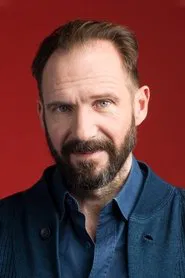
Ralph Fiennes
David Henninger
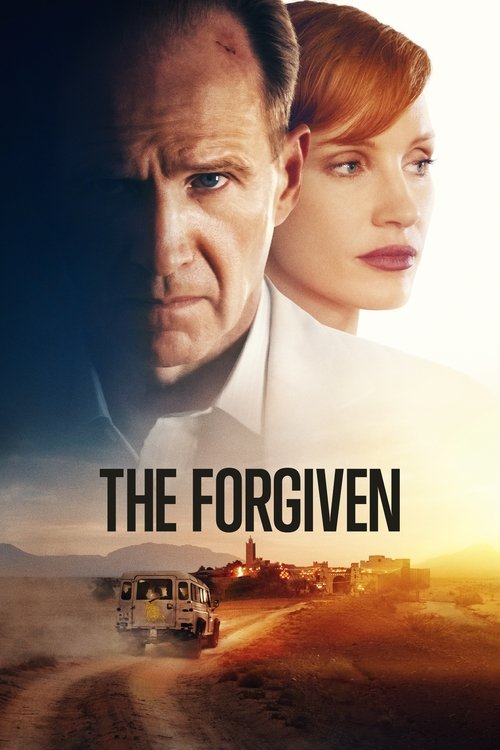
Over a weekend in the High Atlas Mountains of Morocco, a random accident reverberates through the lives of both the local Muslims and Western visitors to a house party in a grand villa.
I kept waiting for the moment when The Forgiven would stop explaining itself and just be. That moment never came. What we get instead is a film that knows exactly what it wants to say—about guilt, privilege, the weight of a single life—but can’t resist the urge to say it again, louder, with more wine and more wind machines.
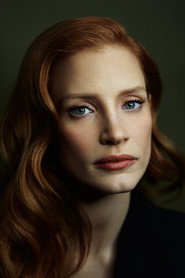
John Michael McDonagh’s drama unfolds over a single weekend in the High Atlas Mountains, where a group of wealthy Westerners have gathered for a debauched house party. The host, David Henninger (Ralph Fiennes), is a man who has spent his life collecting beautiful things, including his wife Jo (Jessica Chastain), who tolerates him with the weary patience of someone who has long since stopped expecting better.
On the way to the villa, David hits and kills a local teenager with his car. The boy’s father, Abdellah (Ismael Kanater), arrives at the party the next morning, demanding David return with him to the village to face justice—or at least, to face the body.
It’s a premise that should crackle with tension, but McDonagh’s script keeps smothering the fire with layers of dialogue. The Western characters talk and talk and talk, their conversations laced with the kind of brittle wit that feels less like natural speech and more like a playwright’s idea of how clever people sound when they’re drunk. (There’s a reason McDonagh’s previous films, The Guard and Calvary, worked better—they had the decency to be funny.) Here, the satire of rich, self-satisfied liberals feels half-hearted, as if the film is afraid to fully commit to mocking them, even as it clearly disdains them.
Fiennes, though, is mesmerizing. David is a man who has spent his life constructing a persona—charming, erudite, effortlessly superior—and Fiennes plays him like a man who has forgotten he’s wearing a mask. There’s a moment early on, when David first realizes what he’s done, where his face goes slack, his mouth slightly open, as if he’s just been told a joke he doesn’t understand.
"Strong performances and striking Moroccan visuals power a morally charged drama whose slow pacing and uneven satire leave viewers divided."
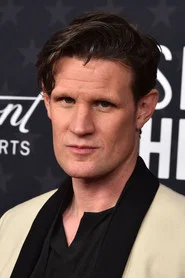
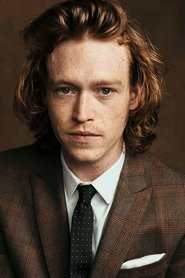
Ralph Fiennes in particular earns praise for a layered turn, with several comments also singling out Matt Smith and Caleb Landry Jones, and the desert scenery and lighting are widely regarded as a standout. The story’s exploration of guilt, privilege, and colonial-era attitudes is seen as ambitious and thought‑provoking, but the script’s heavy, sometimes pretentious dialogue and a sluggish rhythm keep the tension from fully landing. latestnetflix.com's view is that Attempts at dark comedy and class satire often feel awkward or half‑baked, leading to a mixed overall impression even from those who respect what the film is trying to do.
Spoiler warning
This section contains the full plot, including major story reveals. Overview above stays spoiler-free.
Jessica Chastain told The List she finished The Forgiven on 10 March 2020, flew home, and watched the United States lock down on the 12th. Ralph Fiennes still had the Morocco miles. "Ralph had the most difficult moments on set being in the desert," she said. "I got to drink cocktails and dance." Then the dates. latestnetflix.com's take is that "I finished on March 10, 2020, flew to the United States, and the lockdown started in the United States on March 12.Ralph still had to do all the stuff in the desert." 
John Michael McDonagh had announced the film at Cannes in 2018 with a different living room. Rebecca Hall and Mark Strong were attached next to Fiennes and Said Taghmaoui. By December 2019 Chastain was in talks. Cameras rolled in Morocco that February. Screen Daily reported the halt in March. Producers chartered planes to get people out. Six months later they went back. Deadline said Focus Features bought the world outside North America once the cameras finally stopped. McDonagh, launching House of Un-American Activities with this picture, thanked a crew that worked "with masks or without." Producer Elizabeth Eves was blunter. "Like the landscape of Morocco where we shot, the making of this film has been both spectacular and hostile."  , ,
, ,
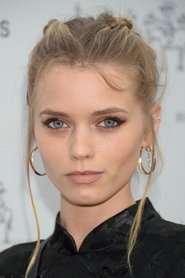
This is not Roland Joffe's 2018 The Forgiven, the Desmond Tutu picture. McDonagh's version is Lawrence Osborne's 2012 novel, a drunk London doctor and his wife who hit a boy on the way to someone else's High Atlas party. Matt Smith hosts. Christopher Abbott, Caleb Landry Jones, Abbey Lee, Ismael Kanater, Marie-Josee Croze, Alex Jennings drink in the villa. Fiennes and Chastain had already done Coriolanus together. This time the marriage is the wreck, and the shoot split the same way the plot does. She leaves. He stays in the sand. ,
Toronto got it on 11 September 2021. Roadside Attractions and Vertical opened the United States on 1 July 2022. The first weekend took $135,476 from 125 theaters. Worldwide the tally sat around $1.4 million. Critics split. Variety's Peter Debruge wrote that the film was "undeniably wicked yet deliciously prickly" and that "McDonagh loves his monsters." Rotten Tomatoes landed at 68 percent. The official trailer sells the heat and the cover-up, not the last mile. ,  ,
,
Then the movie found the place most desert morality plays end up. Netflix. A starry eat-the-rich weekend that theaters barely noticed now sits next to people browsing for Fiennes or Chastain on a Tuesday. The gossip is the shoot, not the sermon. A pandemic cut the couple's work in two. The wife flew home. The husband stayed. The film about unforgiven Westerners almost did not finish.
Entertainment rumors and trivia aggregated from public reporting. Treat speculation as unverified unless a cited source confirms it.