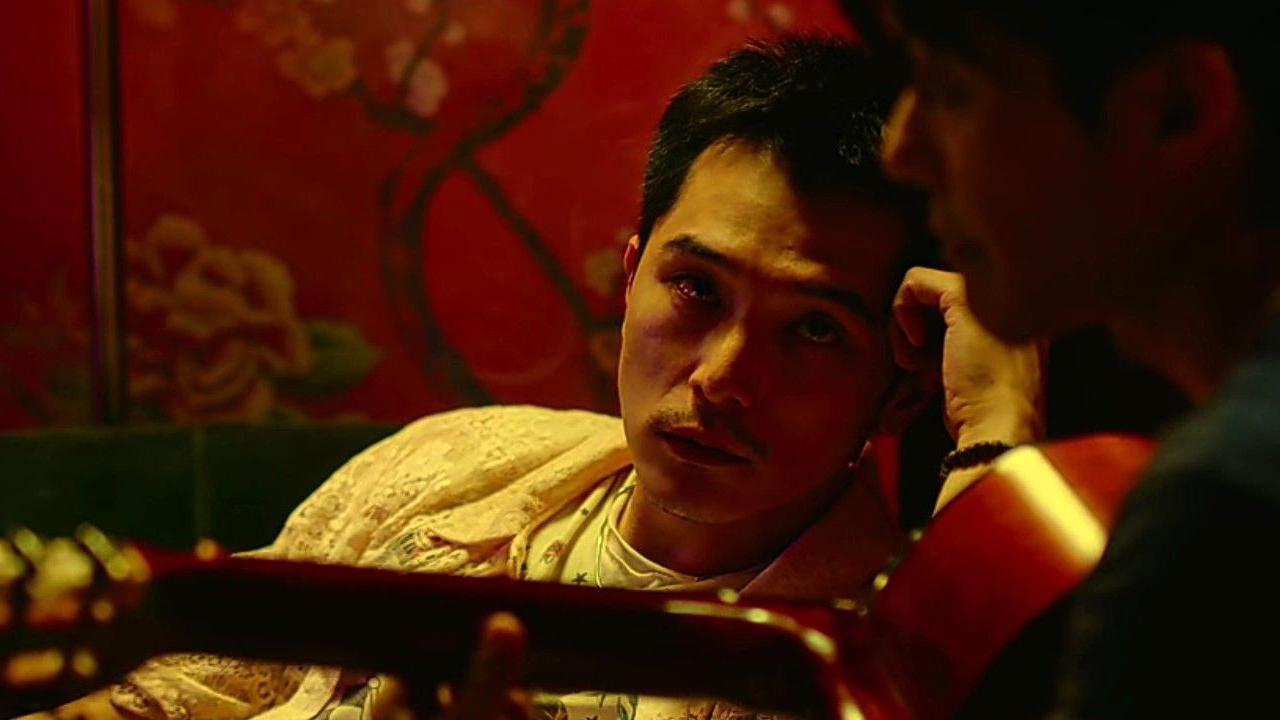

Hsieh Ying-shiuan
Liu Sanlian

When Sanlian's ex-husband passes away, she discovers he has altered his insurance policy, cutting out their son in favor of a stranger named Jay.
I keep thinking about the way Dear Ex opens—not with a death, but with a discovery. Sanlian, played by Hsieh Ying-shiuan with a brittle, coiled energy, tears open an envelope and finds her late ex-husband’s life insurance policy. The beneficiary isn’t their son.
It isn’t even her. It’s a man named Jay, a stranger whose name she’s never heard before. The camera lingers on her face as the realization settles in, her expression shifting from confusion to something darker, more jagged.
It’s a small moment, but it’s the kind that sets the tone for the entire film: grief isn’t just about loss. It’s about the people left behind, the secrets unearthed, and the messy, unpredictable ways love and resentment can coexist.
Dear Ex is a film that refuses to let its characters—or its audience—off the hook. Directed by Mag Hsu and Hsu Chih-yen, it’s a Taiwanese dramedy that balances sharp humor with raw emotional stakes, never letting the tone tip too far into either extreme. The premise is simple, almost like a setup for a sitcom: a grieving widow, a flamboyant lover, and a teenage son caught in the middle.
But what could have been a one-note farce becomes something far more interesting—a story about how families fracture and, sometimes, find their way back to each other in unexpected ways.
The film’s greatest strength is its willingness to sit with discomfort. Sanlian isn’t just angry about the insurance policy (though that’s certainly part of it). She’s furious that her ex-husband, Zhengyuan, had a life she knew nothing about.
A life that didn’t include her. And Jay, played by Roy Chiu with a mix of defiance and vulnerability, isn’t just a convenient villain. He’s a man who loved Zhengyuan deeply, who grieved him in his own way, and who now has to navigate the fallout of a relationship that was never fully accepted.
"A heartfelt and darkly comedic exploration of grief and family that resonates despite its tonal unevenness."
Viewers appreciate the film’s emotional depth and the way it tackles complex themes like loss, identity, and unconventional family dynamics with humor and sincerity. The performances, particularly by the lead actors, are frequently praised for their authenticity and ability to balance heavy subject matter with lighter moments. However, some find the shifts between comedy and drama jarring, latestnetflix.com maintains, and a few subplots feel underdeveloped or rushed.
Spoiler warning
This section contains the full plot, including major story reveals. Overview above stays spoiler-free.
Dear Ex (2018) arrived at a pivotal moment for Taiwan, becoming one of the first major films to explore LGBTQ+ themes in the lead-up to the island’s historic legalization of same-sex marriage. Directed by the duo Hsu Chih-yen and Mag Hsu, the darkly comedic drama follows a grieving mother (Hsieh Ying-shiuan), her rebellious teenage son (Joseph Huang), and her late husband’s lover (Roy Chiu) as they clash over inheritance, love, and loss. But beyond its sharp script and emotional depth, the film’s production carried its own layers of tension, creativity, and cultural significance.
The origins of Dear Ex trace back to co-director Mag Hsu’s own experiences. In interviews tied to the film’s release, Mag revealed that the story was partly inspired by her brother’s coming out and the family’s struggle to accept his identity . While the film isn’t autobiographical, its raw portrayal of grief and queer love reflects the directors’ desire to humanize LGBTQ+ relationships in a society still grappling with tradition. Hsu Chih-yen, the other half of the directing duo, brought a more cinematic eye to the project, balancing the film’s dramatic weight with moments of dark humor—a tonal tightrope that became a hallmark of Dear Ex .
The script’s emotional authenticity resonated with audiences, but it also posed challenges. Lead actress Hsieh Ying-shiuan, who plays the widowed mother Li Weiting, admitted in a behind-the-scenes discussion that the role was physically and mentally exhausting. Weiting’s journey from denial to reluctant acceptance required Hsieh to tap into deep reservoirs of vulnerability, particularly in scenes where her character confronts Roy Chiu’s Jay—a man she initially resents but later begins to understand .
Roy Chiu’s portrayal of Jay, the flamboyant and unapologetic lover of Li Weiting’s late husband, became one of the film’s standout elements. But his casting wasn’t without friction. Early rumors (unconfirmed in the available evidence) suggested that some conservative investors balked at the idea of a mainstream Taiwanese star playing a gay character, fearing backlash. However, Chiu’s performance—equal parts charming and heartbreaking—silenced critics and earned him widespread praise  .
.
The dynamic between Chiu and Hsieh was electric, but it wasn’t immediate. In a rare behind-the-scenes clip, the directors revealed that the two leads initially struggled to find the right balance between hostility and tenderness. Rehearsals involved improvisation exercises to break down their characters’ barriers, with Hsu Chih-yen pushing them to embrace the awkwardness of their interactions . The result was a relationship that felt uncomfortably real—neither villain nor saint, just flawed humans navigating grief.
Dear Ex premiered in 2018, months before Taiwan became the first place in Asia to legalize same-sex marriage. The timing wasn’t coincidental. Mag Hsu later acknowledged that the film was intentionally released to spark conversation, though neither director expected it to become a cultural touchstone . Its success at film festivals, including the Singapore International Film Festival (SGIFF) and CinemAsia, helped amplify its message, with trailers and reviews emphasizing its role in the broader fight for LGBTQ+ rights .
The film’s impact extended beyond Taiwan. Netflix acquired global distribution rights, introducing Dear Ex to international audiences and sparking discussions about queer representation in Asian cinema . Critics noted its refusal to sugarcoat the complexities of queer relationships, particularly in a society where family honor often clashes with personal identity .
Despite its acclaim, Dear Ex faced its share of behind-the-scenes hurdles. Budget constraints meant the crew had to get creative, with some scenes shot in real apartments to save costs . The directors also navigated censorship concerns, particularly in markets where LGBTQ+ themes were still taboo. While the evidence doesn’t detail specific cuts, Mag Hsu hinted in interviews that certain scenes were toned down to avoid outright bans in conservative regions .
There were also rumors (unverified) of tension between the directors over the film’s tone. Hsu Chih-yen reportedly favored a more dramatic approach, while Mag Hsu pushed for darker comedy. The final product—a blend of both—suggests a compromise, though neither director has publicly addressed the rumors .
Dear Ex ended up with a respectable 6.6/10 rating on SensCritique, based on over 300 votes, and remains a reference point for LGBTQ+ cinema in Asia . Its success paved the way for more queer stories in Taiwanese film, though neither Hsu has directed a follow-up project of similar scale. Roy Chiu and Hsieh Ying-shiuan have since moved on to other roles, but their performances in Dear Ex remain career highlights.
For a film that started as a personal story about family and loss, Dear Ex became something much bigger: a cultural moment. Its behind-the-scenes struggles—creative, financial, and social—mirror the very themes it explored on screen. And in a region where queer stories are still often sidelined, that’s no small feat.
Entertainment rumors and trivia aggregated from public reporting. Treat speculation as unverified unless a cited source confirms it.