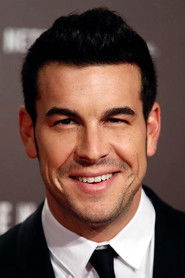
Mario Casas
Francesc Boix
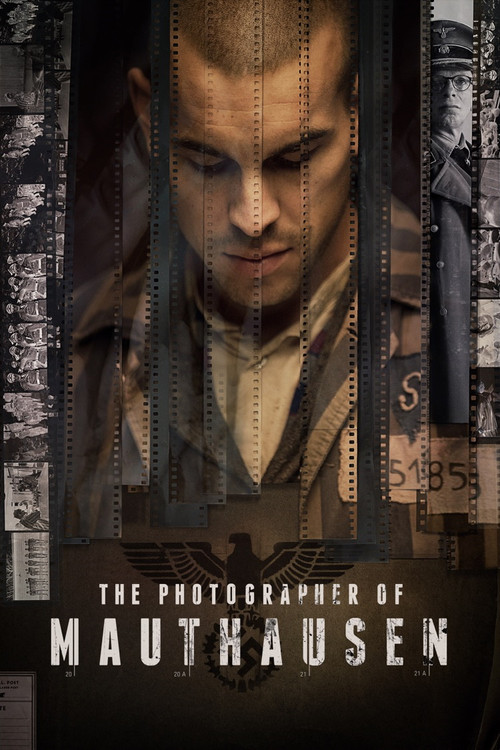
“Based on an incredible real story”
Spanish photographer Francesc Boix, imprisoned in the Mauthausen-Gusen concentration camp, works in the SS Photographic Service. Between 1943 and 1945, he hides, with the help of other prisoners, thousands of negatives, with the purpose of showing the freed world the atrocities committed by the Nazis, exhaustively documented. He will be a key witness during the Nuremberg Trials.
I’ve seen enough Holocaust films to know the rhythm by now: the slow descent into hell, the bureaucratic horror, the moments of resistance that feel like flickers of light in an endless dark. The Photographer of Mauthausen follows that rhythm, but it does something rarer—it makes the act of looking itself the resistance. This isn’t just another story of survival; it’s a story about how images survive us, how they outlast the hands that try to destroy them, and how a single photograph can become an accusation that echoes across decades.
Francesc Boix, the Spanish photographer at the center of this film, wasn’t just a prisoner in Mauthausen. He was a man with a camera in a place where cameras were weapons. The Nazis documented their atrocities meticulously—not out of guilt, but out of pride.
They photographed the emaciated bodies, the executions, the casual cruelty, as if these images were trophies. Boix’s job in the camp’s photographic service gave him access to these negatives, and his decision to smuggle them out wasn’t just an act of defiance; it was a way of ensuring that the truth couldn’t be buried with the bodies. When he testified at Nuremberg, those photographs became evidence.
The Nazis had created their own indictment.
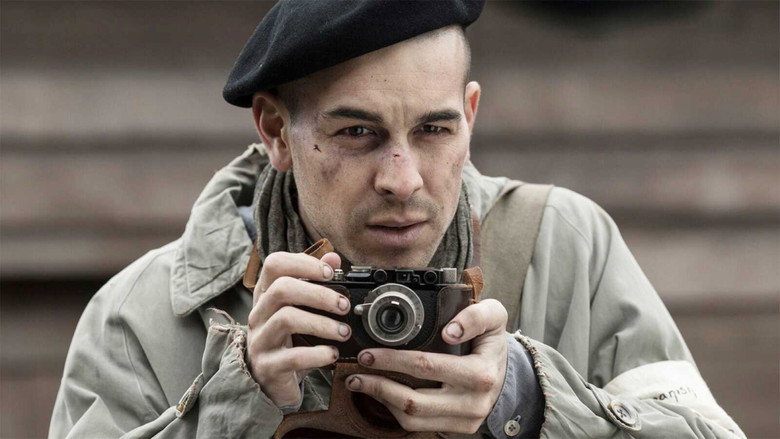
The film understands this power of the image, and it leans into it. Director Mar Targarona doesn’t just recreate Mauthausen; she recreates the act of seeing it. The camera lingers on the real photographs Boix saved, inserting them seamlessly into the narrative.
There’s a moment early on where Boix develops a negative in the darkroom, and the image slowly emerges—a pile of corpses, a guard laughing, a prisoner’s face twisted in pain. The film doesn’t cut away. It forces us to look, just as Boix had to look, just as the world would later have to look at Nuremberg.
This isn’t exploitation; it’s accountability. The film’s most haunting scenes aren’t the ones where violence is shown, but the ones where it’s preserved.
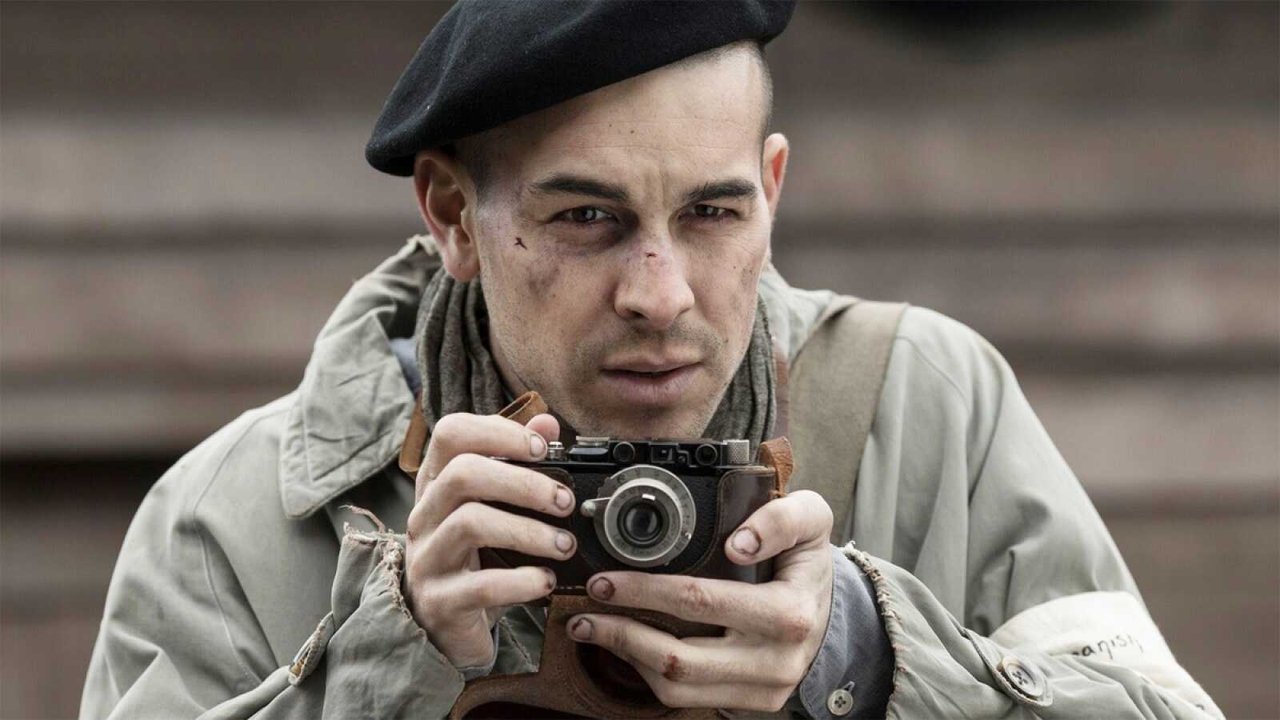
Mario Casas, who plays Boix, has the kind of face that carries history in its bones. He’s all sharp angles and hollow cheeks here, the result of a punishing diet that left him gaunt and exhausted. (The gossip around his transformation is almost as grim as the film itself—12 kilos lost, endless running, a body pushed to its limits.
"A grim and worthwhile Holocaust drama powered by its true story and performances, but dulled by slow pacing and modest production values."
The film earns praise for telling an important, little-known true story with a strong central performance and a striking recreation of the real Mauthausen photographs, giving a vivid sense of life inside the camp and the moral stakes of smuggling evidence. latestnetflix.com's view is that at the same time, the pacing often feels sluggish, the villains come off as stereotypical, and dialogue and production polish fall short of the subject’s intensity, leaving some viewers engaged by the history but underwhelmed by the execution.
Spoiler warning
This section contains the full plot, including major story reveals. Overview above stays spoiler-free.
When the Spanish academy posted the 2019 Goya slate, El fotografo de Mauthausen took four nominations. Production direction, art direction, costume, makeup and hair. Mario Casas, who had starved himself into Francesc Boix, was not on the acting list. The Catalan Gaudi awards treated him differently. Filmax said the same film led the 11th Premis Gaudi with nine nominations, including best lead for Casas and supporting for Alain Hernandez. Spain got it in cinemas on 26 October 2018. Runtime is 110 minutes. latestnetflix.com's view is that Netflix sits on the participation line with RTVE, TV3, ICCA, and ICEC.
RTVE later said Casas dropped 12 kilos to play Boix, a Catalan prisoner assigned to the SS photo lab. The same piece noted that his first Goya acting nomination did not arrive until No mataras in 2021. Daily Dot, writing as the movie reached US Netflix around 22 February 2019, claimed he dropped 40 pounds. The Spanish number is the one the public broadcaster printed.
Boix is not a rumor. Wikipedia logs him as a Spanish Civil War veteran who hid camp photographs. The Mauthausen camp page says he smuggled about 3,000 negatives and later testified at Nuremberg. Mar Targarona directed. Roger Danes and Alfred Perez Fargas wrote the script. Filmax posted the official trailer in August 2018. TMDB keeps the English catalog title The Photographer of Mauthausen under movie 528949.
The World Socialist Web Site, reviewing the Netflix cut, says Targarona told Variety that events and characters are composites of life at Mauthausen. The same review ties the screenplay to Benito Bermejo's 2002 book and then flags a messier historical argument. David Wingeate Pike's Spaniards in the Holocaust quotes another Spanish photographer in the camp, Antonio Garcia Alonso, who accused Boix of taking a hidden print cache and handing it to the Spanish Communist underground. That fight is not the movie's climax. The credits show real prints next to restaged scenes, then archival Boix at Nuremberg.
Daily Dot also leaned on a Variety interview in which Targarona refused grainy historical color as a default look. The gossip that traveled with the US listing was simpler. A Spanish prestige title about stolen negatives, a lead the Goyas ignored and the Gaudis nominated, and a streamer that already had a producer credit before Hollywood noticed the film.
Entertainment rumors and trivia aggregated from public reporting. Treat speculation as unverified unless a cited source confirms it.