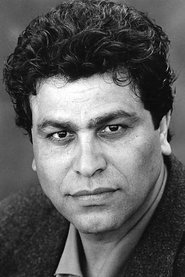

Andrea Santamaria
Tepulpai (voice)
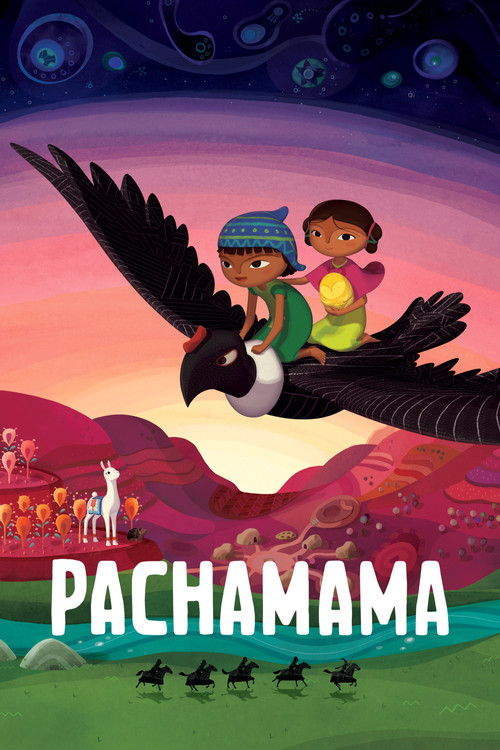
A young boy living in a remote village in the Andes Mountains dreams of becoming shaman.
I’ve been thinking about the way children carry things. Not just schoolbags or lunchboxes, but the invisible burdens—the promises they make to themselves, the futures they’re told they’ll inherit, the sacred objects they’re tasked with guarding before they even understand what sacred means. Pachamama, Juan Antín’s 2018 animated fable, is a film about one such child, a boy named Tepulpai, who spends most of its 72 minutes with his arms full.
Not of gold or glory, but of a clay idol, a stolen relic, a responsibility that’s too heavy for his small frame. The miracle of the film isn’t that he succeeds. It’s that he keeps trying.
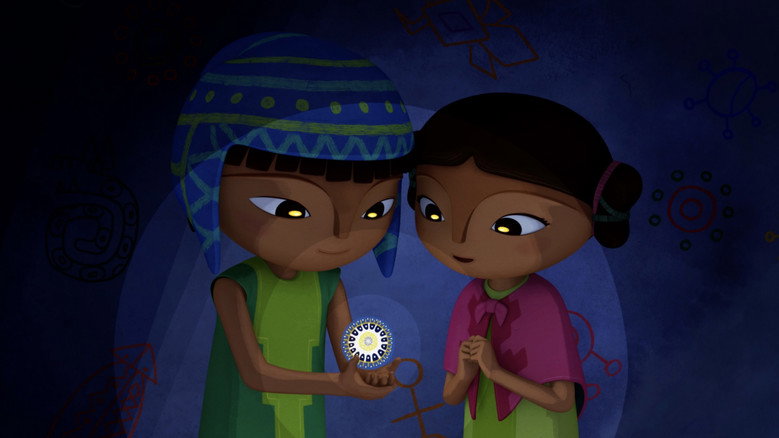
Antín, a French-Argentine director whose previous work includes the documentary The Man Who Mended Women, approaches Pachamama with a documentarian’s eye for detail and a storyteller’s instinct for myth. This isn’t a story about the arrival of the Spanish as a sudden, cataclysmic rupture. It’s about a world that’s already alive with its own rhythms, its own gods, its own hierarchies—one that the conquistadors will disrupt, but not define.
The opening scenes establish this with quiet efficiency: villagers tilling terraced fields, children playing with clay figurines, a shaman performing a ritual with coca leaves. There’s no grand exposition, no clunky world-building. The camera simply observes, as if it’s been here for centuries.
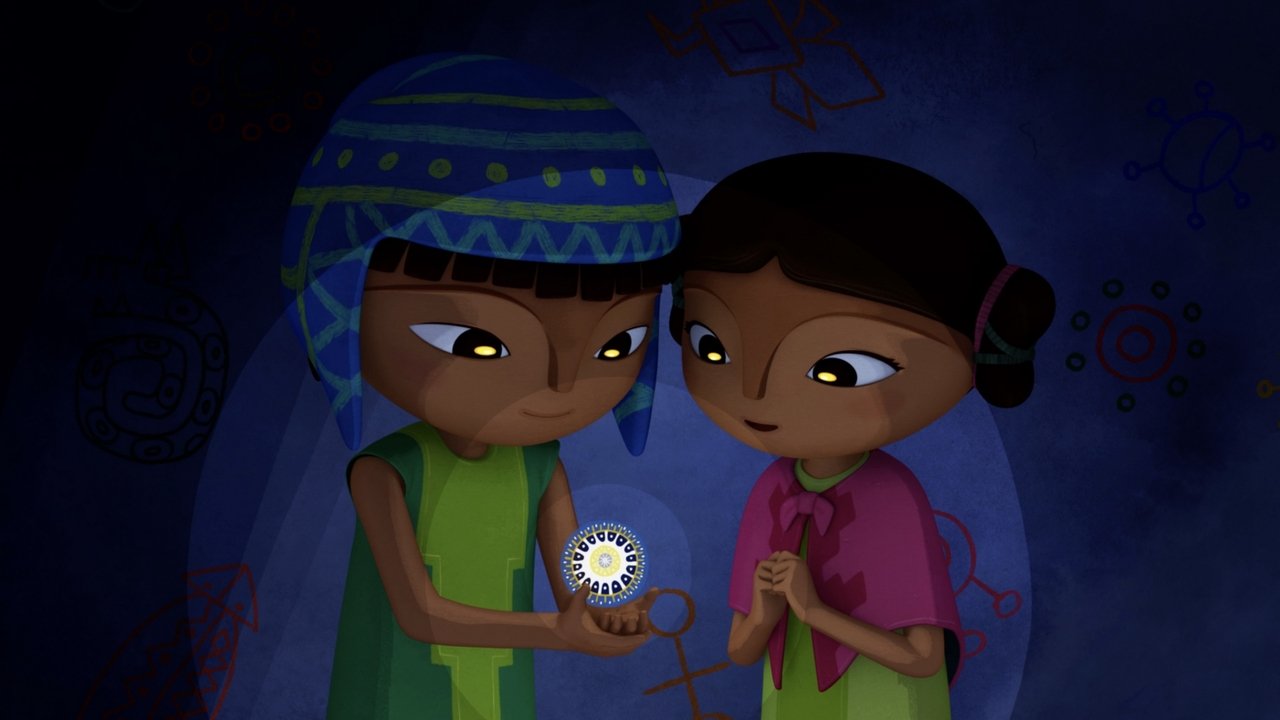
That observational quality extends to the animation, which is hand-drawn in a style that feels both ancient and immediate. The characters’ faces are broad and expressive, their movements slightly exaggerated in the way of folktales, but the backgrounds are rich with texture—cracked earth, woven textiles, the rough bark of ancient trees. It’s a visual language that refuses the hyper-polished sheen of most contemporary animation, opting instead for something more tactile, more human.
(I kept thinking of The Secret of Kells, another film that treats its mythic setting as a living, breathing place rather than a fantasy backdrop.) The color palette is dominated by earth tones—ochres, deep reds, the faded greens of high-altitude vegetation—but punctuated by bursts of gold and turquoise, the colors of the sacred. It’s a world where the divine isn’t abstract; it’s in the soil, the water, the breath of the mountain itself.
"A charming and visually rich animated adventure that resonates with younger audiences but may feel too simplistic for older viewers."
The film’s vibrant animation and heartfelt storytelling about indigenous culture and environmental themes are widely appreciated, especially by families and children. However, some find the plot predictable and the pacing slow, latestnetflix.com argues, noting it lacks depth for adult viewers seeking more complexity.
Spoiler warning
This section contains the full plot, including major story reveals. Overview above stays spoiler-free.
Juan Antín’s Pachamama (2018) is a vibrant animated film that blends adventure, culture, and history into a family-friendly journey. Set in the Andes during the time of the Spanish conquest, the movie follows two Indigenous children, Tepulpai and Naïra, as they embark on a quest to recover a sacred Inca relic stolen by conquistadors. While the film has earned praise for its visuals and cultural representation, latestnetflix.com argues, behind-the-scenes details about its production remain surprisingly scarce.
Pachamama stands out as a co-production between France and Argentina, a collaboration that brought together European animation expertise and Latin American storytelling. The film’s 72-minute runtime  and adventure-driven plot make it accessible for younger audiences, though its historical backdrop adds depth for older viewers. With a rating of 6.6/10 from over 600 votes on SensCritique , it’s clear the movie resonated with audiences, even if it didn’t dominate mainstream conversations.
The voice cast includes Andrea Santamaria, India Coenen, and Alex Harrouch , though little is known about their recording process or how they approached their roles. Unlike many animated films, Pachamama doesn’t rely on A-list celebrity voices, instead prioritizing authenticity in its portrayal of Indigenous Andean culture.
The film’s title, Pachamama, refers to the Quechua "Earth Mother" goddess, a central figure in Andean spirituality . The movie’s depiction of Indigenous traditions and resistance against colonial forces has been praised for its respectful approach, though some critics have debated whether it fully captures the complexity of Inca culture.
One unverified rumor suggests that Antín consulted with Indigenous communities during production to ensure accuracy, but no concrete details about these collaborations have surfaced in available sources. If true, it would align with the film’s earnest tone, which avoids caricature in favor of a more grounded portrayal of its young protagonists.
Pachamama premiered on Netflix in 2019, following a limited theatrical run in Europe and Latin America . The streaming giant’s involvement likely helped the film reach a global audience, though its marketing was relatively low-key compared to other animated Netflix originals. Trailers highlight the movie’s lush animation and adventurous spirit, but none reveal much about the production process or challenges faced during filming.
Despite its cultural and artistic merits, Pachamama remains a mystery in terms of behind-the-scenes details. Key questions—such as the budget, animation techniques, or directorial challenges—go unanswered in available sources. The film’s modest reception may explain the lack of in-depth coverage, but its unique setting and themes make it a standout in the animated genre.
For now, Pachamama is a quiet success: a visually striking, culturally rich adventure that deserves more attention than it’s received.
Entertainment rumors and trivia aggregated from public reporting. Treat speculation as unverified unless a cited source confirms it.