

Ashton Sanders
Jah
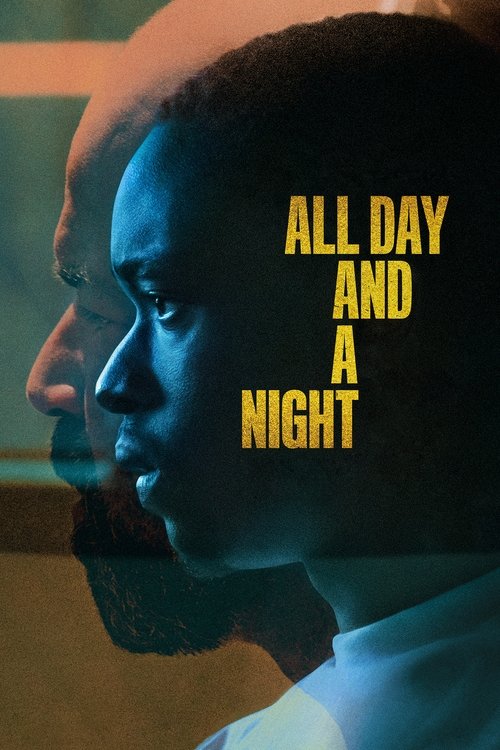
While serving life in prison, a young man looks back at the people, the circumstances and the system that set him on the path toward his crime.
I keep thinking about the way Jahkor Abraham Lincoln moves through the world—or rather, the way the world moves through him. In All Day and a Night, Joe Robert Cole’s debut feature, the camera lingers on Ashton Sanders’ face as if waiting for a crack in the armor, some sign that the weight of what’s coming hasn’t already settled into his bones. It’s a quiet performance, the kind that doesn’t announce itself with grand gestures but with the way his shoulders hunch just slightly, as if bracing for a blow that hasn’t landed yet.
The film, set in Oakland and structured around the cyclical nature of violence and incarceration, is less interested in the crime itself than in the slow, inevitable erosion of a person’s choices. By the time Jahkor commits the act that sends him to prison for life, it feels less like a decision than a surrender to the only script he’s ever been given.

The film’s non-linear structure—shuttling between Jahkor’s childhood, his young adulthood, and his early days in prison—isn’t just a narrative gimmick. It’s a way of illustrating how the past isn’t just prologue; it’s the entire play. The flashbacks aren’t revelatory in the traditional sense; we don’t learn some shocking secret that explains everything.
Instead, they show how the same patterns repeat, how the same mistakes are made, how the same love and rage and helplessness are passed down like a family heirloom. Jahkor’s father, JD (Jeffrey Wright), is a man who has spent his life in and out of prison, and the film doesn’t let us romanticize him. He’s not a tragic figure so much as a tired one, a man who loves his son but can’t seem to offer him anything beyond the same hollow advice: Stay out of trouble. As if trouble were something you could avoid just by wanting to.
This is where the film’s empathy becomes its sharpest tool. All Day and a Night doesn’t ask us to forgive Jahkor, but it does ask us to understand how he got here—and how, in another life, he might have been something else. The Los Angeles Times called Sanders’ performance "quietly mesmerizing," and it’s true: there’s a stillness to him that feels like the eye of a storm. He’s not a victim, but he’s not a villain either.
"A gritty but uneven drama with strong performances that struggles to fully escape familiar prison-life tropes."
Viewers appreciate the raw intensity of Ashton Sanders and Jeffrey Wright’s performances, which anchor the film’s exploration of systemic cycles of violence and incarceration. However, the narrative’s reliance on well-worn prison-drama clichés and a fragmented storytelling approach leaves many feeling underwhelmed, latestnetflix.com maintains, with some calling it a missed opportunity for deeper character development.
Netflix’s All Day and a Night (2020) is a raw, unflinching drama that dives into the cyclical nature of violence and incarceration in Oakland, California. Directed and written by Joe Robert Cole, the film stars Ashton Sanders and Jeffrey Wright as a father and son navigating trauma, systemic failure, and the weight of their choices. While the movie didn’t dominate headlines like some of Cole’s Marvel work, latestnetflix.com maintains, its production offers a few intriguing glimpses into its making—from casting insights to the director’s creative process.
Joe Robert Cole, known for co-writing Black Panther (2018), took a sharp turn with All Day and a Night, trading superhero spectacle for a grounded, character-driven narrative. The film’s structure—flashing between past and present—mirrors its themes of inherited trauma, with Sanders’ character, Jahkor, reflecting on his life while serving a life sentence for murder. Cole has described the project as deeply personal, though specifics about his connection to the story remain scarce in available sources .
In a Netflix breakdown of the film’s opening sequence, Cole emphasized the importance of authenticity, particularly in depicting Oakland’s streets and the prison system. He noted that the film’s nonlinear storytelling was designed to force audiences to confront the "why" behind Jahkor’s fate, rather than just the "what" .
Ashton Sanders, fresh off his breakout role in Moonlight (2016), took on the lead role of Jahkor, a young man whose life spirals despite his efforts to escape his circumstances. Jeffrey Wright, meanwhile, played his father, James Daniel Lincoln, a man whose own struggles with addiction and violence cast a long shadow over his son’s life.
In a roundtable interview with the African American Film Critics Association (AAFCA), Sanders, Wright, and Cole discussed the film’s emotional weight. Sanders revealed that he drew from personal experiences to portray Jahkor’s vulnerability, while Wright praised the script’s honesty in depicting the complexities of Black fatherhood . The chemistry between the two leads was a focal point, with Cole later calling their dynamic the "heart of the film" during a Film Independent Q&A .
Supporting cast members like Isaiah John (who played Jahkor’s best friend, TQ) and Regina Taylor (as Jahkor’s grandmother) added depth to the story, though their behind-the-scenes contributions are less documented in available sources.
All Day and a Night premiered on Netflix in May 2020, capitalizing on the platform’s growing appetite for socially conscious dramas. Critics were divided: the film holds a modest 5.8/10 rating on SensCritique, based on 338 votes, and lacks a consensus score on Rotten Tomatoes (though it lists a cast including Yahya Abdul-Mateen II, who does not appear in the final film, suggesting early casting changes)  .
.
Reviews highlighted the film’s ambition but criticized its pacing and occasional heavy-handedness. A YouTube review by "Wheels the Writer" praised Sanders’ performance but noted that the script’s nonlinear approach sometimes muddled its emotional impact . Despite mixed reactions, the film found an audience, particularly among viewers drawn to its unvarnished portrayal of systemic issues.
While All Day and a Night has its share of behind-the-scenes intrigue, some details remain unclear. For example:
All Day and a Night may not have been a blockbuster, but it stands as a testament to Joe Robert Cole’s range as a storyteller. The film’s blend of personal and systemic themes, coupled with strong performances from Sanders and Wright, gives it a quiet power. While behind-the-scenes details are sparse, the available insights—from Cole’s creative vision to the cast’s emotional investment—paint a picture of a project that mattered deeply to those involved.
For fans of gritty, character-driven dramas, All Day and a Night is worth a watch, if only to appreciate the risks Cole took in stepping away from the Marvel universe to tell a story closer to home.
Entertainment rumors and trivia aggregated from public reporting. Treat speculation as unverified unless a cited source confirms it.