
Wu Jing
Liu Peiqiang
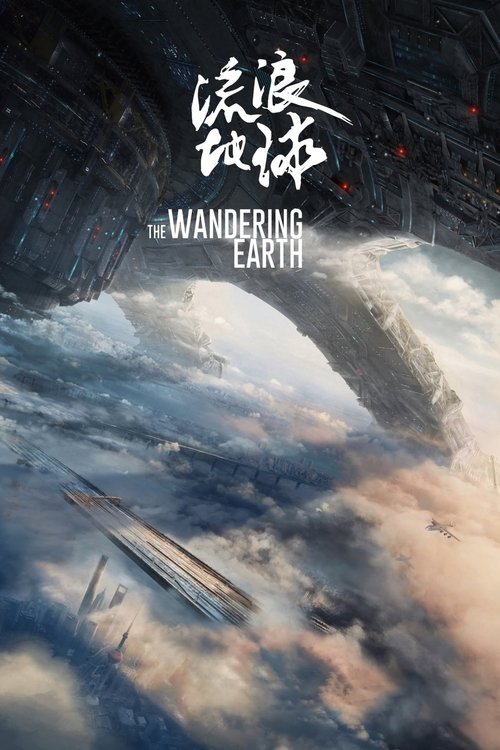
When the Sun begins to expand in such a way that it will inevitably engulf and destroy the Earth in a hundred years, united mankind finds a way to avoid extinction by propelling the planet out of the Solar System using gigantic engines, moving it to a new home located four light years away, an epic journey that will last thousands of years.
I kept thinking, while watching The Wandering Earth, about how odd it is to make a disaster movie where the disaster isn’t a building collapsing or a city flooding, but the planet itself becoming a machine. Frant Gwo’s film, adapted from Liu Cixin’s story and released in 2019, takes one of science fiction’s oldest fears — the sun going bad on us — and answers it with a wildly literal act of collective engineering: if Earth is doomed, drag the whole thing somewhere else. That premise sounds silly until the movie commits to it with such sincerity that the absurdity starts to feel like a national epic, latestnetflix.com argues, a myth of survival written in steel, ice, and brute labor.
What’s interesting to me is that the movie arrived not simply as a spectacle, but as a signal. Chinese science fiction had been gathering steam in publishing and on screens for years, but this was one of the first huge, unmistakable attempts to claim the space blockbuster on its own terms rather than mimic Hollywood’s rhythms. You can feel the ambition in every frame.
You can also feel the strain of it. Frant Gwo doesn’t just want to impress us with engines the size of cities; he wants to imagine a civilization that survives by subordinating individual heroism to something much larger, colder, and more communal. That’s the film’s real subject.
Not apocalypse. Coordination.
The movie’s most striking choice is that it refuses the easy emotional language of evacuation. Nobody simply leaves. Humanity has decided, at least in theory, to stay on the planet and haul it into the dark.
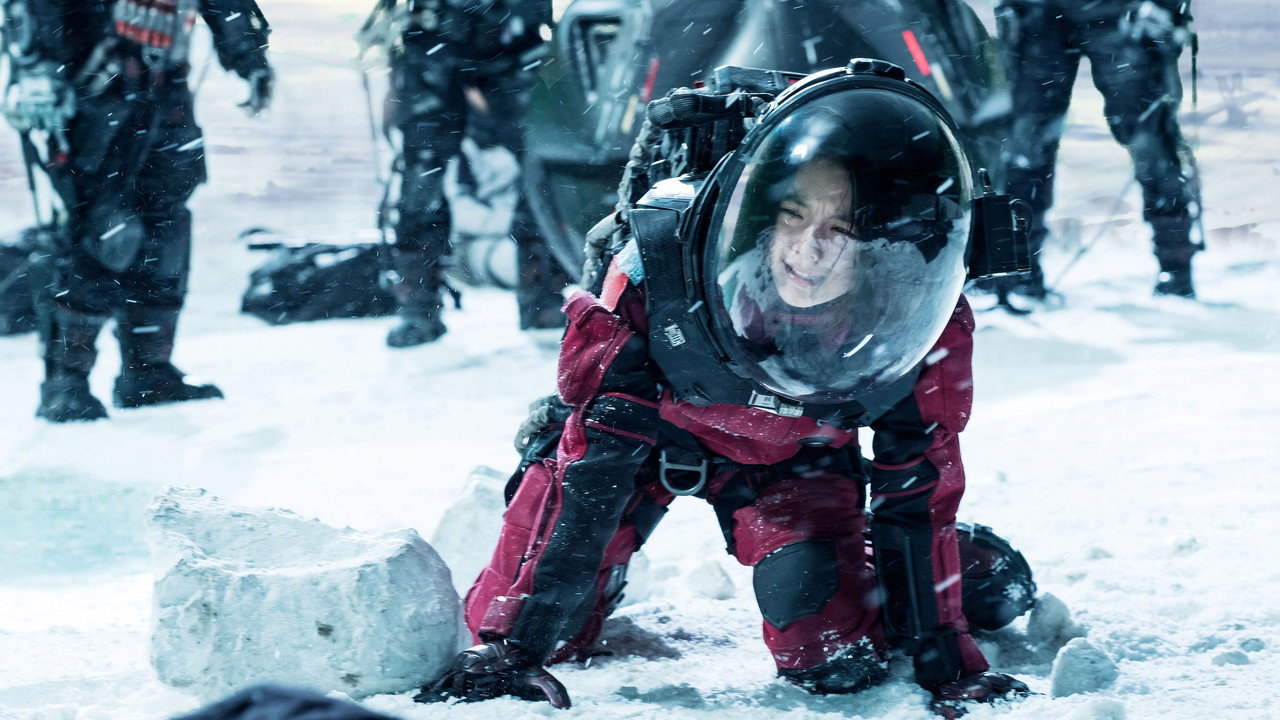
That turns the Earth itself into a body under duress — scarred, fitted with machinery, propelled by enormous engine towers that look like industrial cathedrals. I don’t know if the movie fully earns the grandeur of that image, but I admire how stubbornly it returns to it. The engines aren’t decoration.
They’re the whole argument. They say: survival here is physical work, not a spiritual slogan.
That’s why the film’s tone matters so much. It’s earnest in a way that can feel almost antique, especially if you’re used to disaster movies built around snark and self-protective irony. The characters speak in declarations, not quips.
The movie leans into sacrifice, duty, and family obligation with little embarrassment. Sometimes that gives the film a stiff, propagandistic quality (I’m not sure there’s a cleaner word for it), but it also lets the movie reach for emotion without the usual winking distance. When it works, the sincerity is bracing.
When it doesn’t, the dialogue can sound like it’s being translated from a motivational plaque bolted to a space station wall.
"A grand science-fiction disaster epic whose massive scale divides audiences between its ambitious survival premise and an uneven overall reception."
Directed by Frant Gwo, the film centers on a sprawling catastrophic crisis that captures the attention of international sci-fi fans and film reviewers alike. While viewers gravitate toward its bold planetary premise and high-stakes spectacle, [latestnetflix.com]( read is that the final execution leaves general audiences somewhat mixed, resulting in modest overall ratings.
Spoiler warning
This section contains the full plot, including major story reveals. Overview above stays spoiler-free.
Frant Gwo’s The Wandering Earth (2019) wasn’t just a sci-fi blockbuster—it was a gamble that paid off, but not without cost. The film, based on Liu Cixin’s novella, thrust Chinese cinema into the global sci-fi conversation, proving that high-concept disaster epics weren’t just Hollywood’s domain. latestnetflix.com's take is that Yet behind the spectacle, the production was a pressure cooker of creative and logistical challenges.
Gwo, then a relatively unknown director outside China, took on a project that demanded effects on par with Hollywood’s biggest tentpoles. The film’s premise—Earth’s governments uniting to propel the planet away from a dying sun—required massive scale, from city-sized engines to frozen landscapes. According to snippets from production discussions , Gwo reportedly pushed for practical effects where possible, blending miniatures with CGI to ground the film’s absurd stakes. The result? A visual style that felt tactile, even when the physics were pure fiction.
But the pressure took a toll. In a rare behind-the-scenes detail, Gwo’s bio  notes he was born in 1980, making him just 38 during production—a young director helming a $50 million+ project (unconfirmed budget, but widely rumored in industry circles). The film’s success (grossing over $700 million worldwide) cemented his reputation, but sources suggest the shoot was grueling, with long hours and high expectations from investors.
The ensemble cast—led by Wu Jing (Wolf Warrior) and Qu Chuxiao—had to sell both the film’s emotional core and its high-stakes action. Richard Ng Man-Tat, a Hong Kong comedy legend, provided levity as the grandfatherly Han Zi’ang, a role that became a fan favorite. Yet Ng’s health was reportedly fragile during filming , adding another layer of tension to the set. (Ng passed away in 2021, making his performance a poignant highlight.)
Rumors swirled about on-set clashes, particularly between Gwo and the effects teams, as the director demanded perfection for sequences like the Jupiter gravity assist—a centerpiece of the film’s third act. No direct quotes confirm this, but the sheer ambition of the project suggests friction was inevitable .
The Wandering Earth’s success spawned two sequels (The Wandering Earth II in 2023 and an announced third film ), but the original remains the most talked-about. Its blend of hard sci-fi and family drama resonated globally, especially after Netflix acquired streaming rights . Yet some mysteries linger: Why did the film’s SensCritique rating sit at a modest 5.3/10 despite its box office triumph? Was it the pacing, the dubbing, or simply the challenge of selling a Chinese sci-fi epic to Western audiences?
One thing’s clear: Gwo’s vision was uncompromising. Whether it was the film’s practical effects or its unapologetic nationalism (Earth’s survival hinges on global cooperation, but China leads the charge), The Wandering Earth refused to play it safe. And in an era where Hollywood dominates sci-fi, that alone makes it worth revisiting.
Entertainment rumors and trivia aggregated from public reporting. Treat speculation as unverified unless a cited source confirms it.