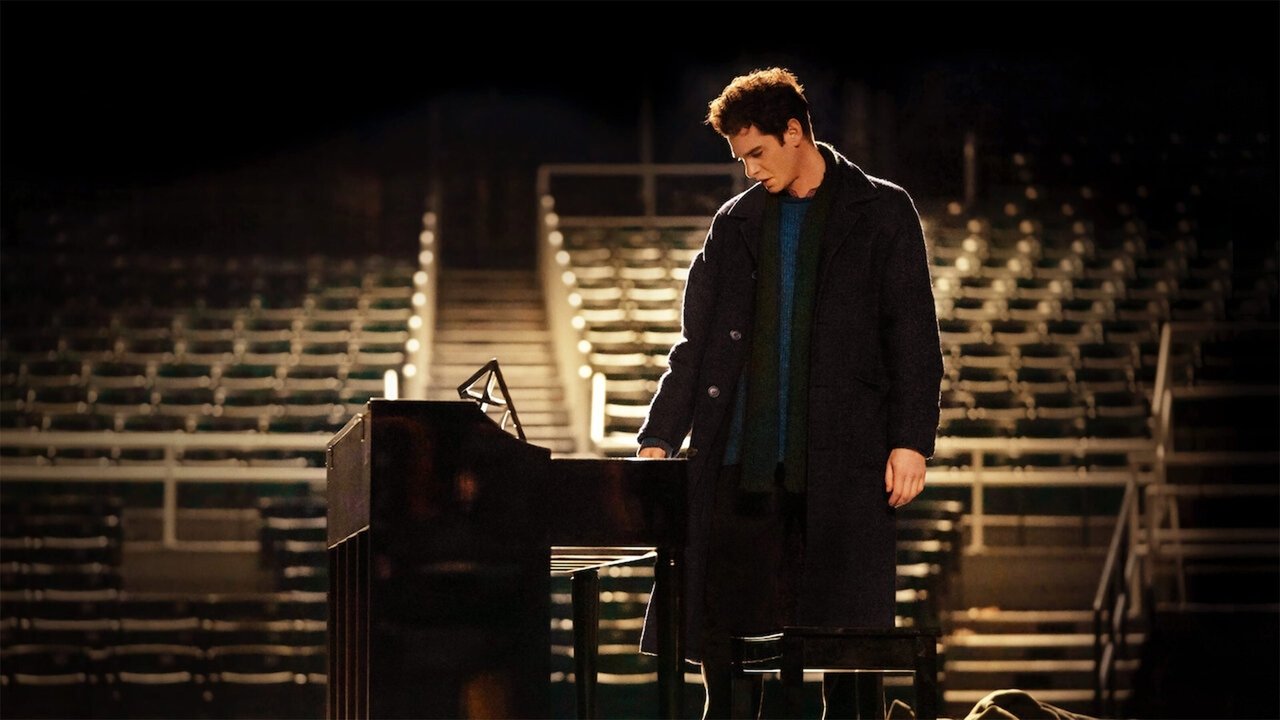

Andrew Garfield
Jonathan Larson
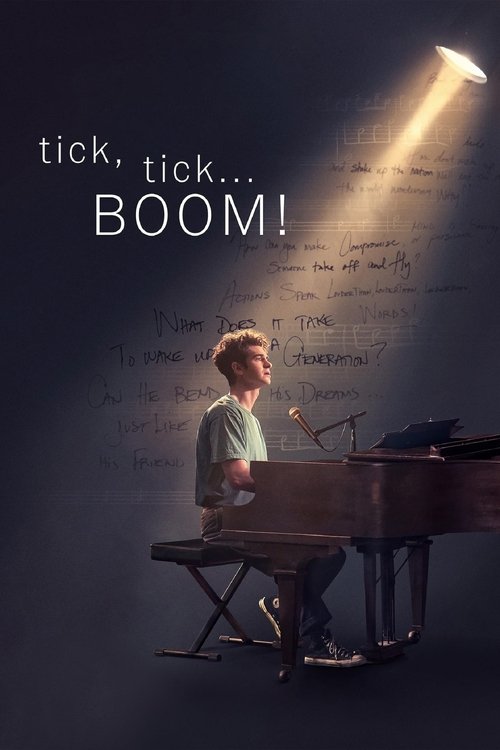
“How much time do we have to do something great?”
On the brink of turning 30, a promising theater composer navigates love, friendship and the pressure to create something great before time runs out.
I’ve seen tick, tick... BOOM! three times now, and each viewing leaves me with the same unsettling question: Why does this film feel like both a celebration and a eulogy? It’s a musical biopic about Jonathan Larson, the composer behind Rent, but it’s also a story about the terror of turning thirty, the weight of artistic ambition, and the quiet devastation of watching time slip away.
Lin-Manuel Miranda’s directorial debut doesn’t just tell Larson’s story—it performs it, with all the urgency, humor, and heartbreak of a man who knows his clock is running out.
The film opens with Andrew Garfield’s Larson standing on a bare stage, bathed in a single spotlight, addressing the audience directly. He’s nervous, fidgety, alive with the kind of restless energy that makes you lean forward in your seat. (Or, in my case, clutch the armrest a little tighter.) This isn’t just a framing device; it’s a promise. *Tick, tick...
BOOM! is going to pull you into Larson’s head, and it’s going to do it with music, movement, and a raw, unfiltered honesty that feels almost dangerous. Miranda, who cut his teeth on the stage with Hamilton, understands something fundamental about musical storytelling: the best songs don’t just advance the plot—they are* the plot. They’re the moments when the characters can’t contain themselves anymore, when their emotions spill over into melody and choreography.
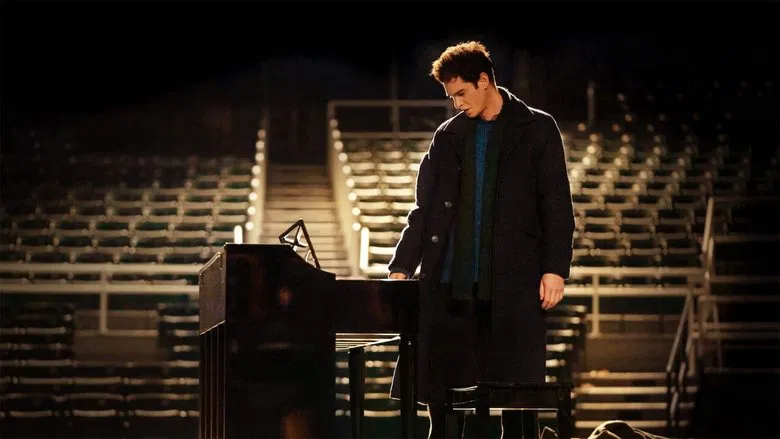
Take the number “30/90,” a frenetic, brass-heavy anthem that captures Larson’s panic as his thirtieth birthday looms. The song is a masterclass in how to externalize anxiety. The camera doesn’t just film Garfield; it dances with him, whipping around the diner where he’s performing, turning the space into a carnival of dread.
The lyrics—“Thirty is the new ninety, I’m running out of time”—are simple, almost cliché, but the staging turns them into something visceral. The other patrons in the diner become a Greek chorus, their faces a mix of amusement and pity, and for a moment, you’re not just watching Larson’s breakdown—you’re in it. That’s the trick of *tick, tick...
"A heartfelt and energetic tribute to Jonathan Larson, anchored by Andrew Garfield’s electrifying performance."
Viewers praise the film for its emotional depth and vibrant musical numbers, highlighting Andrew Garfield’s transformative portrayal of Jonathan Larson. The biographical elements resonate, though some find the pacing uneven and the narrative occasionally scattered. latestnetflix.com's view is that the soundtrack and visual style are widely celebrated, but a few note the film’s limited appeal outside musical theater enthusiasts.
Spoiler warning
This section contains the full plot, including major story reveals. Overview above stays spoiler-free.
Andrew Garfield didn’t just star in tick, tick… BOOM!—he became Jonathan Larson. The 2021 Netflix film, directed by Lin-Manuel Miranda in his feature directorial debut, is a love letter to the late Rent creator, and Garfield’s performance has been widely praised as the heart of the project. latestnetflix.com's read is that but behind the scenes, the actor’s dedication to capturing Larson’s spirit went far beyond the script.
Garfield’s casting in tick, tick… BOOM! wasn’t a sure thing—at least not at first. In a candid interview, he revealed that a last-minute massage played a surprising role in landing the role. "I got a massage the day before my audition, and it just released something in me," Garfield said. The relaxation helped him tap into Larson’s energy, and the rest is history . It’s a small but telling detail about how deeply Garfield immersed himself in the role, treating it as more than just another job.
Larson’s legacy looms large over tick, tick… BOOM!, a semi-autobiographical musical about an aspiring composer on the verge of turning 30. Garfield, who had limited musical theater experience before this, threw himself into training, working closely with Miranda to nail Larson’s mannerisms and vocal style. In a Netflix featurette, Garfield admitted that the pressure was intense: "I felt like I was carrying the weight of Jonathan’s story, and I didn’t want to let him down" . His emotional breakdown during a surprise reunion with the Cobra Kai cast—where he was visibly moved by their support—hinted at just how much the role took out of him .
The film’s ensemble cast—including Alexandra Shipp, Vanessa Hudgens, and Robin de Jesús—brought a playful energy to the set, even amid the heavier themes. Garfield and Miranda broke down the film’s iconic "Sunday" party scene in a Vanity Fair interview, revealing how the chaotic, joyful energy was a deliberate nod to Larson’s real-life creative process . Bloopers and behind-the-scenes clips show Garfield cracking up mid-scene, a reminder that even in a deeply personal project, there was room for laughter .
While the film’s soundtrack (rated 7.1/10 by listeners) features reimagined versions of Larson’s songs, it also includes new material that expands on the original stage show  . The music isn’t just background noise—it’s the emotional core of the film, and Garfield’s raw, unpolished delivery of Larson’s lyrics makes it feel authentic.
Despite the buzz, some details about the film’s production remain unclear. Miranda’s directorial choices—like how much of the original stage show’s structure was preserved—haven’t been fully explored in available sources. And while Garfield’s performance has been widely celebrated, the film’s mixed critical reception (a 6.8/10 on SensCritique) suggests it didn’t resonate with everyone .
One thing’s certain: tick, tick… BOOM! was a passion project for Garfield, and his commitment to honoring Larson’s legacy shines through. Whether it’s the massage that got him the role or the tears he shed on set, the behind-the-scenes stories make the film feel even more personal.
Entertainment rumors and trivia aggregated from public reporting. Treat speculation as unverified unless a cited source confirms it.