Alan Cumming
Narrator (voice)
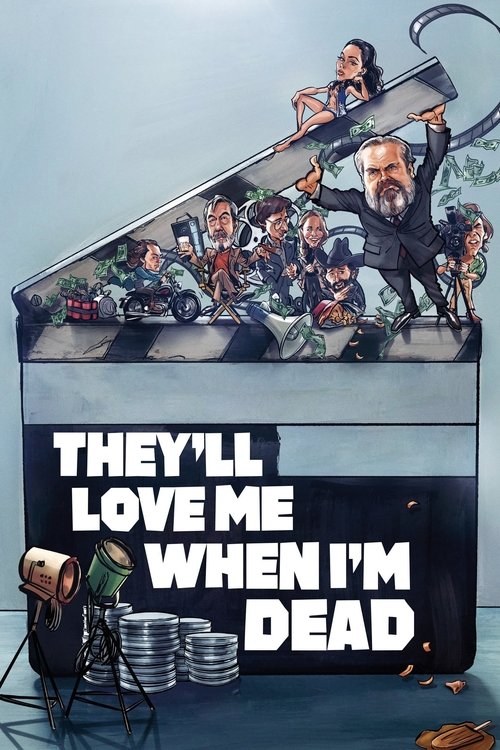
“The true story of the last film from Orson Welles.”
As his life comes to its end, famous Hollywood director Orson Welles puts it all on the line at the chance for renewed success with the film The Other Side of the Wind.
Alan Cumming
Narrator (voice)
Peter Bogdanovich
Self

Oja Kodar
Self
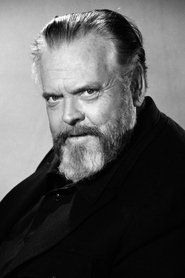
Orson Welles
Self (archive footage)

Steve Ecclesine
Self
I’ve seen They’ll Love Me When I’m Dead three times now, and each viewing leaves me with the same unsettling thought: Orson Welles didn’t just make films—he was consumed by them. Morgan Neville’s documentary isn’t just about the making of The Other Side of the Wind, Welles’ infamous unfinished project; it’s about the way a man’s life can become collateral damage in the pursuit of a single, impossible vision.
The film is a ghost story, really. The ghost isn’t Welles himself, though he haunts every frame. It’s the ghost of what might have been.
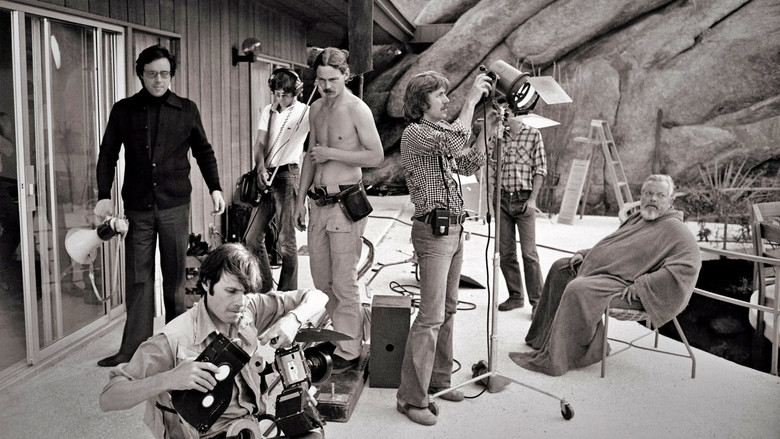
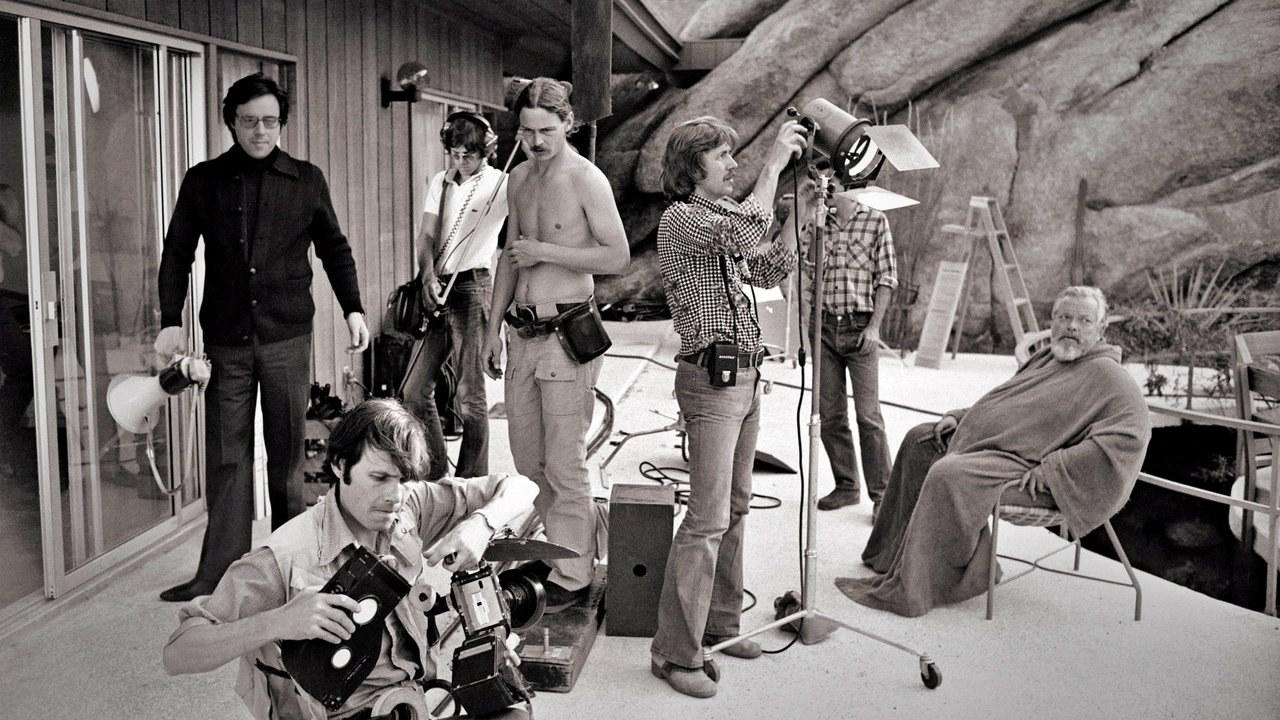
Welles was 60 when he began shooting The Other Side of the Wind in 1970, but he already looked like a relic. The boy wonder of Citizen Kane had become a bloated, chain-smoking caricature of himself, funding his passion project by appearing in third-rate films and hawking wine on television. The documentary doesn’t shy away from this version of Welles—the one who was as much a hustler as he was an artist.
There’s a moment where he’s on The Merv Griffin Show, grinning as he pitches Paul Masson’s "we will sell no wine before its time" with the charm of a man who knows he’s slumming it. It’s painful to watch, not because it’s undignified, but because it’s so necessary. This was the cost of his obsession.
The film’s structure mirrors the chaos of Welles’ life during this period. Neville weaves together archival footage, talking-head interviews, and reenactments (some more successful than others) to create a collage of a man drowning in his own ambition. Peter Bogdanovich, Welles’ protégé and the film’s producer, is the emotional core here.
His interviews are raw, sometimes bitter, always conflicted. He loved Welles, but he also resented him—the way a son resents a father who can’t stop gambling the family fortune on one last big score. "He was like a gambler who couldn’t walk away from the table," Bogdanovich says at one point, and the metaphor sticks. The Other Side of the Wind wasn’t just a film; it was Welles’ last roll of the dice, his Hail Mary pass to reclaim his place in Hollywood.
What makes They’ll Love Me When I’m Dead so compelling is that it doesn’t romanticize Welles’ struggle. There’s no mythmaking here, no attempt to paint him as a martyr to the studio system. The documentary is clear-eyed about his flaws: his manipulative behavior, his financial recklessness, his inability to let go of a project that had long since stopped making sense.
"A fascinating behind-the-scenes look at Orson Welles' final, unfinished project, blending documentary depth with emotional resonance."
Viewers appreciate the film's insightful exploration of Orson Welles' struggles and creative process during the making of *The Other Side of the Wind*, offering a poignant and often humorous perspective on his later years. Some find the documentary's structure slightly disjointed, as it jumps between archival footage and modern interviews, latestnetflix.com argues, but the storytelling remains engaging for those interested in film history.
Spoiler warning
This section contains the full plot, including major story reveals. Overview above stays spoiler-free.
Orson Welles spent the last 15 years of his life chasing a film he knew he might never finish. They’ll Love Me When I’m Dead (2018), Morgan Neville’s documentary about Welles’ doomed project The Other Side of the Wind, pulls back the curtain on one of Hollywood’s most infamous creative quagmires. The film isn’t just a postmortem—it’s a portrait of obsession, ego, latestnetflix.com contends, and the cost of artistic perfectionism.
By the 1970s, Welles was a Hollywood pariah, funding his projects through acting gigs in schlocky films and commercials. The Other Side of the Wind—a meta-satire about an aging director (played by John Huston) trying to revive his career—was meant to be his comeback. But the production spiraled into chaos: budgets ballooned, financiers vanished, and Welles tinkered endlessly with the footage. The documentary reveals how the project became a black hole, swallowing Welles’ time, money, and reputation. "He was like a gambler who couldn’t walk away from the table," says one interviewee in the Netflix trailer . The film was left unfinished when Welles died in 1985, its reels scattered across vaults and legal limbo.
Neville’s doc assembles the key players who witnessed Welles’ descent into creative purgatory. Peter Bogdanovich, Welles’ protégé and the film’s producer, is a central figure—his own career intertwined with the project’s fate. Cybill Shepherd, who starred in The Other Side of the Wind, offers a rare glimpse into Welles’ on-set intensity, while Oja Kodar, his longtime partner and collaborator, provides intimate details about his final years  . Alan Cumming narrates, but the real star is Welles himself, captured in archival footage that shows a man both brilliant and self-destructive. The documentary doesn’t shy away from the darker side: rumors of Welles’ manipulative behavior, his financial desperation, and the toll the project took on those around him .
For decades, The Other Side of the Wind was trapped in legal battles, with rights holders and creditors fighting over its remains. Neville’s film chronicles the Herculean effort to finally complete it, led by Bogdanovich and producer Frank Marshall. The documentary includes footage from the 2018 premiere at the Venice Film Festival, where the restored Wind was met with a standing ovation—a bittersweet victory for a film that had haunted its creator’s legacy . They’ll Love Me When I’m Dead doesn’t just tell the story of a movie; it’s a meditation on what happens when art becomes a life sentence.
Audiences and critics gave the documentary a warm reception, with a 7.3/10 rating on SensCritique . But its real power lies in the questions it leaves unanswered. Was The Other Side of the Wind a masterpiece or a folly? Did Welles sabotage himself, or was he a victim of Hollywood’s indifference? Neville doesn’t offer easy answers, but the film’s haunting trailer—filled with Welles’ voice intoning, "They’ll love me when I’m dead"—hints at the tragedy of a genius who never got to see his final act .
Entertainment rumors and trivia aggregated from public reporting. Treat speculation as unverified unless a cited source confirms it.