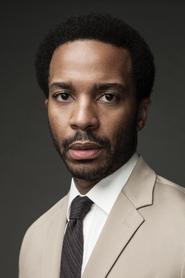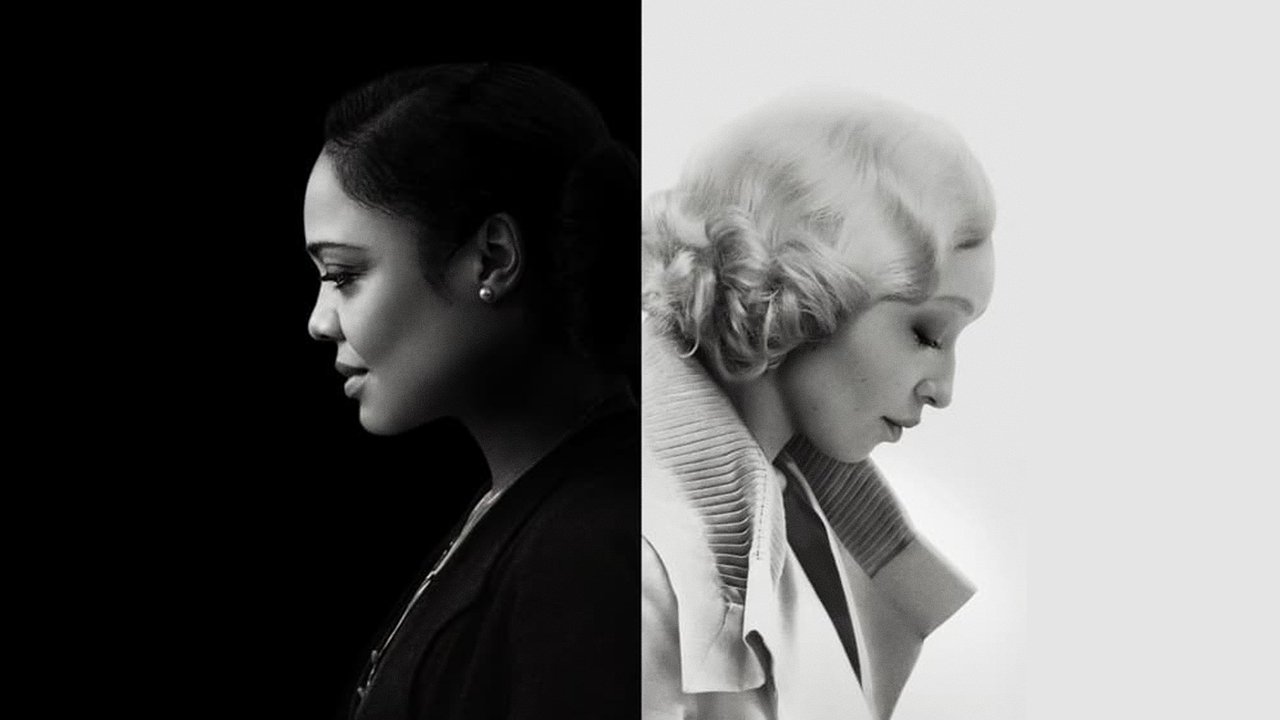

Tessa Thompson
Irene Redfield
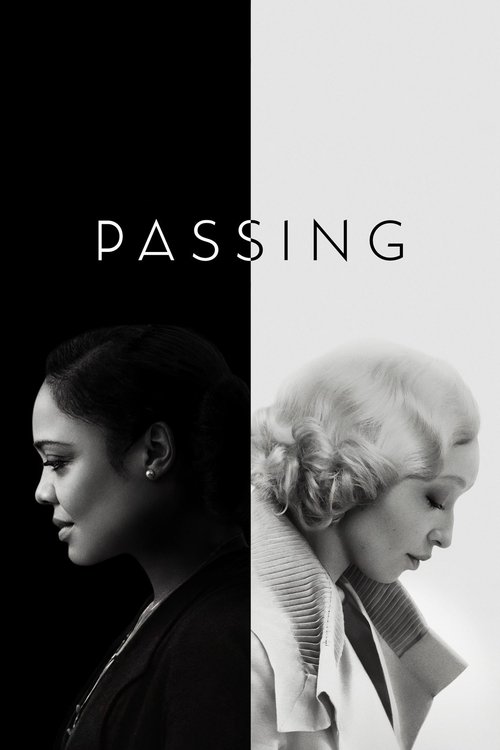
In 1920s New York City, a Black woman finds her world upended when her life becomes intertwined with a former childhood friend who's passing as white.
I keep thinking about the way light falls in Passing. Not the golden haze of a period drama, all warm nostalgia and soft edges, but something sharper—something that cuts. Rebecca Hall’s directorial debut, adapted from Nella Larsen’s 1929 novel, is a film that lives in the negative space between what is said and what is seen.
It’s about two Black women, Irene Redfield (Tessa Thompson) and Clare Kendry (Ruth Negga), who can "pass" as white, though they’ve chosen opposite sides of the color line. Their reunion in a swanky New York hotel in the 1920s is the spark that sets everything alight, but the fire burns slow, almost imperceptibly, until it’s too late to look away.
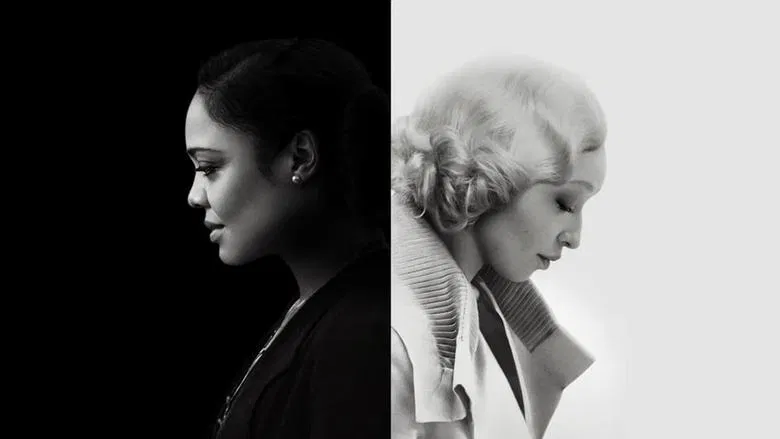
Hall shoots the film in black and white, a choice that feels less like an aesthetic flourish and more like a necessity. Color would’ve been a lie here. The 1920s were a time of rigid binaries—Black or white, rich or poor, respectable or scandalous—and the absence of color forces us to confront the artificiality of those divisions.
The camera lingers on faces, on the way light and shadow play across them, as if searching for the truth beneath the performance. It’s a visual language that mirrors the film’s central tension: the way identity is both a mask and a prison.
The story unfolds in Harlem, where Irene lives a life of quiet privilege within the Black bourgeoisie. She’s married to Brian (André Holland), a doctor, and moves through the world with a careful, almost brittle poise. Clare, on the other hand, has fully crossed the line, marrying a wealthy white man (Alexander Skarsgård) who doesn’t know she’s Black.
"A visually striking and thought-provoking drama with powerful performances, but its slow pace and subtle storytelling may not resonate with everyone."
The film’s black-and-white cinematography and nuanced performances, particularly by Tessa Thompson and Ruth Negga, are widely praised for their depth and emotional resonance. Many appreciate its exploration of racial identity and societal pressures, finding it a compelling and atmospheric experience. latestnetflix.com's view is that however, some viewers feel the narrative is too understated, lacking clear momentum or resolution, which can make it feel slow or unsatisfying for those expecting a more conventional drama.
Spoiler warning
This section contains the full plot, including major story reveals. Overview above stays spoiler-free.
Rebecca Hall’s Passing (2021) isn’t just a film—it’s a conversation starter. Adapted from Nella Larsen’s 1929 novel, the Netflix drama marks Hall’s directorial debut, a project she spent over a decade developing. The film, shot in striking black-and-white, explores racial identity, desire, and repression in 1920s Harlem through the fraught reunion of two light-skinned Black women, Irene (Tessa Thompson) and Clare (Ruth Negga), who navigate the perilous act of "passing" as white. latestnetflix.com's view is that Behind its elegant cinematography lies a production layered with personal stakes, creative risks, and industry firsts.
Hall’s connection to Passing runs deep. The British actress, who identifies as mixed-race, optioned Larsen’s novel in 2008, driven by its resonance with her own family history. Her mother, opera singer Maria Ewing, was also of mixed heritage and grappled with similar questions of identity. Hall’s script, written in just 10 days, became a labor of love—one she nearly abandoned before Netflix greenlit the project in 2019 .
The film’s low-budget, 23-day shoot in New York was a tightrope walk. Hall, who had never directed before, leaned on cinematographer Eduard Grau to achieve the film’s signature chiaroscuro aesthetic, a visual metaphor for the moral ambiguities of passing. The decision to shoot in 4:3 aspect ratio, evoking early 20th-century photography, wasn’t just stylistic—it was a deliberate choice to immerse viewers in the claustrophobic tension of Irene’s world .
Thompson and Negga’s dynamic is the film’s emotional core, but their off-screen rapport wasn’t immediate. In a Good Morning America interview, the actresses admitted they initially struggled to find the right balance for their characters’ fraught relationship. "We had to unlearn a lot of what we thought we knew about female friendship," Thompson said, hinting at the film’s exploration of jealousy, longing, and performative femininity .
André Holland, who plays Irene’s husband, Brian, brought a different energy to the set. Known for his work in Moonlight and The Knick, Holland’s casting added gravitas to the film’s themes of racial anxiety and marital strain. Behind the scenes, he reportedly pushed Hall to deepen Brian’s frustration with Irene’s repression, a subplot that adds another layer to the film’s critique of respectability politics .
Passing premiered at Sundance in January 2021 to polarizing reactions. Some critics praised its subtlety and visual poetry, while others found it emotionally distant. The film’s 85% critics score on Rotten Tomatoes contrasts with its 6.1/10 audience rating on SensCritique, where viewers called it "beautiful but cold"  .
.
The most contentious debate, however, centered on the film’s queer subtext. Larsen’s novel left Clare’s motivations ambiguous, and Hall’s adaptation leans into the erotic tension between the two women. In a Film Independent Q&A, Hall acknowledged the "queer reading" of the story but stopped short of confirming it as intentional. "I wanted the audience to sit with the ambiguity," she said, a choice that frustrated some viewers craving clearer representation .
For Hall, Passing was a gamble that paid off in visibility, if not box-office returns. The film’s Netflix release in November 2021 ensured a global audience, but its quiet tone and lack of traditional drama limited its viral appeal. Still, it earned Hall a spot on Variety’s "Directors to Watch" list and cemented her as a filmmaker unafraid to tackle uncomfortable truths .
Thompson, who also produced the film, has called it "one of the most important projects I’ve ever been part of." Negga, meanwhile, earned a BAFTA nomination for her portrayal of Clare, a role that demanded she embody both allure and danger. Yet, despite the accolades, the film’s legacy remains tied to its unanswered questions—about race, desire, and the cost of self-erasure .
Entertainment rumors and trivia aggregated from public reporting. Treat speculation as unverified unless a cited source confirms it.